Slim rolling storage cart
SONGMICS Slim Rolling Cart with Handle
A narrow rolling cart can hold everyday supplies in a measured gap.
Find on AmazonSearch Amazon ↗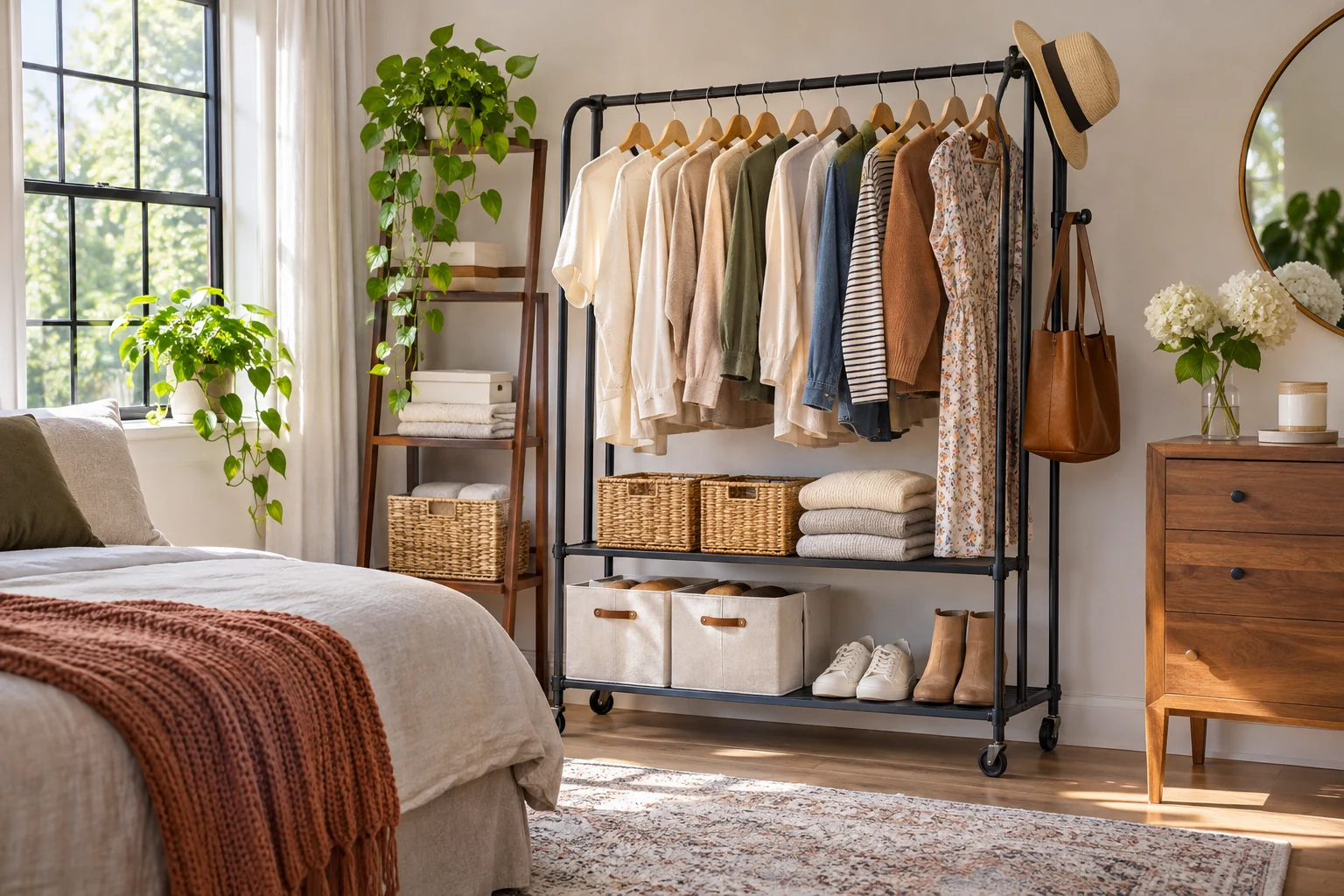
Bedroom without closet storage are easier to maintain when every item has a place and the setup fits the room. Use these practical steps to make awkward space useful, keep essentials reachable, and choose storage that matches your measurements.
Affiliate disclosure: As an Amazon Associate I earn from qualifying purchases.
A narrow rolling cart can hold everyday supplies in a measured gap.
Find on AmazonSearch Amazon ↗Choose a freestanding shelf that fits around the tank and leaves access to the lid.
Find on AmazonSearch Amazon ↗A wall shelf keeps frequently used items off limited floor space.
Find on AmazonSearch Amazon ↗Stackable clear drawers use vertical space for small packets and accessories. Check dimensions and stability, and keep the stack low enough to reach safely.
Find on AmazonSearch Amazon ↗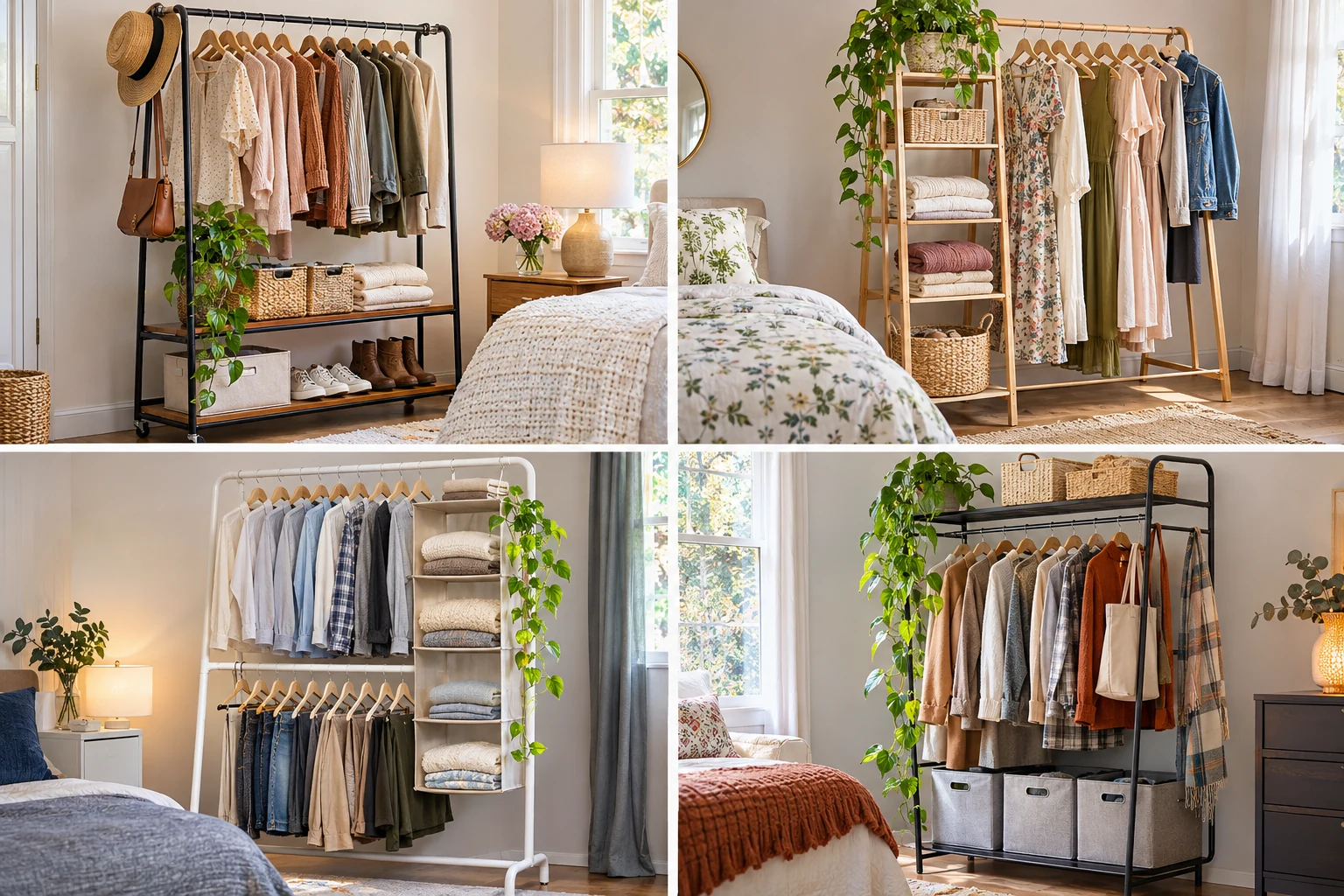
Do not fill every shelf edge to edge—bedroom without closet storage needs a small margin for the next item. Avoid packing the container to its limit. A little spare capacity makes it possible to put things back one-handed and gives new arrivals a temporary home while you decide where they belong. Check the weave and lining before using a basket near spills or damp items; breathable materials work best for dry storage. Leave spare capacity in closet storage and the daily dressing routine so a new item has a temporary home. Leave spare capacity for bedroom without closet storage so a new item has a temporary home.
Choose one short reset habit for bedroom without closet storage, such as returning loose items after dinner. A quick reset during the normal routine is easier than emptying the whole area later. Look at shelf height, drawer travel, and garment clearance from the spot where you will use the items. Put the short label on the front face, where it remains readable after the container is returned. A short reset keeps closet storage and the daily dressing routine from collecting things that belong elsewhere. A short reset keeps bedroom without closet storage from collecting things that belong elsewhere.
The real test for bedroom without closet storage is the busiest part of the routine; notice what gets left out. Move that category closer to the moment it is needed. Choose a bin that still feels manageable when full, and leave enough clearance to slide it forward without scraping adjacent items. Use closet storage and the daily dressing routine for a full week, then change the position that causes actual friction. Try bedroom without closet storage for a full week before changing the setup; move the position that causes actual friction.
Label seasonal pieces by room or occasion before moving them out of bedroom without closet storage; next year’s reset will be quicker. Use one container per group rather than mixing unrelated supplies; this keeps the contents visible and the return decision simple. Seasonal items in closet storage and the daily dressing routine should move as one labeled group when the rotation changes. Seasonal items connected with bedroom without closet storage are easier to rotate when they move as one labeled group.
Start with an honest edit: remove anything that does not belong in bedroom without closet storage before choosing another container. Gather the items in this zone, remove anything broken or no longer used here, and measure for the smaller, more honest pile that remains. In the bedroom or closet, make the setup work with shelf height, drawer travel, and garment clearance. Check the organizer dimensions against the usable opening and the items it will hold before ordering. The first step in closet storage and the daily dressing routine is editing the contents; what stays determines how much storage the space needs. The first step in planning bedroom without closet storage is deciding which belongings still earn space.
Give the most-used items the easiest position in bedroom without closet storage; move occasional stock farther back. That small hierarchy saves repeated searching and keeps backups from taking over the working area. In the bedroom/closet, check shelf height, drawer travel, and garment clearance before putting anything in place. Use a riser only if it sits flat and leaves enough finger room to retrieve cups or containers. In closet storage and the daily dressing routine, put the everyday group at the easiest reach and let occasional items take the less convenient position. For bedroom without closet storage, place daily-use items closest to the task and move occasional pieces farther back.
Write down the usable dimensions of bedroom without closet storage before comparing organizer sizes. Compare those numbers with the loaded organizer, not just its empty outer dimensions. Then check shelf height, drawer travel, and garment clearance in the bedroom/closet. Measure between brackets and trim as well as from wall to shelf edge; those small obstructions decide whether a bin will slide out. Before buying for closet storage and the daily dressing routine, measure the usable opening and the clearance needed to retrieve a full container. Before buying for bedroom without closet storage, measure the usable opening and the clearance needed to retrieve a full container.
Sort the contents of bedroom without closet storage by one rule that matches your routine—use, owner, or task. Keep the same rule across adjacent bins so an item has one obvious destination. Put the short label on the front face, where it remains readable after the container is returned. One sorting rule makes closet storage and the daily dressing routine easier to restock and easier for someone else to follow. One sorting rule makes bedroom without closet storage easier to restock and easier for someone else to follow.
Gather the tools for a single routine in bedroom without closet storage and leave a little room to use them. Leave a little working room beside it; the goal is to make the task easier, not to fill every spare inch. Check shelf height, drawer travel, and garment clearance with doors and drawers open. Choose a caddy with a handle you can grip when full, and avoid overloading it with heavy bottles. A routine in closet storage and the daily dressing routine works better when its tools stay together and there is room to use them. A routine built around bedroom without closet storage works better when its tools stay together and there is room to use them.
Load one sample organizer and pull it out twice to see whether bedroom without closet storage still feels easy to use. If it snags or forces another group to move, choose a shallower or more accessible arrangement. Use one container per group rather than mixing unrelated supplies; this keeps the contents visible and the return decision simple. For closet storage and the daily dressing routine, test the organizer both empty and loaded; weight can change how easily it slides or lifts. Load-test the organizer you are considering for bedroom without closet storage; weight can change how easily it slides or lifts.
Measure the full opening, including trim, hinges, and the clearance needed for doors and drawers. Compare those measurements with product dimensions before ordering.
Keep daily essentials reachable, heavy belongings low, and access to utilities, vents, and exits clear.
After a week of regular use, move anything that is hard to reach, blocks a walkway, or does not fit your routine.
Begin with the changes that make the biggest difference to your daily routine. Recheck the measurements and review the arrangement after a week of use.