OPEN CABLE SUPPORT
Clamp-On Under-Desk Cable Tray
Supports compatible cable groups below the desktop without leaving them across the floor.
Find on AmazonSearch Amazon ↗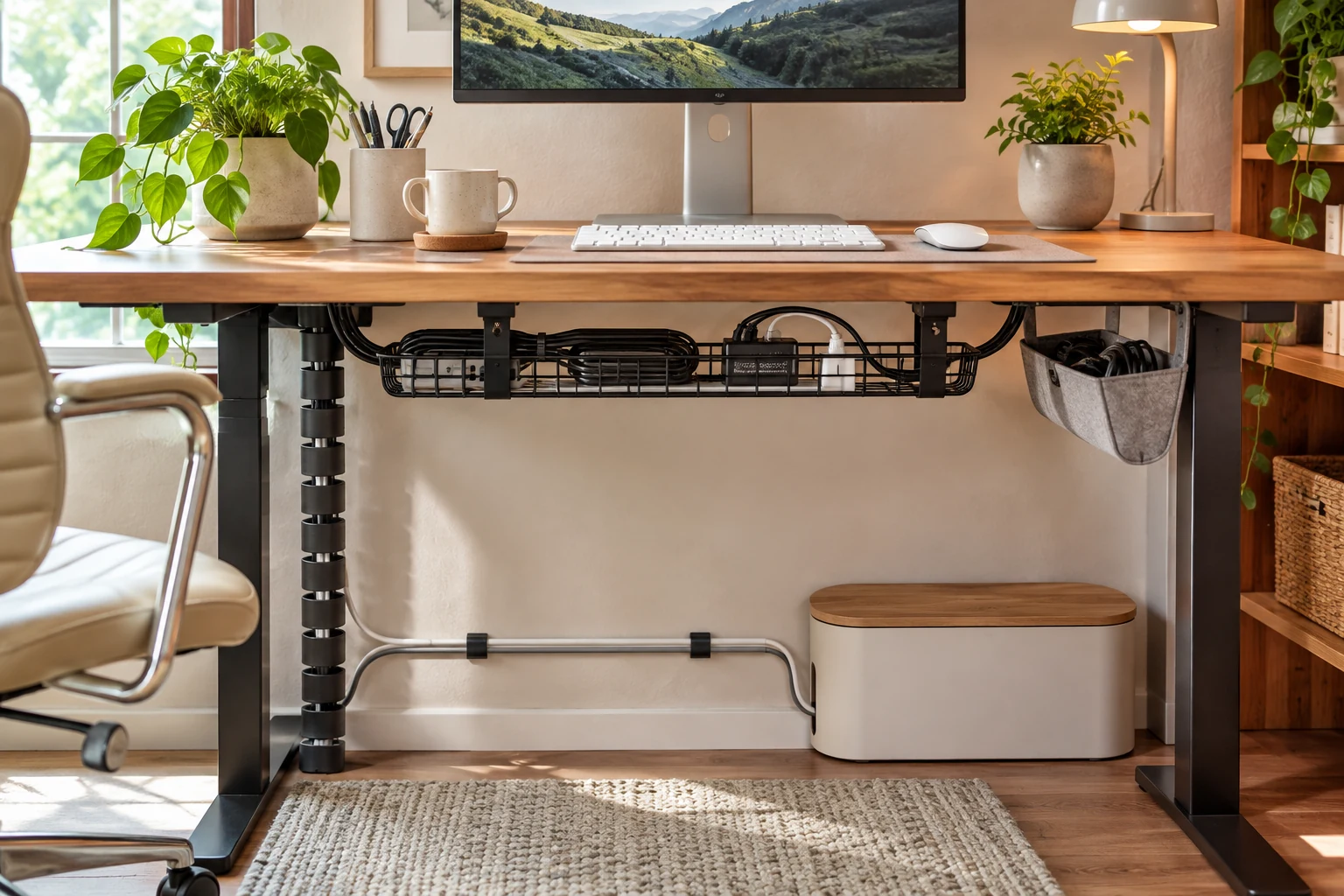
Under-desk cable management works best when each lead has a clear route and enough room to move. These organizers lift loose cords away from the chair and floor while keeping connections accessible for ordinary equipment changes.
Affiliate disclosure: As an Amazon Associate I earn from qualifying purchases.
Supports compatible cable groups below the desktop without leaving them across the floor.
Find on AmazonSearch Amazon ↗Keeps a modest cable group together while allowing later equipment changes.
Find on AmazonSearch Amazon ↗Guides intact device leads along suitable desk surfaces away from chair movement.
Find on AmazonSearch Amazon ↗Contains compatible leads in a flexible route without hiding damaged cables or blocked device vents.
Find on AmazonSearch Amazon ↗
An open tray gives a modest cable group support instead of letting the weight hang from the device connections. Choose a mounting system compatible with the desk, leaving knees, drawers, and controls clear. Keep plugs reachable and follow the equipment guidance for power accessories and ventilation rather than packing every adapter into one crowded basket.
Reusable ties make it easier to remove one device later than a permanent tightly cinched bundle. Gather related peripheral leads loosely, keeping gentle bends and comfortable slack at both ends. Follow the equipment instructions for power cords, and avoid using a tidy-looking bundle to conceal damaged jackets, tight coils, or cables under strain.
Find reusable ties for computer peripheral cables on Amazon ↗
A short row of clips can define a cable route behind the desk instead of across the place where the chair moves. Match the clip opening to the cable diameter and use it only on a compatible surface. Leave the lead free to move where needed, without pinching its jacket or forcing a sharp turn at the connector.
A split sleeve can contain several compatible leads that travel together from the desk toward their connection point. Choose a size that leaves the group relaxed rather than compressing it into a rigid tube. Keep the route accessible for inspection and equipment changes, and leave device cooling openings uncovered instead of treating the sleeve as general-purpose concealment.
A smooth grommet insert can finish an existing cable opening so leads do not rub against a rough edge. Match the insert to the opening and the cable group without forcing plugs through a slot that is too small. Follow the desk guidance before making any structural changes; a cable organizer does not require cutting an improvised opening.
Find a smooth grommet insert for a desk cable opening on Amazon ↗
Some monitor arms include channels or clips for the display leads, which can reduce a loose loop behind the screen. Follow the arm's routing instructions and check the complete adjustment movement before settling on a cable length. Leave enough slack at the monitor and desk ends so moving the screen does not tug on a connection.
Find cable-routing accessories for a monitor arm on Amazon ↗
A standing desk needs its cables to move through the full intended height range without becoming tight or catching on nearby furniture. A purpose-built spine or flexible guide can organize that movement when it suits the desk system. Test the routing according to the equipment instructions and keep the floor path clear beneath the moving frame.
Find a flexible cable spine for an adjustable desk on Amazon ↗
Small markers near accessible connector ends can reduce the need to pull on several leads while finding the right one. Use a consistent code or clear identification that remains readable without covering required product markings. Keep the markers away from moving parts and leave the connector itself easy to grip when equipment needs to be disconnected appropriately.
Find reusable identification markers for desk cables on Amazon ↗
A fitted cable-end holder can keep a disconnected peripheral lead from dropping behind the desk whenever the device leaves. Choose a position that does not obstruct the work surface or expose the cable to chair movement. Keep the lead relaxed, with enough reach for its intended use rather than pulling the connector taut against the holder.
An open purpose-built adapter holder may give a compatible device brick support instead of leaving it suspended by a cord. Check the adapter and holder instructions, including clearance and cooling requirements, before mounting it under the desk. Avoid enclosing active equipment in an improvised storage box or pressing fabric and loose cable bundles against its vents.
Unused leads do not need to remain mixed into the active desk routing. A small under-desk storage pouch can hold disconnected peripheral cables and compatible small accessories, kept separate from operating power equipment. Coil or fold stored leads according to their care needs, and keep the pouch clear of knees, moving desk parts, and ventilation openings.
Find a removable under-desk pouch for spare cables on Amazon ↗
No. Keep the routing relaxed and compatible with the equipment instructions, especially for power cords and moving devices. Organizers should not hide damage, strain connectors, create tight bends, or block cooling. Leave enough access to change one device without pulling through a dense bundle.
The routing must accommodate the full intended movement without snagging or pulling tight. Check the desk and device instructions and choose a compatible flexible guide where useful. Test the parked and working positions while keeping leads clear of the chair and moving frame.
Do not assume an ordinary closed box is suitable for operating electrical equipment. Follow the equipment's installation and ventilation requirements and use only compatible purpose-built holders as intended. Keep required cooling openings and connections accessible.