SHALLOW SHOE CABINET
Slim Flip-Drawer Shoe Cabinet
Conceals everyday pairs in shallow storage designed to suit a narrow entry wall.
Find on AmazonSearch Amazon ↗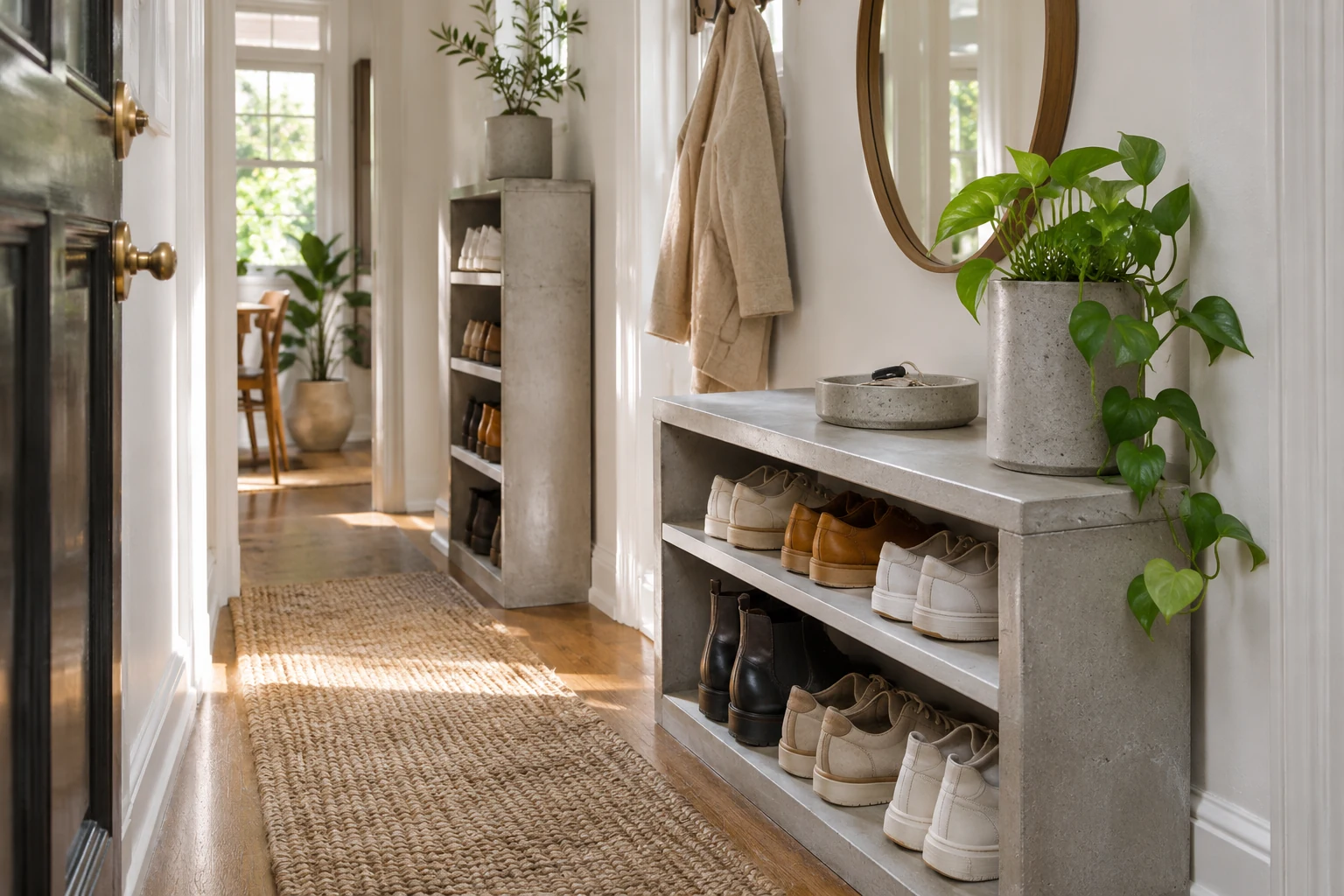
Shoe storage in a narrow hallway has to fit the walkway as well as the footwear. These entryway ideas focus on shallow furniture, vertical organizers, and small return spots that keep everyday pairs together without blocking the door.
Affiliate disclosure: As an Amazon Associate I earn from qualifying purchases.
Conceals everyday pairs in shallow storage designed to suit a narrow entry wall.
Find on AmazonSearch Amazon ↗Holds a modest shoe selection above the floor without another freestanding rack.
Find on AmazonSearch Amazon ↗Stacks suitable pairs vertically inside existing shoe storage instead of spreading them sideways.
Find on AmazonSearch Amazon ↗Provides a place to sit with one accessible footwear shelf underneath.
Find on AmazonSearch Amazon ↗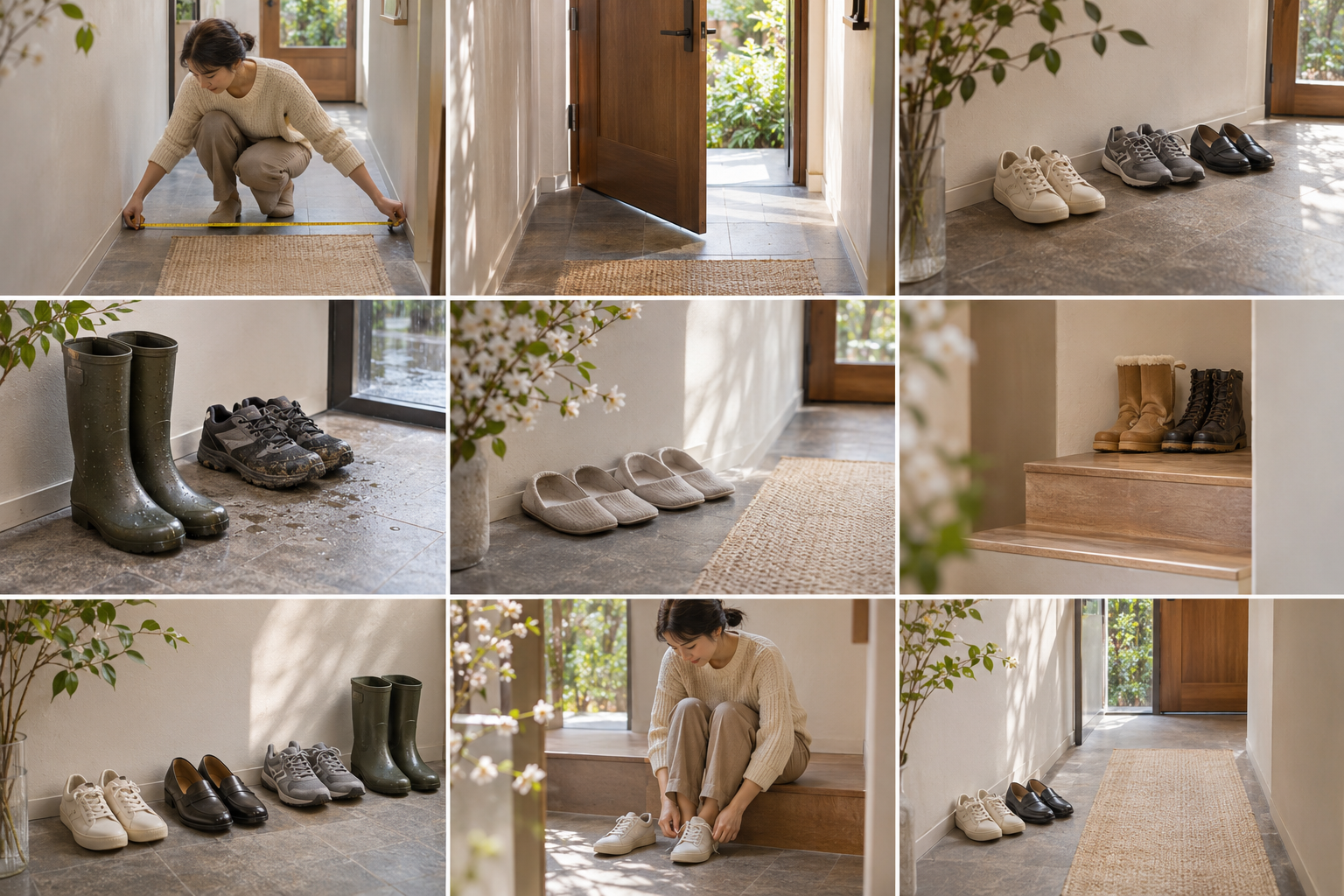
A shallow cabinet can hide shoes neatly, but its open drawer still needs room in front. Measure the hallway with the drawer fully extended and compare the interior compartments with your largest everyday shoes. Follow the cabinet’s anchoring instructions and keep it clear of the entry door rather than treating a slim profile as a guarantee of fit.
A shallow shoe rail can keep a small selection off the floor where a freestanding rack would narrow the passage. Check the loaded projection, including the toes and heels of the shoes themselves. Mount the rail for the actual wall and intended weight, and place it where nobody has to brush past the footwear to enter.
If the entry already needs a place to sit, a bench with a single shoe shelf can perform both jobs. Compare its full seat depth with the walking route before adding it to a narrow hall. Keep the top clear enough to use, with only a modest row of everyday pairs on the shelf below.
Shoe slots can use extra shelf height inside an existing cabinet instead of demanding another rack in the hallway. Adjust each slot for the actual pair and check that the upper shoe does not catch on the shelf above. These organizers suit some shoes better than bulky boots, so test one pair before planning the entire cabinet around them.
Find adjustable shoe slots for a shallow cabinet on Amazon ↗
A vertical rack can hold several pairs on a short stretch of wall when there is enough depth for the loaded shoes. Check the rack’s stability and any required fixing points, especially in a busy entryway. Keep heavy pairs low and leave the nearby door, switches, and usual walking route unobstructed.
The inside of an entry closet door can hold suitable lightweight shoes without adding furniture to the hallway. Measure the hook fit and the space between the closed door and stored coats. Keep larger or damp footwear in a better-fitting dryable spot rather than forcing it into pockets that strain or prevent the closet from closing.
Find an entry-closet over-door shoe-pocket organizer on Amazon ↗
A boot tray defines the temporary landing spot for wet footwear so pairs do not spread across the threshold. Choose a long narrow shape that suits the door opening and still leaves a clear path beside it. Empty collected water and clean the tray as needed, then move dry occasional footwear to its proper storage position.
A low sliding or rolling tray can use the space under a bench when reaching the back of a fixed shelf is awkward. Measure the loaded tray height against the underside of the seat and any crossbars. It should pull out easily for retrieval and cleaning, then park fully beneath the bench instead of projecting into the hall.
Small removable baskets can give each household member an obvious return spot inside a low entryway cubby. Choose baskets that suit the shoe sizes and slide out without catching on the frame. Keep them for a limited active selection so the baskets remain manageable and do not become overfilled piles beside the door.
A boot hanger can keep suitable dry boots paired inside an entry closet rather than lined along the hall. Check that the clips are appropriate for the boot material and that the loaded drop clears the floor and other belongings. Leave enough closet space around the boots so retrieving a coat does not pull them down.
Large sneakers and bulky shoes may not fit the compartments of a slim flip-front cabinet. A small adjustable open rack can give those pairs adequate height without squeezing them into unsuitable slots. Keep the rack’s depth within the available wall space and choose a modest capacity that will not turn into a second row on the floor.
A narrow entry does not need to display every pair the household owns. Suitable dry occasional shoes can go into separate boxes on an existing entry-closet shelf, leaving the easiest storage for current everyday footwear. Check the shelf load and safe reach, and keep each box identifiable without building a heavy unstable stack above the doorway.
Find stackable shoe boxes for entry-closet shelves on Amazon ↗
Measure the available wall space and the route past it with doors and drawers open. Include the depth of the shoes themselves on open racks. A cabinet or bench must also fit the doorway, baseboards, and any required fixing points without blocking normal access.
Not necessarily. Check the interior compartment length and height against your actual shoes, especially bulky sneakers or boots. A separate small adjustable shelf may be more suitable than forcing every pair into the same type of cabinet.
Use a washable tray in a location that leaves the entrance clear, then clean and empty it as needed. Avoid returning damp or dirty footwear to closed boxes or fabric pockets simply to clear the hallway quickly.