SOCK PAIR COMPARTMENTS
Soft Fabric Grid Sock Drawer Organizer
Keeps suitable sock pairs together in visible compartments without a loose drawer-wide pile.
Find on AmazonSearch Amazon ↗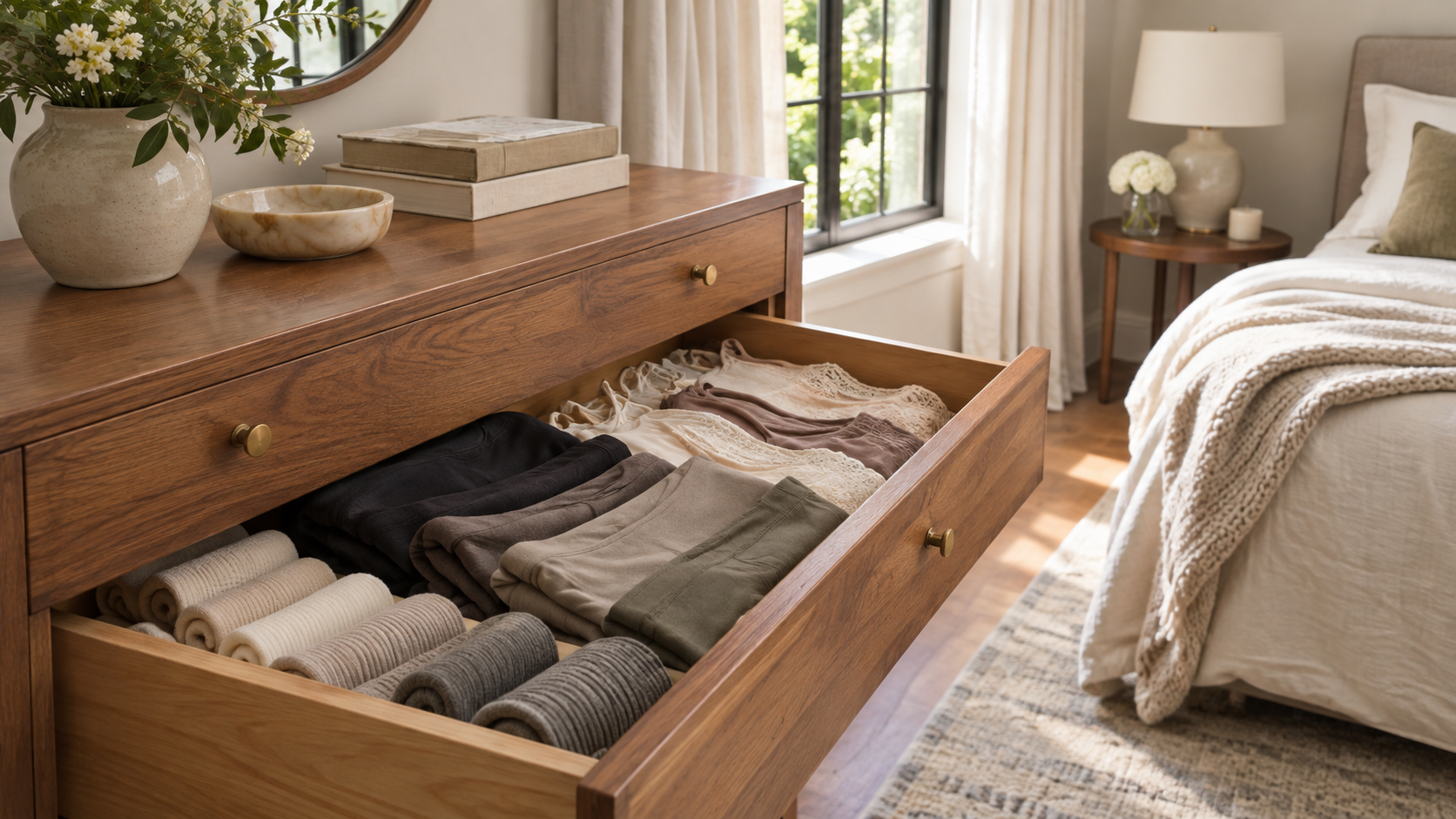
Socks, bras, and leggings need different kinds of drawer space. Use small cells for pairs, wider sections for shaped cups, and upright rows for folded leggings so each item can be taken out without disturbing the rest.
Affiliate disclosure: As an Amazon Associate I earn from qualifying purchases.
Keeps suitable sock pairs together in visible compartments without a loose drawer-wide pile.
Find on AmazonSearch Amazon ↗Gives shaped bras wider sections instead of forcing cups into small rigid cells.
Find on AmazonSearch Amazon ↗Separates clothing groups using compartment widths fitted to the actual garments.
Find on AmazonSearch Amazon ↗Holds folded leggings in short upright rows that are easy to browse.
Find on AmazonSearch Amazon ↗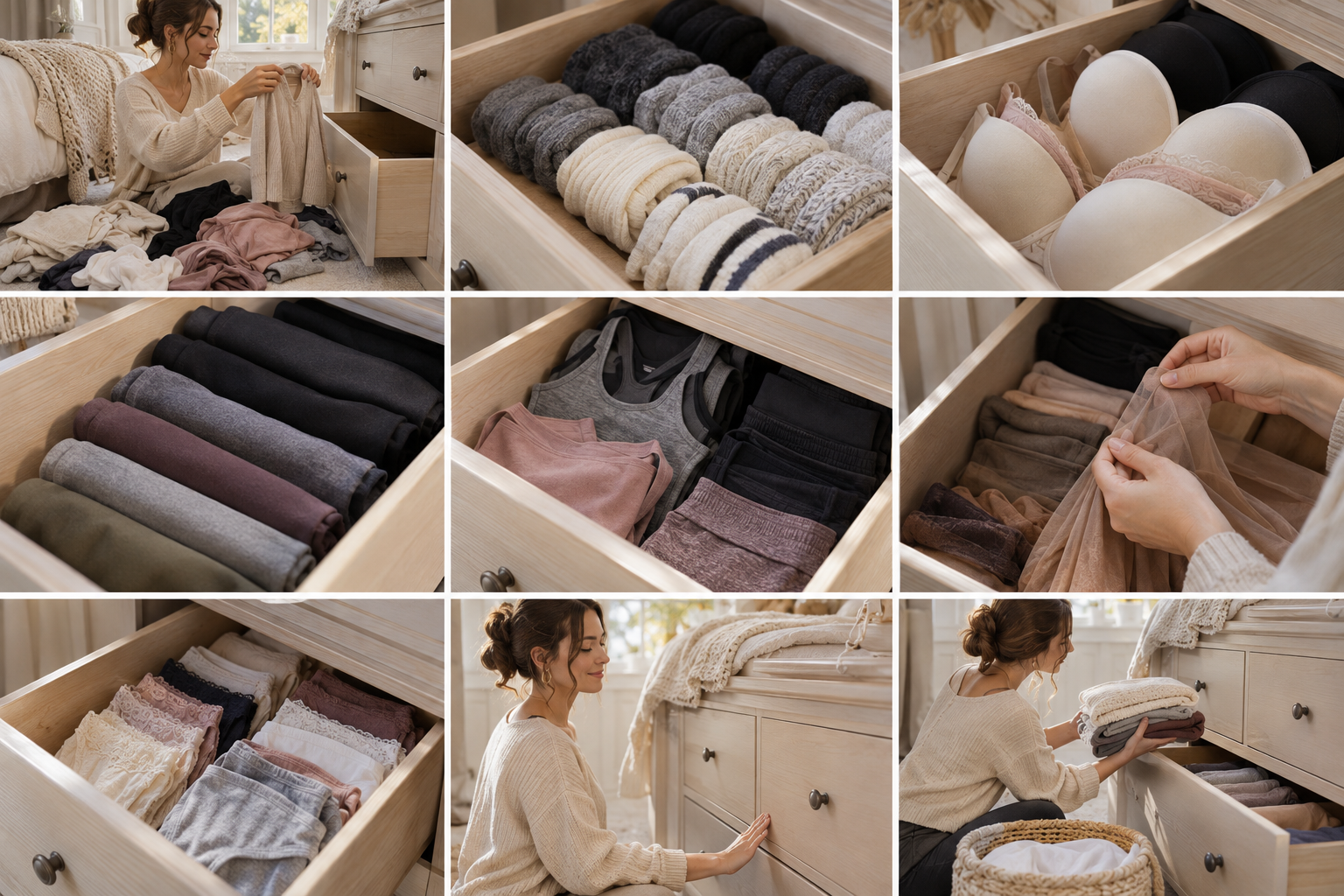
A soft grid organizer can stop paired socks from spreading across the drawer whenever another item is removed. Choose cell sizes that suit the socks rather than compressing thick pairs into tiny openings. Fold or place each pair according to its fabric and care needs, without stretching one cuff tightly around the entire bundle.
Small no-show socks can disappear underneath larger clothing even when the drawer looks organized. A shallow tray or low fabric bin keeps those pairs visible without needing a deep cell. Keep the group modest and easy to lift out, so a missing small sock does not require emptying the bras and leggings beside it.
Longer socks may need a different fold and more space than everyday ankle pairs. A narrow fabric bin lets them stand together without forcing them into a grid that is too short. Check the loaded height against the drawer opening, and leave enough room between the folded pairs to take one out cleanly.
Shaped cups need a compartment that supports their normal shape rather than folds them inside out to match a small box. Use a wide section with a smooth lining and contain loose straps alongside the bras. Follow the garment’s care guidance and avoid pressing other heavy clothing down on the cups just to close the drawer.
Soft sports bras that can be folded according to their care instructions may fit neatly in a short upright row. Keep them separate from molded styles that need a wider shaped compartment. Choose a bin that lets the row remain loose enough to browse, with the identifying straps or edges visible where practical.
An upright row lets you see more leggings at once than a pile with only the top pair visible. Adjust the fold to the garment and drawer height, then keep each row short enough to browse comfortably. A removable rectangular bin can hold the row together while making the drawer base easier to clean.
Find rectangular drawer bins for folded leggings on Amazon ↗
Fleece-lined or heavier leggings can overwhelm the same narrow compartments that suit lightweight pairs. Give these garments a wider lane or a separate small bin instead of compressing the entire drawer. Check that the loaded folds sit below the opening and that pulling out one pair does not lift the divider or drag other garments with it.
Find wide fabric drawer compartments for thick leggings on Amazon ↗
The socks and leggings worn during an ordinary week should not sit behind occasion pieces that rarely leave the drawer. Arrange the fitted compartments so the active groups are reachable when the drawer is open normally. Keep the less-used sections organized as well, rather than pushing them into a hidden loose pile at the back.
Find modular fabric bins for everyday dresser storage on Amazon ↗
If a few sports bras and leggings are regularly used together, neighboring compartments can make the set easier to find. Keep each garment folded or supported in the way its construction requires. A small shared zone can help with daily dressing without turning every compartment into a rigid outfit kit that is awkward to maintain.
Lace and fine straps can catch on a rough divider edge or exposed fastener inside an organizer. Choose a smooth soft-lined compartment and check its seams before placing delicate garments in it. Keep hooks and straps contained according to the garment’s care needs instead of allowing them to tangle through neighboring bras.
Find soft fabric drawer compartments for delicate bras on Amazon ↗
When two people share a drawer, separate fitted bins can keep sock pairs and everyday clothing from migrating between sections. Size the compartments around the actual garments rather than dividing the drawer into identical halves automatically. Leave enough space to lift one person’s bin out without disturbing the other person’s clothing.
Find removable clothing bins for shared dresser drawers on Amazon ↗
A drawer that holds mostly socks may later need more room for leggings or shaped bras. Smooth adjustable dividers let the compartment widths change without replacing every organizer. Check the divider’s contact pads and tension requirements so it stays secure without marking the drawer or squeezing the sides out of alignment.
Find adjustable dividers for changing clothing drawer layouts on Amazon ↗
A small pouch can keep unmatched socks from scattering through the organized pairs while their partners are being found. Keep it separate from the active sock cells and review it during the normal laundry routine. Limit the space deliberately so the drawer does not become permanent storage for damaged garments or an ever-growing collection of singles.
Not if the cells bend or compress the cups and straps. Use a compartment suited to the bra’s construction and follow its care guidance. Molded cups generally need a wider shaped section than a small sock organizer provides.
Use a short fitted row inside a removable bin or between suitable dividers. Keep the folds below the drawer opening and leave enough room to remove one pair without dragging out its neighbors. A bin that matches the garment size is more useful than a tightly packed oversized drawer.
No. Socks, shaped bras, and leggings have different space requirements. A combination of small cells, wider soft sections, and rectangular bins can be more practical than one matching grid imposed on every garment.