LOW CLOTHING BAGS
Zippered Under-Bed Clothing Storage Bags
Contains suitable seasonal garments in low fabric bags with accessible pull handles.
Find on AmazonSearch Amazon ↗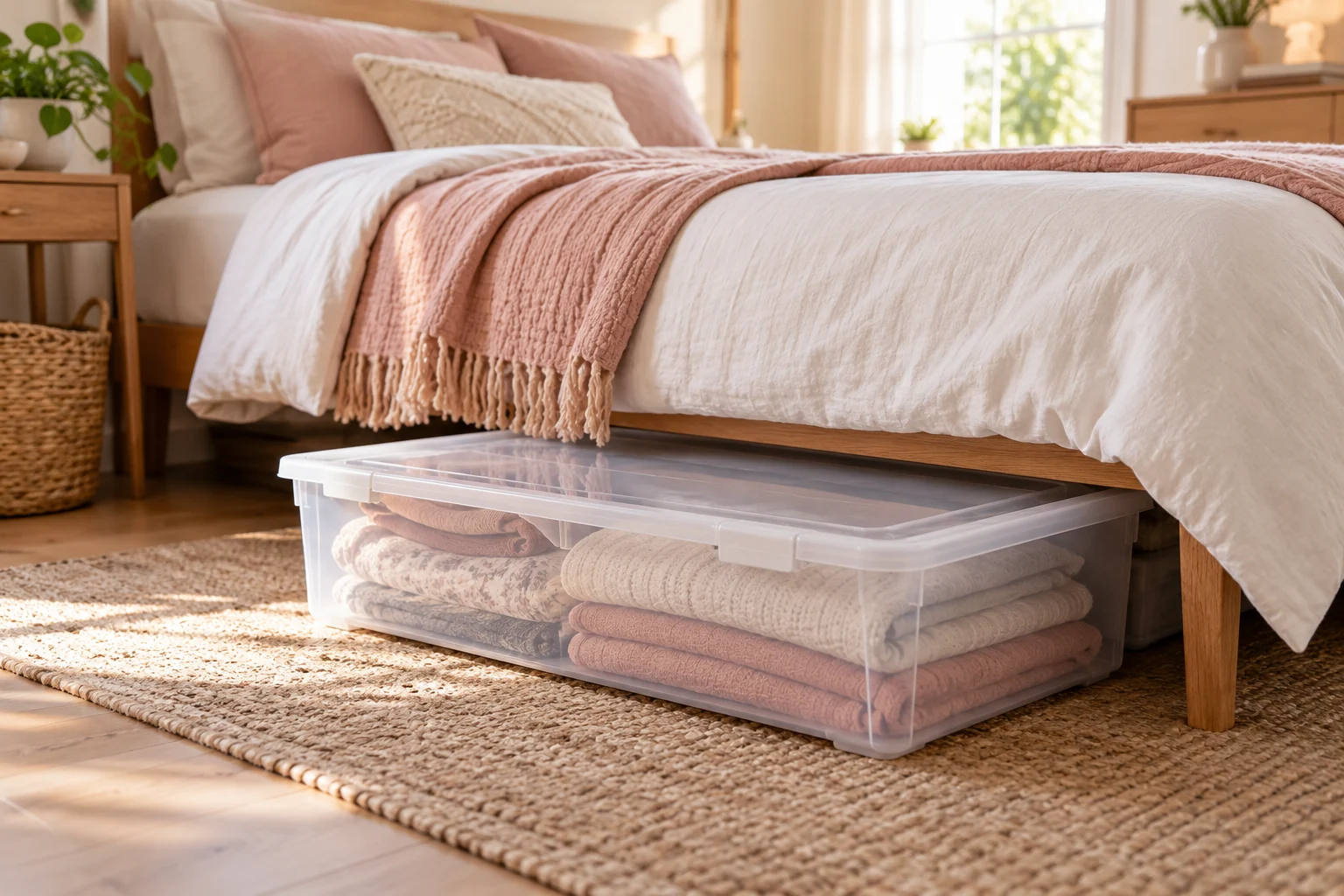
The space beneath a bed can hold seasonal clothes and extra shoes without taking over another wardrobe. Choose low containers around the frame’s actual openings, then keep clean dry clothing and footwear in separate groups that can be pulled out easily.
Affiliate disclosure: As an Amazon Associate I earn from qualifying purchases.
Contains suitable seasonal garments in low fabric bags with accessible pull handles.
Find on AmazonSearch Amazon ↗Brings suitable extra footwear forward without dragging a large container across the floor.
Find on AmazonSearch Amazon ↗Keeps compatible shoe pairs separated beneath the bed instead of stacked together loosely.
Find on AmazonSearch Amazon ↗Reduces bulk only for garments whose care and storage instructions permit compression.
Find on AmazonSearch Amazon ↗
Low fabric bags work well for folded T-shirts, light layers, and other seasonal clothes that do not need a rigid box. Arrange the garments in short rows rather than one thick mound, keeping the loaded bag below the bed frame. The zipper should close without pressure, with the handle facing the side you can reach.
Find low-clearance zippered seasonal-clothing bags on Amazon ↗
A rolling bin is useful for an extra shoe collection that would be awkward to drag across the floor in a large fabric bag. Include the wheels when measuring the container height, then check how it moves on your floor. Keep the pull-out route free so the bin can roll straight out instead of being lifted over another container.
Find low rolling under-bed containers for extra shoes on Amazon ↗
Individual compartments make it easier to see which shoes belong together, especially when the reserve includes sandals, sneakers, and occasion pairs. Give each clean dry pair its own space rather than stacking footwear in a mixed layer. A modest selection also makes the organizer easier to browse without opening every neighboring bag beneath the bed.
Start with the widest pair when arranging an adjustable shoe organizer. Move the dividers to fit those shoes, then use the remaining sections for narrower footwear instead of forcing every compartment to match. Leave enough space around decorative details and handles on the cover so closing the organizer does not crush the shoes.
Find adjustable under-bed shoe compartments for larger pairs on Amazon ↗
A shallow rigid box can provide a defined space for footwear that would disappear inside a soft bag. Compare the interior measurements with the actual pair, including any shape supports the shoes need. Keep other storage from pressing on the lid, and choose a box that opens easily once it is pulled from beneath the bed.
Gather the jackets that leave the active wardrobe during the same season into one roomy bag. Follow their care guidance when folding them, keeping fasteners from catching on neighboring fabric. A broad loose arrangement is easier to unpack than a tightly pressed bundle, especially when you need one jacket before the rest of the seasonal clothes return.
Find roomy under-bed bags for suitable seasonal jackets on Amazon ↗
Keep seasonal knitwear together so a sweater does not have to be pulled from beneath shoe bags or miscellaneous accessories. Fold the garments according to their care needs and arrange them in a small accessible group. Leave room to lift one piece out by its folded body rather than tugging on a sleeve caught beneath the stack.
Find fabric under-bed bags for seasonal knitwear on Amazon ↗
Vacuum bags can reduce bulk for some seasonal clothing, but compression is not automatically suitable for every fabric, filling, or garment shape. Check the clothing and bag instructions before using them together. Keep the sealed package flat enough for the frame opening, and retain an easy way to identify the contents without opening every bag.
Find vacuum bags for compatible under-bed clothing storage on Amazon ↗
A small divided case can keep gloves paired and scarves separate from the larger folded garments in an under-bed bag. Give the accessories enough room to come out as a group when the weather changes. This prevents a missing glove from becoming a search through every sweater and jacket stored beneath the frame.
Find a divided fabric case for winter accessories on Amazon ↗
A long low container can hold boots that may be stored horizontally according to their care guidance. Compare the full boot length with the box before choosing it, keeping shafts from being bent just to gain a few inches. Suitable shape supports and a separate compartment can help keep the pair organized without mixing it into folded clothing.
Find long low under-bed containers for suitable boots on Amazon ↗
Assign clothing and footwear different containers so either group can be retrieved without unpacking the other. One side of the bed might hold seasonal clothes, while the accessible end holds extra shoes, depending on the frame openings. Separate closures also make it easier to clean a shoe container without emptying the garment storage beside it.
Find separate under-bed clothing and shoe storage bins on Amazon ↗
A center support can make two smaller bags more useful than one wide organizer. Map the clear openings around the legs and crossbars, then give each container its own straight path out. Avoid wrapping a soft bag around the support, which makes an otherwise simple seasonal changeover turn into moving the bed.
Find compact under-bed bins for divided frame openings on Amazon ↗
With a bed against a wall, a handle on the wrong side can make a well-sized container frustrating to use. Look for end handles if the foot of the bed is the clearest access point, or side handles for a usable bedside opening. Keep the loaded group manageable enough to pull out without dragging on the bag corners.
Find under-bed clothing bags with side and end handles on Amazon ↗
A viewing window helps distinguish similar seasonal bags without opening them all. Face the window toward the accessible side so folded sweater colors or a familiar jacket remain visible. Keep the contents in an orderly group behind it rather than packing loose garments against the plastic until the window no longer reveals anything useful.
Find under-bed clothing bags with clear viewing windows on Amazon ↗
A side zipper can be helpful when the bag needs to open before it has been pulled completely clear of a low frame. Arrange the clothes in small folded groups near the opening instead of pushing everything to the far end. Check that the zipper can move freely without catching garment edges or rubbing against the bed.
Find side-opening under-bed garment storage bags on Amazon ↗
Occasional shoes can share a larger box while remaining separate in soft pouches that suit their materials. Keep each pair identifiable and allow enough room around buckles or other delicate details. The pouches should contain clean dry footwear without forcing a tight fit, with the larger box still easy to open and close.
Find soft shoe pouches for protected under-bed storage on Amazon ↗
Group seasonal clothes and footwear by how they return to use, rather than creating one enormous package of everything not currently worn. Keep each container small enough to handle comfortably and separate shoes from garments within the plan. Before the next changeover, review what still fits and gets used so the space does not fill permanently with forgotten extras.
Find manageable handled bins for seasonal under-bed storage on Amazon ↗
Measure the lowest frame clearance and the usable openings around support legs and crossbars. Include the container’s lid, handles, and wheels in its full height. Check the floor space needed to pull the loaded container out from the side or end you can reach.
Separate contained groups are usually easier to manage and keep clean. Choose storage appropriate to the clothes and footwear, and return items only when clean and fully dry according to their care instructions. Keep shoe pairs from pressing directly against folded garments.
No. Check the garment’s care and storage instructions and the bag’s intended use before compressing fabrics or fillings. A roomy suitable fabric bag may be a better option for pieces whose shape or construction should not be compressed.