When I first tried vegan iced sugar cookies with aquafaba royal icing, I was intrigued by the idea of using chickpea brine in a dessert. It’s amazing how this humble ingredient can transform a classic treat into something surprisingly delightful and animal-friendly. If you’re curious about how to whip up these cookies and elevate your baking game, let’s explore the steps and tips to create your own charming batch.
What kind of recipe is it?

The Vegan Iced Sugar Cookie is a delightful treat that combines the classic flavor of sugar cookies with a cruelty-free twist.
This recipe features a tender, airy texture and a sweet, glossy icing that makes it visually appealing and perfect for any occasion.
Ideal for those on a plant-based diet or anyone looking to indulge without compromising their values, these cookies offer a deliciously sweet option for dessert lovers, kids’ parties, or festive gatherings.
They’re easy to make and sure to impress!
Preparation Time
| Aspect | Details |
|---|---|
| Difficulty of the Recipe | Easy |
| Preparation Time | 20 minutes |
| Number of Servings | 24 cookies |
Ingredients
| Ingredient | Quantity |
|---|---|
| All-purpose flour | 2 ½ cups |
| Granulated sugar | 1 cup |
| Baking powder | 1 teaspoon |
| Baking soda | ½ teaspoon |
| Salt | ½ teaspoon |
| Vegan butter | 1 cup (softened) |
| Unsweetened applesauce | ¼ cup |
| Vanilla extract | 2 teaspoons |
| Almond extract (optional) | ½ teaspoon |
| Powdered sugar | 2 cups |
| Non-dairy milk (unsweetened) | 2-4 tablespoons |
| Food coloring (optional) | As desired |
Make sure to gather all these ingredients to ensure the smooth preparation of your vegan iced sugar cookies!
Essential Kitchen Equipment
| Tool/Equipment | Purpose | Alternative Option |
|---|---|---|
| Mixing bowls (large & medium) | Used for mixing dry ingredients and wet ingredients separately before combining. | Any large bowl or container can work, even a large pot. |
| Measuring cups (dry and liquid) | Essential for accurately measuring out the flour, sugar, and liquids to ensure proper ingredient ratios. | Use standard kitchen cups, but check for volume to ensure accuracy. |
| Measuring spoons | Needed for precise measurements of smaller ingredients like baking powder, baking soda, and extracts. | Tablespoons and teaspoons from your regular cutlery can substitute, but watch the measurements closely. |
| Stand mixer or hand mixer | Ideal for creaming together the vegan butter and sugar quickly and efficiently. | Mixing by hand with a wooden spoon can work, though it requires more effort and time. |
| Rubber spatula | Great for scraping down the sides of the mixing bowl and for folding in ingredients gently. | A silicone spatula or even a wooden spoon could serve a similar purpose. |
| Wooden spoon | Useful for mixing together ingredients, particularly when incorporating flour into the wet mixture. | Any sturdy spoon can be used in place of a wooden spoon. |
| Baking sheets (2-3) | Needed for placing the cookie dough to bake. Ensure even baking and good airflow around the cookies. | In a pinch, any flat baking dish or oven-safe tray can be used, but check sizes for even cookie placement. |
| Parchment paper or silicone mats | Helps prevent cookies from sticking to the baking sheets, making for easy transfer and cleanup. | A greased baking sheet can substitute, but may lead to more sticking. |
| Cookie scoop or spoon | Perfect for consistently portioning out the cookie dough for even baking. | A tablespoon can work for hand-scooping dough but may not provide the same uniformity. |
| Cooling rack | Allows cookies to cool properly and prevents them from becoming soggy on the baking sheet. | A plate can work in a pinch, but ensure cookies are spaced out to cool effectively. |
| Oven thermometer | Ensures that your oven is at the correct temperature for baking, which is crucial for successful cookies. | If you don’t have one, allow the oven to preheat for the recommended time, but this is less reliable. |
Cooking Steps
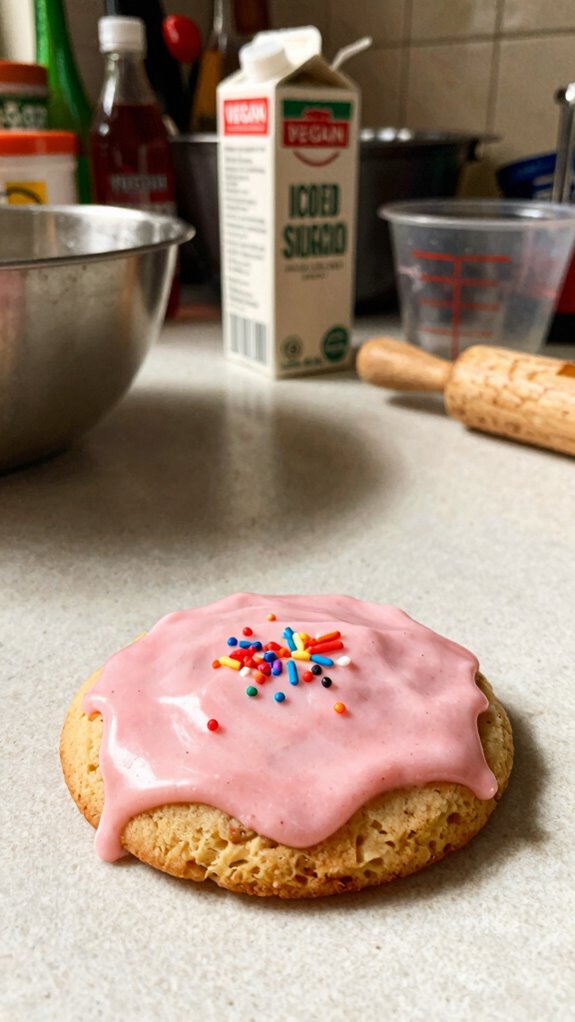
- Mise en Place: Gather all ingredients. Measure out 240 g (1 ¾ cups) all-purpose flour, 120 g (½ cup) granulated sugar, 60 g (¼ cup) vegan butter at room temperature, 60 ml (¼ cup) non-dairy milk, 5 ml (1 tsp) vanilla extract, 5 g (1 tsp) baking powder, and a pinch of salt. Set aside.
- Preheat Oven: Preheat your oven to 180 °C (350 °F) and position the oven rack in the center. If using a convection oven, reduce the temperature to 165 °C (325 °F).
- Prepare Baking Sheets: Line two baking sheets (30 x 40 cm or 12 x 16 inches) with parchment paper or silicone mats to prevent sticking.
- Mix Dry Ingredients: In a large mixing bowl, whisk together the flour, baking powder, and salt until evenly combined. Set aside.
- Cream Butter and Sugar: In another medium bowl, use a stand mixer or hand mixer to cream together the vegan butter and granulated sugar on medium speed for about 2–3 minutes until light and fluffy.
- Incorporate Wet Ingredients: Add the non-dairy milk and vanilla extract to the creamed mixture. Mix on low speed until just combined; don’t overmix.
- Combine Mixtures: Gradually add the dry ingredients to the wet mixture, mixing on low speed until fully integrated. Scrape down the sides of the bowl as necessary with a rubber spatula.
- Scoop Dough: Using a cookie scoop or tablespoon, scoop the dough (about 30 ml or 2 tablespoons per cookie) and place them onto the prepared baking sheets, spacing them at least 5 cm (2 inches) apart to allow for spreading.
- Bake the Cookies: Bake in the preheated oven for 10–12 minutes or until the edges are lightly golden. The cookies should appear set in the middle, with a slightly domed shape.
- Cool Cookies: Once baked, remove the baking sheets from the oven and let the cookies rest for 5 minutes on the sheets. Then transfer the cookies to a cooling rack to cool completely.
- Rest and Serve: Allow the cookies to cool for at least 15 minutes on the cooling rack before serving. Enjoy the cookies once they’re cool to the touch, ensuring they maintain their structure and don’t crumble.
Variations
- Lemon Poppy Seed Cookies: Add the zest of 1 lemon and 30 g (¼ cup) poppy seeds to the dough for a bright citrus flavor.
- Chocolate Chip Vegan Cookies: Fold in 120 g (1 cup) dark dairy-free chocolate chips to the mixed dough for added sweetness and richness.
- Gluten-Free Variation: Substitute 240 g (1 ¾ cups) all-purpose flour with a gluten-free flour blend to make the recipe gluten-free.
- Peanut Butter Swirl Cookies: Mix in 60 g (¼ cup) creamy peanut butter into the wet ingredients for a nutty twist and richer texture.
- Matcha Green Tea Cookies: Add 10 g (2 tsp) matcha powder to the dry ingredients for a unique flavor and vibrant green color.
- Cinnamon Spice Cookies: Incorporate 5 g (1 tsp) ground cinnamon and a pinch of nutmeg into the dry mixture for a warm, cozy flavor.
- Pumpkin Spice Cookies: Replace 60 ml (¼ cup) non-dairy milk with 60 g (¼ cup) canned pumpkin puree and add 5 g (1 tsp) pumpkin pie spice for a seasonal variation.
- Chilled Dough Method: Refrigerate the scooped dough for at least 30 minutes before baking to enhance the flavors and prevent excessive spreading.
Tips on plating and presentation

When it comes to plating and presentation, the way you serve your vegan iced sugar cookies can elevate their appeal.
I love using themed decorations that match the occasion, like seasonal motifs for holidays.
Don’t forget to sprinkle on some colorful sprinkles for that extra pop!
Arrange them on a beautiful platter, and you’ll have a stunning display that’s sure to impress.
What other dishes can I pair it with?
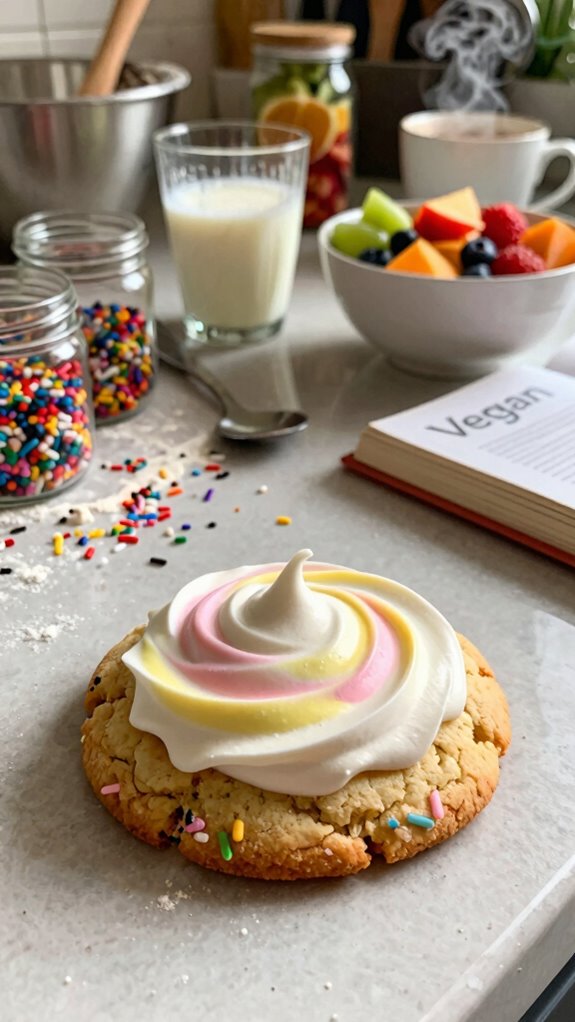
Pairing your vegan iced sugar cookies with complementary dishes can enhance the overall experience of your dessert spread.
I love serving them alongside fresh fruit salads and creamy dairy-free yogurt for a delightful contrast.
For snack ideas, try adding a platter of vegan cheese and crackers.
These dessert pairings create a balance that elevates the sweetness of the cookies while offering diverse flavors.
What drinks can I pair it with?

If you’re looking to elevate your vegan iced sugar cookies with the perfect beverage, I highly recommend a refreshing herbal tea or a glass of almond milk.
These drink suggestions create delightful flavor combinations that complement the sweetness of the cookies.
For a twist, consider pairing them with a vanilla almond latte, enhancing the vanilla notes beautifully. Enjoy experimenting!
Frequently Asked Questions
Can I Use Regular Eggs Instead of Aquafaba?
You can’t use regular eggs instead of aquafaba directly; they’re different egg substitutes. I’d suggest experimenting with egg substitutions while adjusting your recipe modifications, but the results may vary significantly from the original.
How Long Do the Cookies Stay Fresh?
Those cookies usually stay fresh for about a week! I recommend using airtight storage containers to keep them tasty. For extra freshness tips, consider adding a slice of bread to the container, too.
Is Aquafaba Easy to Make at Home?
Yes, making homemade aquafaba is easy! Just whip the liquid from canned chickpeas. The benefits are great—it’s an excellent egg replacer in baking. I love using it for light, fluffy textures in my recipes.
Can I Freeze the Cookies?
Absolutely, you can freeze the cookies! I wrap them tightly in plastic wrap, ensuring no air gets in. This method preserves the cookie texture, so they stay delicious when you defrost and enjoy them later.
Where Can I Buy Aquafaba?
I usually buy aquafaba at health food stores or online. Several brands offer it, but if you’re in a pinch, you can also use aquafaba substitutes like blended chickpeas or bean water from canned legumes.