I’ve always appreciated the simplicity of cookies, but brown butter shortbread has a unique charm that sets it apart. The rich, nutty flavor creates a delightful contrast with its tender texture. If you haven’t tried them yet, you’re in for a treat. I’ll guide you through the process and share some tips to elevate your cookie game. Just wait until you discover how easy these are to customize.
What kind of recipe is it?
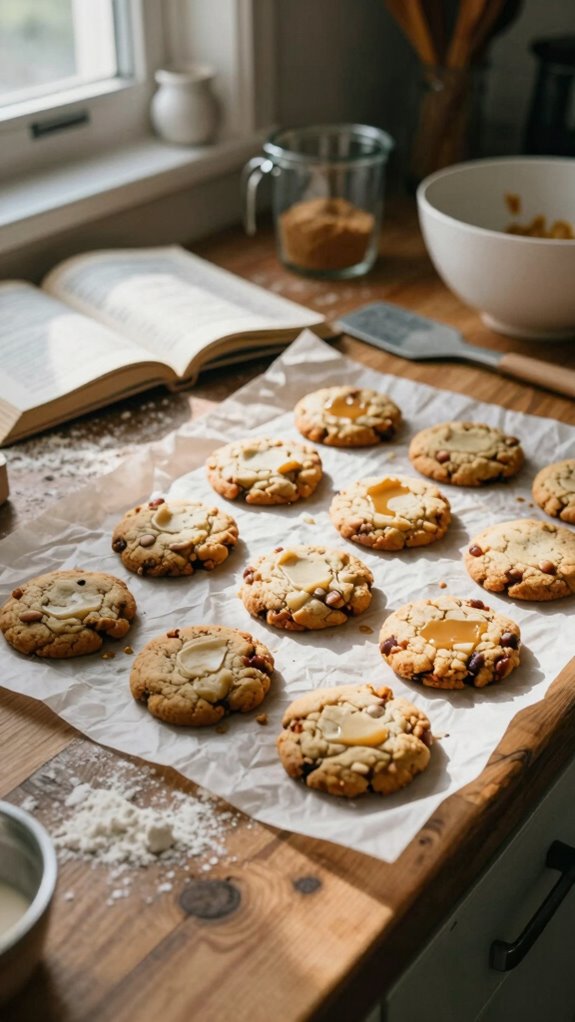
Brown Butter Shortbread Cookies are a delightful twist on the classic shortbread, featuring the nutty, rich flavor of browned butter that elevates their taste profile.
With a melt-in-your-mouth texture and a hint of sweetness, these cookies are perfect for both special occasions and everyday indulgence. They appeal to cookie lovers and baking enthusiasts alike, making them an ideal treat for gatherings, tea parties, or cozy evenings at home.
Baking these cookies is a rewarding experience that fills your kitchen with a warm, inviting aroma.
Preparation Time
| Attribute | Details |
|---|---|
| Difficulty of the Recipe | Easy |
| Preparation Time | 15 minutes |
| Number of Servings | Approximately 24 cookies |
Ingredients
| Ingredient | Quantity |
|---|---|
| Unsalted butter | 1 cup (226 grams) |
| Granulated sugar | 1/2 cup (100 grams) |
| Brown sugar | 1/2 cup (100 grams) |
| All-purpose flour | 2 cups (240 grams) |
| Salt | 1/2 teaspoon |
| Vanilla extract | 1 teaspoon |
| Optional: chocolate chips | 1/2 cup (90 grams) (if desired) |
This table outlines all the necessary ingredients along with their respective quantities for preparing Brown Butter Shortbread Cookies.
Essential Kitchen Equipment
| Tool/Equipment | Purpose | Alternative Option |
|---|---|---|
| Mixing Bowls (Large & Medium) | Used for mixing ingredients and separating different components during the baking process. | Any sturdy bowl, like a serving bowl. |
| Measuring Cups (Dry & Liquid) | Essential for accurately measuring flour, sugars, and other liquids required for the recipe. | Use a kitchen scale for precision if unavailable. |
| Measuring Spoons | Needed for measuring small quantities of ingredients like salt and vanilla extract. | A set of regular spoons can work in a pinch if measured carefully. |
| Stand Mixer or Hand Mixer | Makes the mixing process easier, especially for creaming butter and sugars together evenly. | Mixing by hand with a wooden spoon is a great workout! |
| Rubber Spatula | Used to scrape down the sides of bowls and incorporate ingredients without wasting any. | A wooden spoon or another type of spatula can suffice. |
| Wooden Spoon | Ideal for mixing and combining ingredients, especially thick cookie dough. | A sturdy plastic spoon can also do the job. |
| Baking Sheets (2-3) | Used for placing the cookie dough to bake in the oven. Multiple sheets allow for more batch processing. | Any flat baking pan can substitute if placed carefully in the oven. |
| Parchment Paper or Silicone Mats | Line the baking sheets to prevent sticking and ensure easy removal of cookies. | Greasing the baking sheet with butter or oil can work as an alternative. |
| Cookie Scoop or Spoon | Helps in portioning out the cookie dough to create uniform cookie sizes. | A regular tablespoon can be used to scoop dough. |
| Cooling Rack | Allows cookies to cool evenly after baking, preventing steam buildup. | A flat surface or wire rack from another appliance (like a toaster oven) can be used if necessary. |
| Oven Thermometer | Ensures that the oven is at the correct temperature for baking, improving results. | Preheating the oven for a longer time can help ensure it’s hot enough. |
Cooking Steps
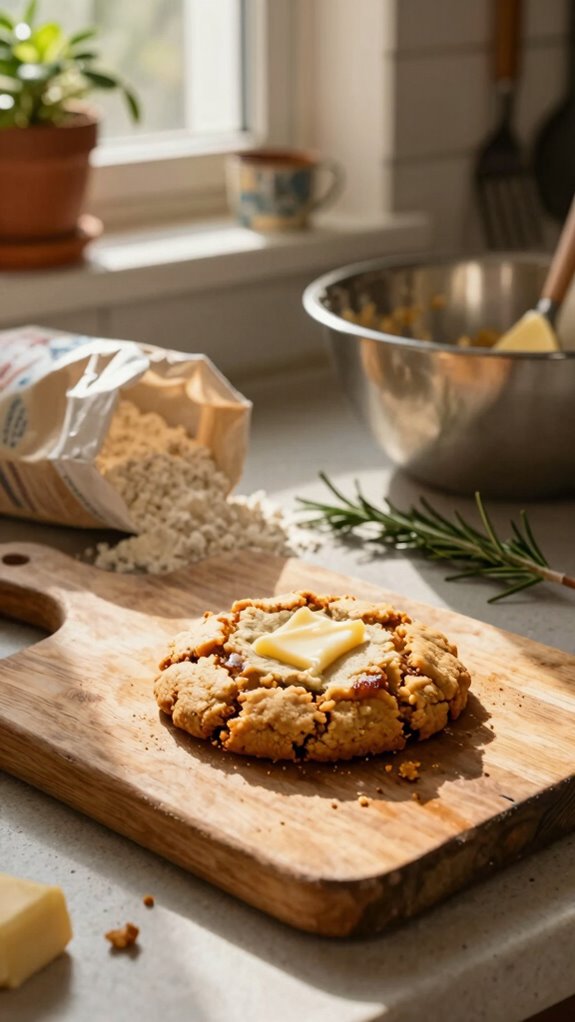
1. Mise en Place: Gather all ingredients; have 240 g (2 cups) all-purpose flour, 100 g (½ cup) granulated sugar, 100 g (½ cup) unsalted butter, 1 tsp vanilla extract, and a pinch of salt ready at room temperature.
2. Preheat Oven: Preheat your oven to 160 °C (320 °F) and position the oven rack in the center. If using a convection setting, reduce the temperature to 150 °C (300 °F).
3. Prepare Baking Sheets: Line two baking sheets (approximately 30 cm x 40 cm) with parchment paper or silicone mats. This will prevent the cookies from sticking.
4. Brown the Butter: In a medium saucepan over medium heat, add 100 g (½ cup) unsalted butter. Stir constantly until the butter melts and begins to foam.
Continue stirring until it turns a deep golden brown and has a nutty aroma (approximately 5-7 minutes). Remove from heat and let cool slightly.
5. Combine Dry Ingredients: In a large mixing bowl, whisk together 240 g (2 cups) all-purpose flour and a pinch of salt until well combined.
6. Mix Wet Ingredients: Once the browned butter has cooled slightly, add 100 g (½ cup) granulated sugar and 1 tsp vanilla extract to the bowl.
Use a stand mixer or hand mixer to cream the mixture on medium speed until it’s light and fluffy (about 2-3 minutes).
7. Incorporate Dry Ingredients: Gradually add the flour mixture to the butter mixture while mixing on low speed.
Mix until just combined – don’t overmix. The dough should be soft and slightly crumbly.
8. Portion the Dough: Using a cookie scoop or a tablespoon, portion out the cookie dough into uniform balls (about 30 g/1 oz each).
Place them evenly spaced on the prepared baking sheets.
9. Chill the Dough: For best results, refrigerate the cookie dough portions for at least 30 minutes. This helps the cookies retain their shape while baking.
10. Bake Cookies: Transfer the baking sheets to the preheated oven. Bake for 15-18 minutes, or until the edges are lightly golden and the centers remain slightly soft while retaining a pale color.
The scent of rich, nutty butter should fill the kitchen.
11. Cool Cookies: Once baked, remove the cookies from the oven and let them cool on the baking sheets for 5 minutes.
Then transfer them to a cooling rack to cool completely.
12. Check for Doneness: The cookies should feel firm on the edges and slightly soft in the center but will firm up as they cool.
Enjoy once cooled!
Variations
- Herb-Infused Shortbread: Add 1-2 tsp of dried rosemary or thyme to the flour mixture for a savory twist.
- Chocolate Chip Variation: Fold in 100 g (1 cup) of semi-sweet chocolate chips into the dough for a sweet addition.
- Gluten-Free Shortbread: Substitute 240 g (2 cups) all-purpose flour with a gluten-free flour blend for a gluten-free treat.
- Dairy-Free Delight: Replace unsalted butter with 100 g (½ cup) coconut oil or vegan butter for a dairy-free version.
- Vegan Shortbread: Use 100 g (½ cup) coconut oil and substitute the egg with 1 tbsp of ground flaxseed mixed with 2.5 tbsp water for a vegan adaptation.
- Citrus Zest Twist: Add the zest of 1 lemon or orange to the butter mixture for a fresh, citrusy flavor boost.
- Seasonal Spice: Incorporate 1 tsp of cinnamon or pumpkin spice into the dry ingredients for a warm, seasonal flavor.
- No-Bake Option: Combine the dough with 100 g (1 cup) crushed nuts and shape into bars, refrigerating until firm for a no-bake variation.
Tips on plating and presentation
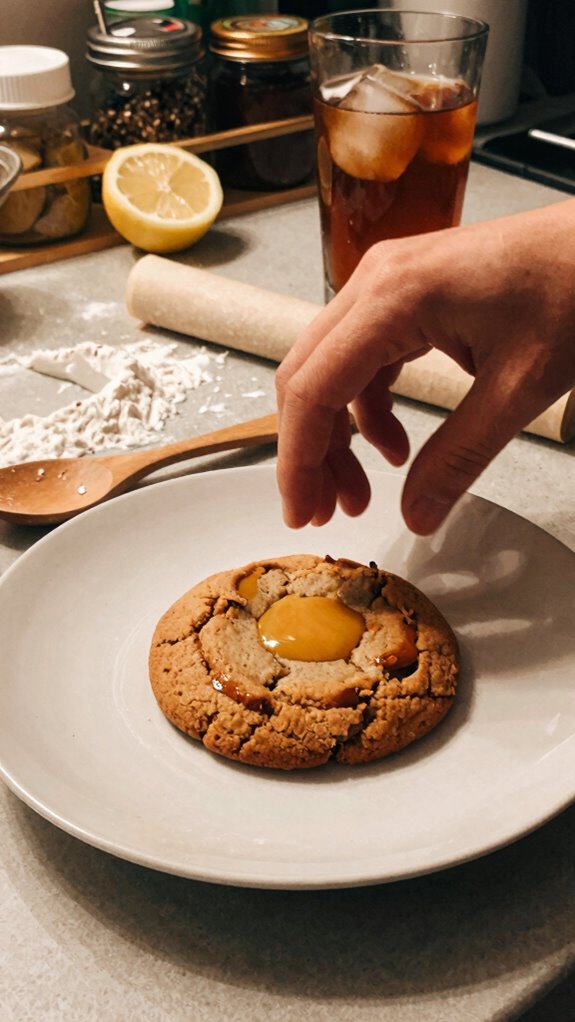
After exploring various delicious variations of Brown Butter Shortbread Cookies, let’s turn our attention to how to present these treats beautifully.
Utilize simple plating techniques, like stacking cookies in a rustic basket or using a white plate for contrast.
For presentation styles, consider garnishing with fresh herbs or a dusting of powdered sugar. These touches elevate your cookies and make them eye-catching!
What other dishes can I pair it with?
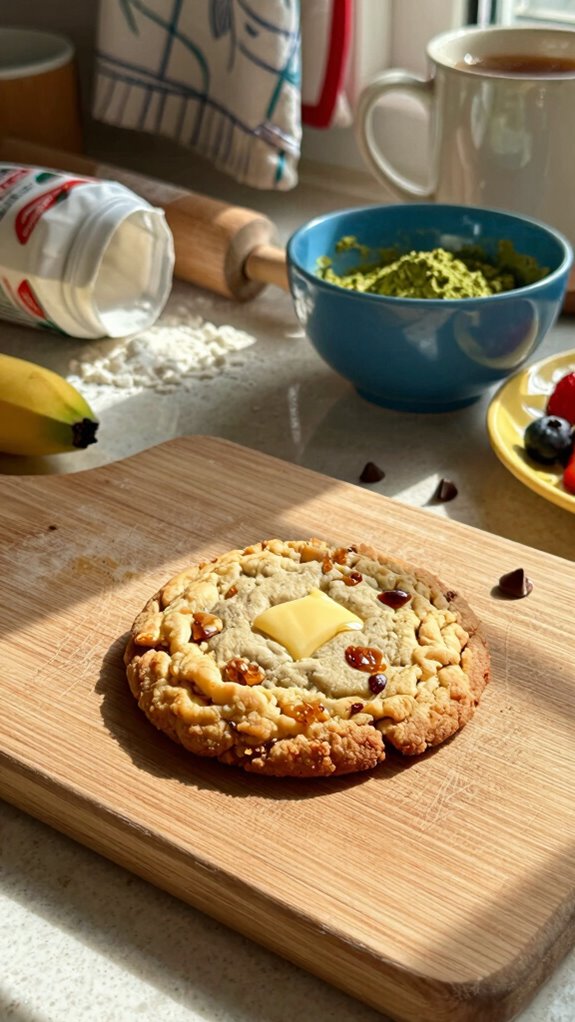
What can you serve alongside Brown Butter Shortbread Cookies to enhance your dessert experience?
I’ve found that pairing them with a scoop of vanilla ice cream or a dollop of fresh whipped cream really elevates the flavors.
They also make fantastic meal complements to a cheese platter or a charcuterie board, offering delightful dessert pairings that surprise your guests and keep them coming back for more.
What drinks can I pair it with?
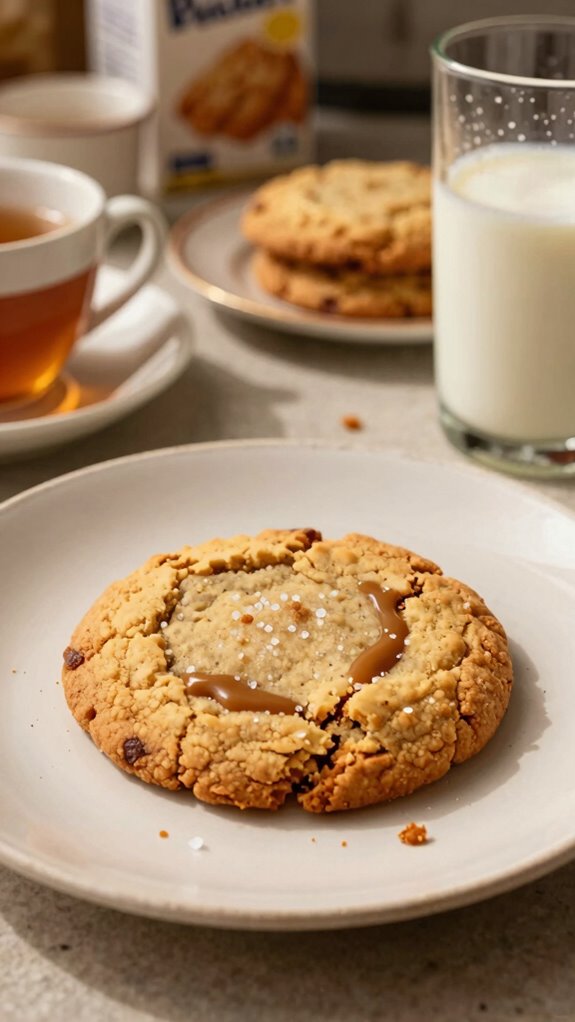
While enjoying my Brown Butter Shortbread Cookies, I often find that a well-chosen drink can truly enhance the experience.
For coffee pairings, a smooth latte or a rich espresso perfectly complements the buttery notes.
If I’m in the mood for tea selections, a lightly flavored chamomile or a robust black tea really elevates the flavors.
The right drink makes every bite even better!
Frequently Asked Questions
Can I Use Margarine Instead of Butter for This Cookie Recipe?
Sure, I’ve used margarine in cookie recipes before. Its consistency works well as an alternative to butter, but keep in mind that the flavor might differ slightly. Experiment and see what you prefer!
How Can I Store Leftover Brown Butter Shortbread Cookies?
I store leftover cookies in airtight cookie containers at room temperature for a few days. For longer storage, I freeze cookies in freezer-safe bags. They stay fresh and delicious, ready to enjoy whenever I want.
What Makes Brown Butter Different From Regular Butter?
Brown butter has a distinct nutty flavor because of a cooking technique that involves browning the milk solids. I love how it adds depth and richness to recipes, transforming ordinary butter into something extraordinary.
Do I Need to Chill the Dough Before Baking?
Yes, I chill the dough before baking. Chilling benefits the dough texture, making it firmer and promoting better flavor development. Trust me, a little patience results in cookies that are truly worth the wait!
Can I Add Chocolate Chips to the Brown Butter Shortbread Cookies?
Absolutely, I love adding chocolate chips! The chocolate chip variations create a delightful flavor balance with the nuttiness of brown butter. It’s a delicious twist that elevates the cookies to another level. Enjoy experimenting!