When I first tried making gluten-free gingerbread cookies with almond flour, I was curious about how they’d turn out. The nutty flavor intrigued me, and I wondered if they could capture the festive essence of traditional gingerbread. As the warm spices filled my kitchen, I realized there’s more to these cookies than meets the eye. Let me share the secrets behind their delightful texture and taste that just might surprise you.
What kind of recipe is it?
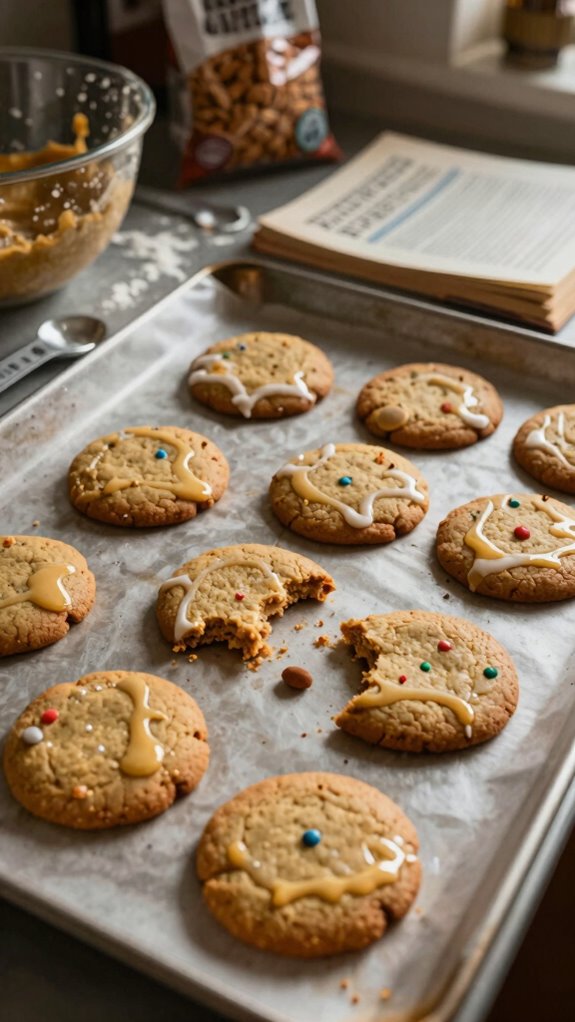
The Gluten-Free Gingerbread Cookie is a delightful treat that caters to those with gluten sensitivities or celiac disease.
This festive cookie boasts a rich blend of warm spices such as ginger, cinnamon, and nutmeg, offering a nostalgic flavor perfect for the holiday season. Its soft and chewy texture, combined with a crisp exterior, makes it a joy to munch on.
Ideal for families, bakeries, or anyone looking to enjoy traditional gingerbread without gluten, it’s a delicious way to include everyone in holiday celebrations.
Preparation Time
| Attribute | Details |
|---|---|
| Difficulty of the Recipe | Easy |
| Preparation Time | 20 minutes |
| Number of Servings | Approximately 24 cookies |
Ingredients
| Ingredient | Quantity |
|---|---|
| Gluten-free all-purpose flour | 2 ½ cups |
| Brown sugar | ¾ cup |
| Ground ginger | 2 teaspoons |
| Ground cinnamon | 1 teaspoon |
| Ground nutmeg | ½ teaspoon |
| Baking soda | 1 teaspoon |
| Salt | ¼ teaspoon |
| Unsalted butter (softened) | ¾ cup |
| Honey or molasses | ½ cup |
| Vanilla extract | 1 teaspoon |
| Egg | 1 large |
| Granulated sugar (for rolling) | ½ cup |
This table lists all the necessary ingredients along with their respective quantities required to make Gluten-Free Gingerbread Cookies.
Essential Kitchen Equipment
| Tool/Equipment | Purpose | Alternative Option |
|---|---|---|
| Mixing Bowls (Large & Medium) | Used to combine dry ingredients and wet ingredients separately before mixing. | Any large, heat-safe bowl can be used, such as a casserole dish. |
| Measuring Cups (Dry & Liquid) | For accurately measuring flour, sugar, honey/molasses, and liquids. | Use scaled kitchen containers, like yogurt cups or mugs for liquid measurements. |
| Measuring Spoons | For measuring smaller quantities of spices and baking soda accurately. | Similar to measuring cups, small cups or spoons can be used for rough measurements. |
| Stand Mixer or Hand Mixer | To thoroughly mix the cookie dough, ensuring all ingredients are well incorporated. | A whisk can be used for mixing by hand, though it may take longer. |
| Rubber Spatula | Helpful for scraping the sides of the bowl to ensure all ingredients are mixed properly. | A wooden spoon or any sturdy spoon can work in a pinch. |
| Wooden Spoon | Useful for stirring the batter together or incorporating dry ingredients into wet ingredients. | Any sturdy spoon can suffice, but wooden spoons are easier to clean. |
| Baking Sheets (2-3) | For placing cookies on while baking. Multiple sheets allow for batch cooking. | Use any flat, oven-safe trays; even aluminum foil can be used to line the trays. |
| Parchment Paper or Silicone Mats | Prevent cookies from sticking to the baking sheets and promote even baking. | Greasing the baking sheets generously can work as an alternative, though it’s less effective. |
| Cookie Scoop or Spoon | For portioning out uniform cookie dough onto the baking sheets. | Two spoons can be used to drop dough onto the pan if a cookie scoop isn’t available. |
| Cooling Rack | Allows cookies to cool evenly after baking, preventing sogginess. | A large plate can be used as a temporary cooling area, although circulation is limited. |
| Oven Thermometer | To ensure the oven is at the correct temperature for baking cookies. | A simple preheating method works, but it’s less precise than using a thermometer. |
This table outlines the essential kitchen equipment needed for making Gluten-Free Gingerbread Cookies, including their purpose and budget-friendly alternatives for each item.
Cooking Steps
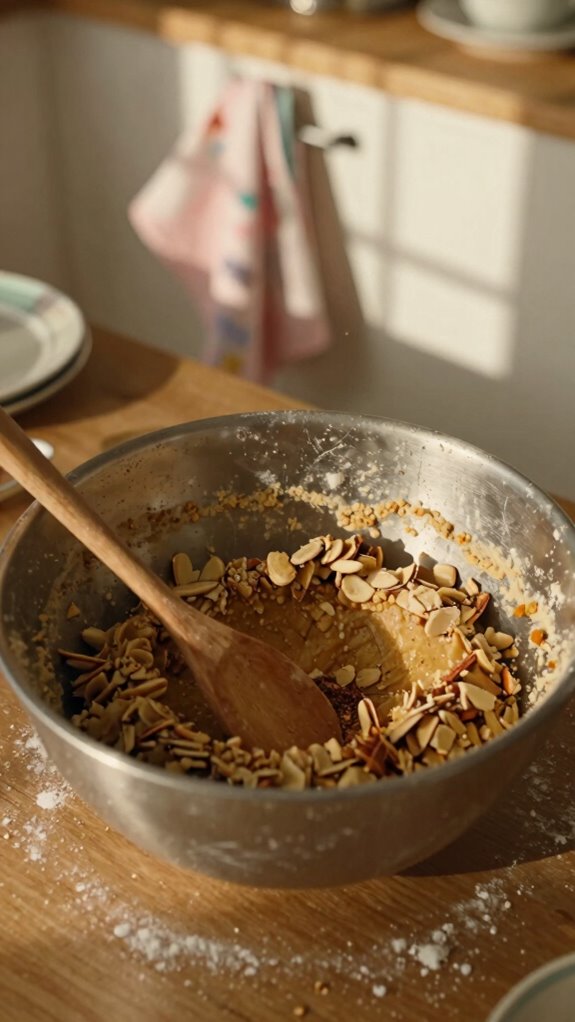
- Mise en Place: Gather all ingredients including 240 g (2 cups) gluten-free flour, 100 g (1/2 cup) brown sugar, 100 g (1/3 cup) molasses, 60 g (1/4 cup) unsalted butter (softened), 1 large egg, 2 tsp ground ginger, 1 tsp ground cinnamon, 1/2 tsp ground nutmeg, 1/2 tsp baking soda, and 1/4 tsp salt. Prepare mixing bowls, measuring cups, measuring spoons, and a stand mixer (or hand mixer).
- Preheat Oven: Preheat your oven to 175 °C (350 °F) and position the oven rack in the middle position. Prepare two baking sheets by lining them with parchment paper or silicone mats to prevent sticking.
- Mix Dry Ingredients: In a large mixing bowl, combine 240 g (2 cups) gluten-free flour, 2 tsp ground ginger, 1 tsp ground cinnamon, 1/2 tsp ground nutmeg, 1/2 tsp baking soda, and 1/4 tsp salt. Whisk together until well blended.
- Cream Butter and Sugar: In a medium mixing bowl, use a stand mixer (or hand mixer) to beat 60 g (1/4 cup) softened unsalted butter and 100 g (1/2 cup) brown sugar on medium speed for 2-3 minutes until light and fluffy.
- Incorporate Wet Ingredients: Add 100 g (1/3 cup) molasses and 1 large egg to the creamed mixture. Beat on low speed just until combined, scraping down the sides of the bowl as needed.
- Combine Mixtures: Gradually add the dry ingredients to the wet ingredients, mixing on low speed until a soft dough forms, about 1-2 minutes. The dough should look smooth and slightly sticky.
- Chill Dough: Cover the mixing bowl with plastic wrap and refrigerate the dough for at least 30 minutes. This helps the cookies maintain their shape during baking.
- Portion Dough: After chilling, use a cookie scoop or two spoons to portion out the dough, forming uniform balls about 45 g (3 tablespoons) each. Place the scooped dough onto the prepared baking sheets, spacing them 5 cm (2 inches) apart.
- Flatten Cookies: Gently flatten each dough ball to about 1 cm (1/3 inch) thickness using the palm of your hand or the bottom of a glass.
- Bake Cookies: Place the baking sheets in the preheated oven. Bake for 10-12 minutes, or until the cookies are firm around the edges and slightly soft in the center. The cookies should be lightly browned and aromatic.
- Cool Cookies: Remove the baking sheets from the oven and allow the cookies to cool on the sheets for 5 minutes. Transfer the cookies to a cooling rack to cool completely, which will maintain their texture and prevent sogginess.
- Storage: Once completely cooled, store the cookies in an airtight container at room temperature for up to one week. For longer storage, consider freezing the cookies.
Variations
- Maple Gingerbread: Substitute 100 g (1/3 cup) molasses with 100 g (1/3 cup) pure maple syrup for a lighter, more nuanced sweetness.
- Coconut Flour Cookies: Replace 240 g (2 cups) gluten-free flour with 120 g (1 cup) coconut flour; add extra egg for moisture as coconut flour absorbs more liquid.
- Vegan Gingerbread: Replace 60 g (1/4 cup) unsalted butter with 60 g (1/4 cup) coconut oil and substitute the egg with 60 g (1/4 cup) unsweetened applesauce for a dairy-free version.
- Almond Spice Gingerbread: Substitute half of the gluten-free flour (120 g or 1 cup) with almond flour for a rich, nutty flavor.
- Pumpkin Gingerbread: Add 120 g (1/2 cup) canned pumpkin puree to the wet ingredients for a seasonal twist and added moisture and flavor.
- Chocolate Chip Gingerbread: Fold 150 g (1 cup) gluten-free chocolate chips into the dough before chilling for a delightful combination of chocolate and spice.
- Chai-Spiced Gingerbread: Replace ground ginger and cinnamon with 1 tsp (5 g) chai spice mix for a warming, aromatic cookie reminiscent of chai tea.
- Grain-Free Gingerbread: Use a blend of 240 g (2 cups) almond flour and 60 g (1/2 cup) tapioca flour as a gluten-free, grain-free alternative to traditional flour.
Tips on plating and presentation
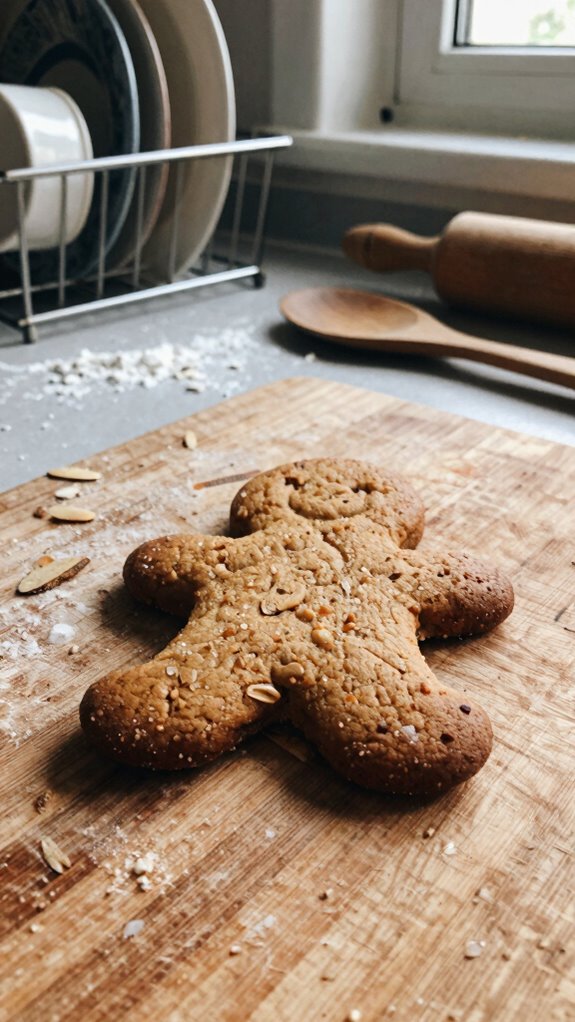
When you’re ready to serve your gluten-free gingerbread cookies, presentation can elevate them from simple treats to eye-catching delights.
I love using creative plating techniques, like stacking cookies or arranging them in festive shapes. Adding cookie garnishes, such as drizzled icing or a sprinkle of crushed nuts, makes all the difference.
These small touches truly enhance the overall appeal of your cookies!
What other dishes can I pair it with?
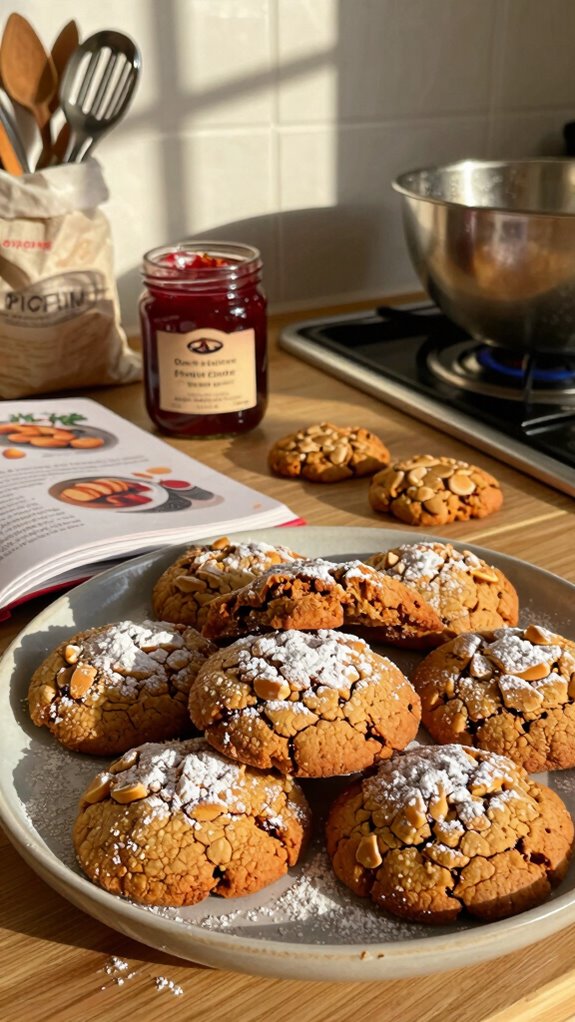
Along with presenting your gluten-free gingerbread cookies beautifully, think about what dishes can complement their warm, spicy flavors.
I love pairing them with festive meals like roasted sweet potatoes or cranberry sauce.
For dessert pairings, try serving them alongside a scoop of vanilla ice cream or a warm fruit compote.
These combinations enhance the cookies’ richness and create a delightful holiday experience!
What drinks can I pair it with?
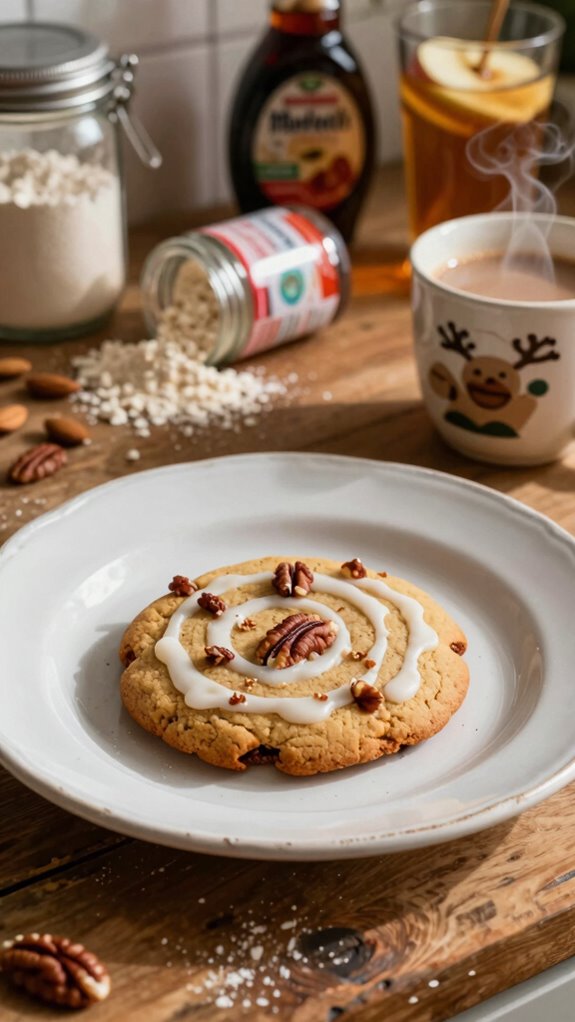
Since a warm cup of something delightful can elevate the experience of enjoying gluten-free gingerbread cookies, I often turn to spiced beverages.
A chai tea pairing brings out the cookies’ warmth, while a rich coffee suggestion, like cinnamon-infused brew, complements their sweetness beautifully.
Both options create a cozy atmosphere, making each bite even more enjoyable.
Give them a try!
Frequently Asked Questions
Can I Substitute Almond Flour With Another Flour?
Yes, you can substitute almond flour, but I’d recommend using coconut flour or another gluten-free option. Just remember, flour comparisons show that each substitute behaves differently in baking, so adjust your recipes accordingly!
How Do I Store Leftover Gingerbread Cookies?
I store leftover gingerbread cookies in an airtight container at room temperature. For longer freshness, I use proper storage techniques, like layering them with parchment paper to prevent sticking. They’ll stay delicious longer this way!
Are These Cookies Suitable for Diabetics?
These cookies can be suitable for diabetics if I manage the carbohydrate count. I always monitor my blood sugar levels, ensuring that any treats fit within my dietary plan. Moderation is key for delicious indulgence!
Can I Use Molasses Instead of Honey?
Yes, I’d definitely use molasses instead of honey! Molasses has great benefits, like added minerals and depth of flavor. Plus, it’s a fantastic honey alternative that can enhance your recipe beautifully. Give it a try!
How Long Do These Cookies Last?
These cookies last about a week if stored in an airtight container. For cookie freshness, I recommend keeping them in a cool, dry place. That’s one of my favorite baking tips for homemade treats!