When it comes to indulgent treats, I often find myself drawn to shortbread cookies dipped in dark chocolate. They strike the perfect balance between buttery crumb and rich flavor. With a few simple ingredients, you can create a delightful snack that’s ideal for sharing—or keeping to yourself. There’s more to these cookies than just their taste; let’s explore the details that can elevate your baking experience.
What kind of recipe is it?
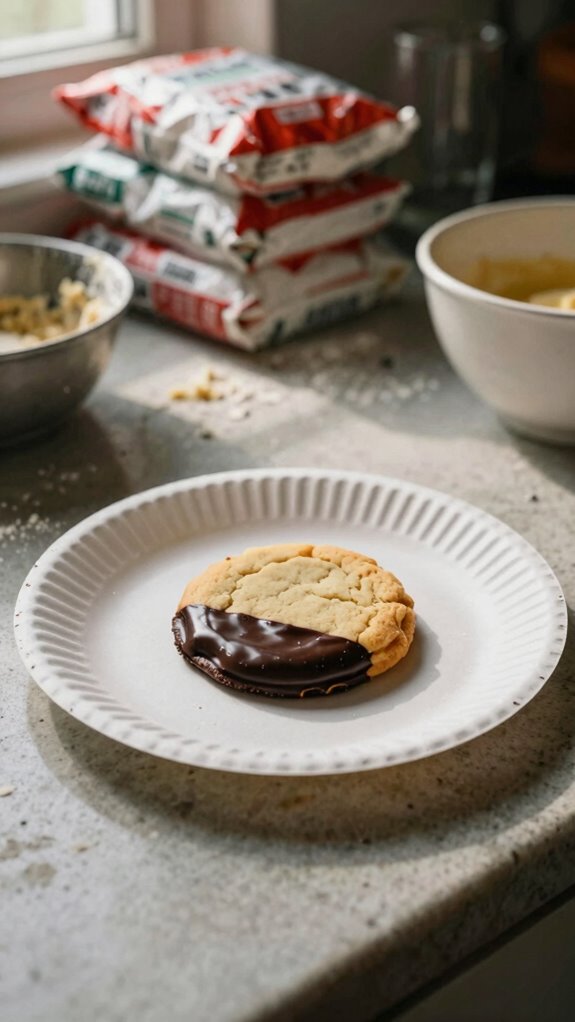
Shortbread cookies dipped in dark chocolate are a delightful treat that combines the rich, buttery flavor of classic shortbread with the indulgent allure of dark chocolate.
This recipe is simple yet elegant, making it perfect for both novice bakers and seasoned chefs seeking a sweet snack or dessert to impress guests.
The contrast between the crumbly texture of the shortbread and the smooth, decadent chocolate offers a satisfying experience for any palate.
Ideal for holiday gatherings or as a thoughtful homemade gift, these cookies are sure to please everyone who enjoys a touch of sophistication in their treats.
Preparation Time
| Recipe Detail | Description |
|---|---|
| Difficulty of the Recipe | Easy |
| Preparation Time | 15 minutes (total time may be longer depending on cooling time) |
| Number of Servings | Approximately 24 cookies |
Ingredients
| Ingredient | Quantity |
|---|---|
| Unsalted Butter | 1 cup (2 sticks, softened) |
| Granulated Sugar | ½ cup |
| Powdered Sugar | ¼ cup |
| All-Purpose Flour | 2 cups |
| Cornstarch | ¼ cup |
| Vanilla Extract | 1 teaspoon |
| Salt | ½ teaspoon |
| Dark Chocolate (for dipping) | 8 oz (about 1 cup, chopped) |
Essential Kitchen Equipment
| Tool/Equipment | Purpose | Alternative Option |
|---|---|---|
| Mixing Bowls (Large and Medium) | Used for combining ingredients and mixing dough. | Any large, heatproof bowls or containers. |
| Measuring Cups (Dry and Liquid) | Essential for accurately measuring ingredients for consistency in baking. | Use a kitchen scale for precise measurements. |
| Measuring Spoons | Necessary for measuring smaller amounts of ingredients like baking powder or salt. | Use regular tablespoons for approximate measurements. |
| Stand Mixer or Hand Mixer | Provides efficient mixing of butter and sugars to create a well-blended dough. | A whisk or wooden spoon (though it requires more effort). |
| Rubber Spatula | Used to scrape down the sides of bowls to ensure all ingredients are incorporated. | A regular spoon can work, but a spatula is more effective. |
| Wooden Spoon | Helpful in mixing ingredients, especially thicker mixtures like cookie dough. | A sturdy plastic or metal spoon can be a good substitute. |
| Baking Sheets (2-3) | Provide a surface for baking cookies; multiple sheets allow for batch baking. | Use any flat, oven-safe tray or shallow dish. |
| Parchment Paper or Silicone Mats | Prevent cookies from sticking to baking sheets and aid in even baking. | Grease the baking sheets if parchment or silicone is unavailable. |
| Cookie Scoop or Spoon | Ensures evenly sized cookies for uniform baking. | Use two teaspoons to portion out the dough instead. |
| Cooling Rack | Allows cookies to cool properly and prevents sogginess from steam. | A simple platter can work, but it won’t provide airflow. |
| Oven Thermometer | Ensures that your oven is at the correct temperature for even baking. | If unavailable, test with an oven-safe thermometer or adjust baking time accordingly based on your oven’s behavior. |
Cooking Steps
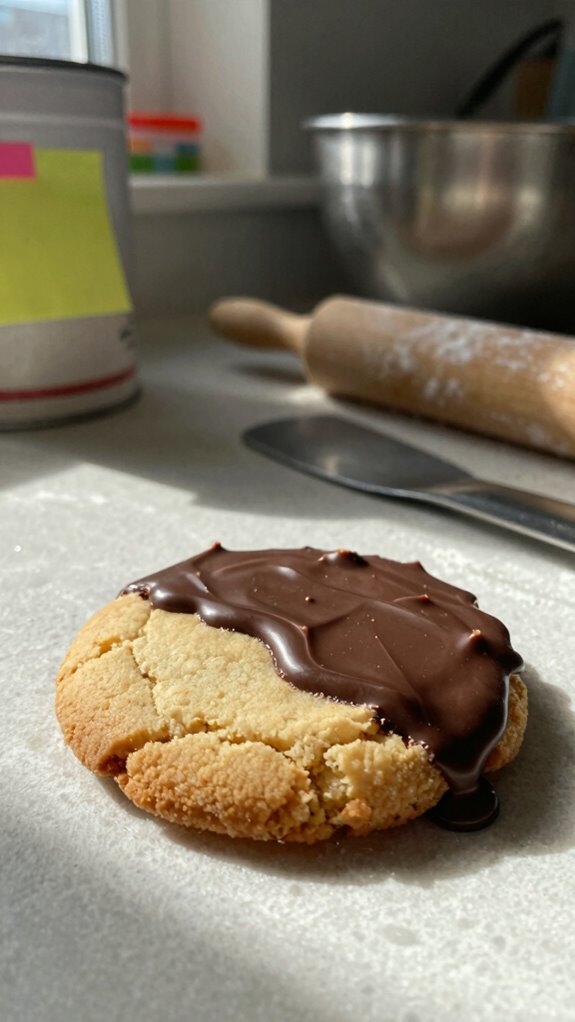
1. Mise en Place: Gather and measure the following ingredients: 225 g (1 cup) unsalted butter (room temperature), 135 g (2/3 cup) powdered sugar, 1 tsp vanilla extract, 250 g (2 cups) all-purpose flour, and 50 g (1/2 cup) cornstarch. Prepare 250 g dark chocolate for dipping.
2. Preheat Oven: Preheat the oven to 160 °C (325 °F) and position the oven rack in the middle.
3. Pan Preparation: Line two baking sheets (approximately 40 x 30 cm (15 x 12 inches)) with parchment paper or silicone baking mats.
4. Mix Ingredients: In a large mixing bowl, use a stand mixer fitted with the paddle attachment set to medium speed to cream together 225 g softened butter and 135 g powdered sugar until light and fluffy, about 3-5 minutes.
Scrape the bowl as needed.
5. Add Flavoring: Add 1 tsp vanilla extract to the mixture and beat until fully incorporated.
6. Incorporate Dry Ingredients: Gradually add 250 g all-purpose flour and 50 g cornstarch to the butter mixture.
Mix at low speed until just combined, ensuring not to overmix.
7. Shape Cookies: Use a cookie scoop (about 1 tablespoon capacity) to portion the dough onto the prepared baking sheets, spacing each cookie about 5 cm (2 inches) apart.
8. Bake: Bake in the preheated oven for 15-20 minutes, or until the edges are lightly golden and the centers still look slightly soft.
The aroma should be buttery and slightly sweet.
9. Cool: Remove the baking sheets from the oven, and let the cookies Cool on the sheets for 5 minutes.
Then, transfer them to a cooling rack to cool completely.
10. Melt Chocolate: In a heatproof bowl over a pot of simmering water (double boiler), melt the prepared 250 g dark chocolate, stirring occasionally.
Ensure the temperature doesn’t exceed 45 °C (113 °F).
11. Dip Cookies: Once the cookies are completely cool, dip half of each cookie into the melted chocolate.
Allow excess chocolate to drip off and return the dipped cookies to the parchment-lined baking sheets.
12. Set Chocolate: Let the chocolate set at room temperature, or for quicker results, place the cookies in the refrigerator for about 15 minutes until the chocolate has hardened.
13. Store: Once the chocolate has set, transfer cookies to an airtight container.
They can be stored at room temperature for up to one week.
Variations
- Lemon Zest Shortbread: Add 1 tbsp (15 ml) of freshly grated lemon zest to the dough for a bright citrus flavor.
- Almond Flour Variation: Substitute 125 g (1 cup) of all-purpose flour with almond flour for a gluten-free option.
- Cocoa Shortbread: Replace 50 g (1/2 cup) of all-purpose flour with 50 g (1/2 cup) of unsweetened cocoa powder for a rich chocolate flavor in the cookies.
- Vegan Shortbread: Use 225 g (1 cup) coconut oil instead of butter and replace powdered sugar with 135 g (2/3 cup) powdered cane sugar to make the recipe dairy-free and vegan.
- Matcha Dipped Cookies: Add 2 tsp (10 g) of matcha powder to the flour mixture for a unique earthy flavor, and dip in white chocolate instead of dark.
- Spiced Shortbread: Incorporate 1 tsp (5 g) of ground cinnamon and a pinch of nutmeg into the dough for a warm, spicy note perfect for fall.
- Chocolate Chip Shortbread: Fold in 100 g (1/2 cup) of dark chocolate chips into the dough before baking for a delightful texture contrast.
- Nutty Hazelnut Variation: Replace 50 g (1/2 cup) of cornstarch with finely ground hazelnuts for a nutty flavor that complements the shortbread base.
Tips on plating and presentation
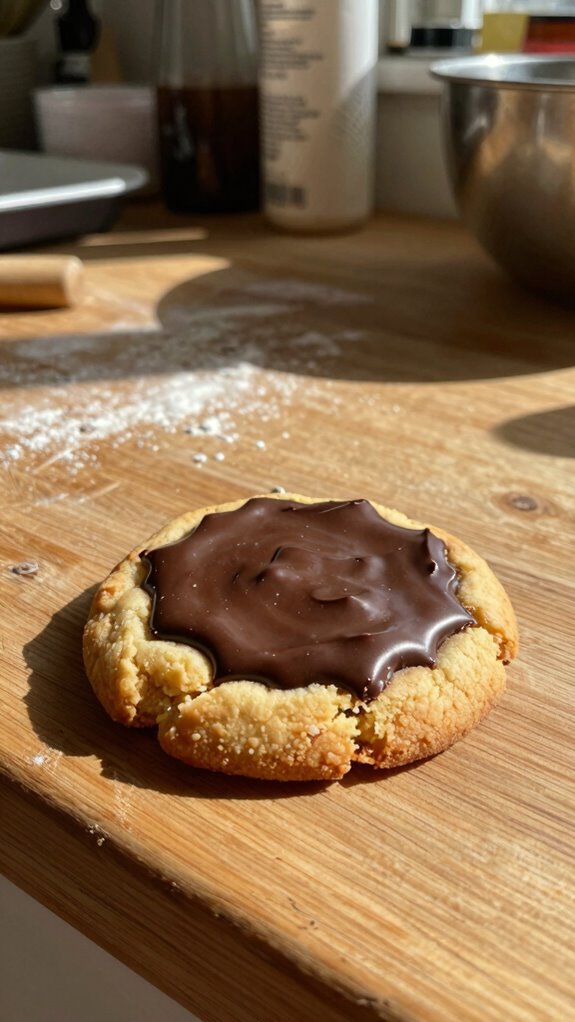
After trying out the various shortbread cookie variations, it’s time to think about how to serve them beautifully.
I love using simple plating techniques like stacking cookies or arranging them in a circle.
For presentation styles, consider adding fresh berries or a drizzle of chocolate on the plate.
These small touches make each bite feel special and elevate the entire dessert experience.
What other dishes can I pair it with?
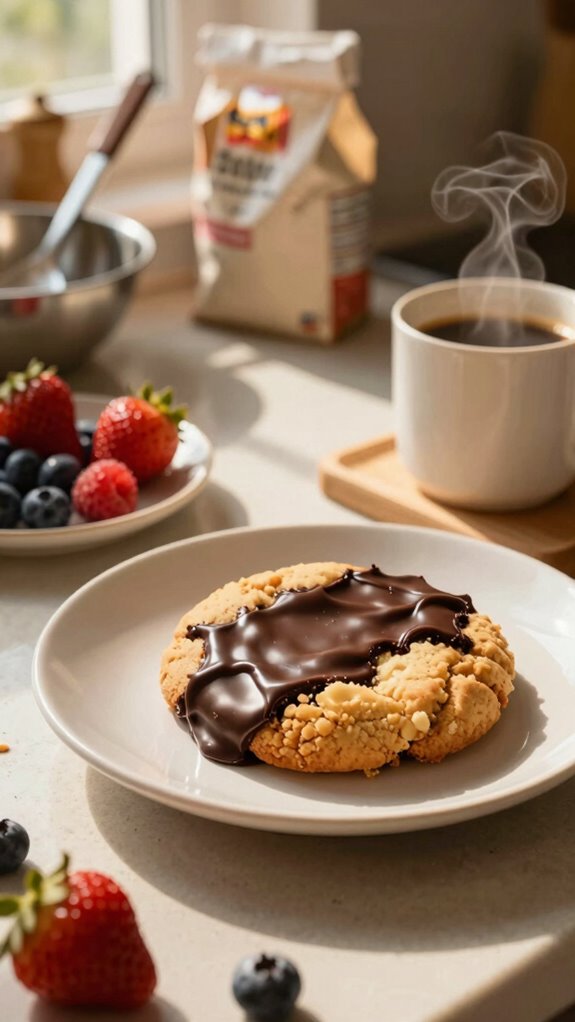
While shortbread cookies dipped in dark chocolate pair beautifully with a variety of dishes, I particularly love serving them alongside a rich cup of espresso or a smooth cappuccino.
For a more adventurous twist, I enjoy combining them with savory snacks like cheese or nuts. These dessert pairings elevate the experience, creating a delightful balance that enhances both the sweet and savory flavors!
What drinks can I pair it with?
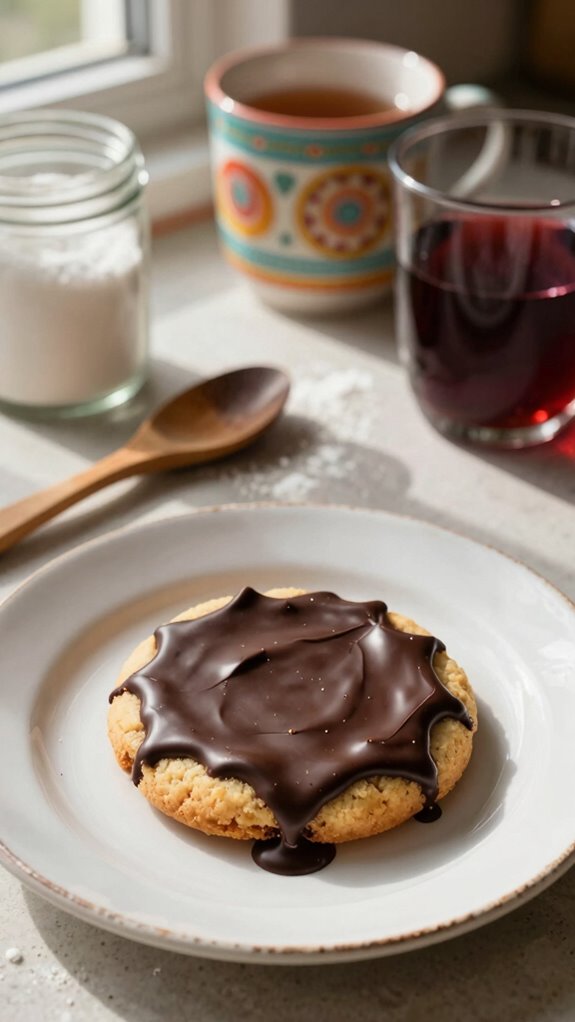
When it comes to drinks that complement shortbread cookies dipped in dark chocolate, I can’t help but recommend a few favorites.
For coffee pairings, a rich espresso works wonders, enhancing the chocolate’s depth.
If you’re a tea lover, consider a robust black tea to balance the sweetness.
Both options elevate your treat, making each bite even more indulgent and satisfying.
Frequently Asked Questions
Can I Use Milk Chocolate Instead of Dark Chocolate?
Absolutely, you can use milk chocolate instead of dark chocolate! It’ll give a sweeter flavor that caters to different flavor preferences. I often switch things up for variety, and it turns out delicious every time.
How Long Do Shortbread Cookies Last in Storage?
Shortbread cookies typically last about two weeks when stored properly. To extend their shelf life, I recommend keeping them in an airtight container at room temperature. This way, they stay fresh and delicious for longer!
Are There Gluten-Free Options for Shortbread Cookies?
Absolutely! I’ve experimented with gluten-free flours like almond and coconut, which work wonderfully. For baking substitutes, using cornstarch or gluten-free blends can yield a delicious, crumbly texture that’s just as satisfying as traditional shortbread.
What Should I Do if My Dough Is Crumbly?
If my dough’s crumbly, I’ll add a teaspoon of cold water or softened butter. This helps achieve that perfect shortbread consistency and improves the cookie texture, making them deliciously tender and melt-in-your-mouth delightful.
Can I Freeze the Cookies After Baking Them?
Yes, I can freeze the cookies after baking them. I use proper freezing techniques and airtight containers for cookie storage. This way, they maintain their deliciousness and freshness until I’m ready to enjoy them again!