I’ve been experimenting with gluten-free baking lately, and I stumbled upon a recipe for Italian cookies made with almond flour. They strike a lovely balance between crispy and chewy, ideal for those avoiding gluten. Infused with almond, lemon, and anise, they offer a delightful flavor profile. If you’re curious about how to make these treats and what to pair them with, there’s definitely more to explore.
What kind of recipe is it?
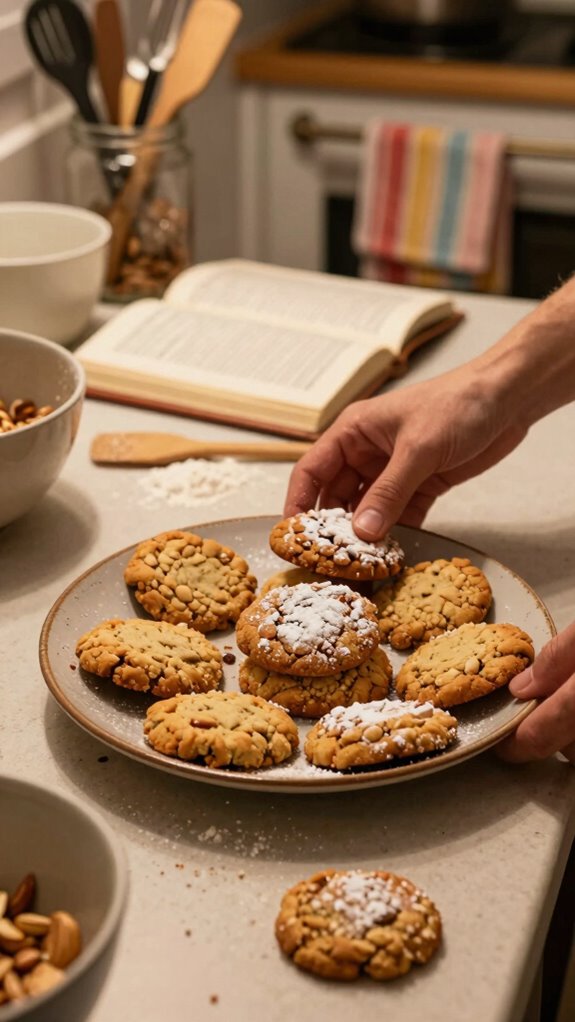
The Gluten-Free Italian Cookie is a delightful treat that captures the essence of traditional Italian baking while accommodating those with gluten sensitivities.
These cookies are typically delicate, with a crispy exterior and a chewy interior, often infused with flavors such as almond, lemon, or anise. Their unique texture and rich taste make them a perfect accompaniment to coffee or tea.
This recipe is aimed at health-conscious individuals and anyone looking to indulge in a classic dessert without compromising dietary needs.
Preparation Time
| Recipe Attribute | Details |
|---|---|
| Difficulty of the Recipe | Easy |
| Preparation Time | 20 minutes |
| Number of Servings | 24 cookies |
Ingredients
| Ingredient | Quantity |
|---|---|
| Almond flour | 2 cups |
| Powdered sugar | 1 cup |
| Large eggs | 2 |
| Vanilla extract | 1 teaspoon |
| Baking powder | 1 teaspoon |
| Salt | 1/4 teaspoon |
| Lemon zest (optional) | 1 teaspoon |
| Chopped nuts (optional) | 1/2 cup |
| Chocolate chips (optional) | 1/2 cup |
Essential Kitchen Equipment
| Tool/Equipment | Purpose | Alternative Option |
|---|---|---|
| Mixing Bowls (Large and Medium) | Used for combining dry and wet ingredients separately. | Any large bowl or pot can work in a pinch. |
| Measuring Cups (Dry and Liquid) | Ensures accurate measurement of ingredients. | Use a standard cup or a converted measuring system (e.g., using a mug) as a rough guide. |
| Measuring Spoons | For precise measurement of small quantities of ingredients. | Use a standard teaspoon or tablespoon as an alternative. |
| Stand Mixer or Hand Mixer | Mixes batter to a consistent smooth texture. | A whisk or fork can be used by hand for mixing, though it requires more effort. |
| Rubber Spatula | Helps scrape down the sides of bowls and fold ingredients. | A wooden spoon or any flat-edged utensil can be substituted. |
| Wooden Spoon | Stirs the batter or dough effectively. | Any spoon can work, although wooden spoons are preferred for mixing. |
| Baking Sheets (2-3) | Provides a flat surface for baking cookies in the oven. | Use the back of a roasting pan or any flat, oven-safe surface. |
| Parchment Paper or Silicone Mats | Prevents cookies from sticking to baking sheets. | Lightly greasing the baking sheet with oil or butter can be an alternative. |
| Cookie Scoop or Spoon | Helps portion out cookie dough evenly for consistent baking. | Use a regular spoon to drop dough onto the baking sheet, though sizes may vary. |
| Cooling Rack | Allows cookies to cool evenly after baking, preventing sogginess. | A plate can work, but ensure cookies are spaced out to cool properly. |
| Oven Thermometer | Checks if the oven temperature is accurate for baking. | An in-built oven temperature gauge can be used, but a thermometer is more reliable for accuracy. |
Cooking Steps

1. Begin with mise en place by measuring all ingredients accurately: 240 g (2 cups) of gluten-free flour blend, 150 g (3/4 cup) of sugar, 1 tsp of baking powder, 1/2 tsp of salt, 100 g (1/2 cup) of unsalted butter at room temperature, 1 large egg, and 1 tsp of vanilla extract.
Prepare your workspace and tools, ensuring your mixing bowls, measuring spoons, and spatula are clean and at hand.
2. Preheat the oven to 180°C (350°F). Position the oven rack in the center. Prepare 2 baking sheets by lining them with parchment paper or silicone mats to prevent sticking.
3. In a large mixing bowl, combine 240 g (2 cups) of gluten-free flour, 1 tsp of baking powder, and 1/2 tsp of salt.
Whisk the dry ingredients together until evenly mixed, ensuring there are no clumps.
4. In a separate medium mixing bowl, using a stand mixer fitted with a paddle attachment or a hand mixer, beat 100 g (1/2 cup) of unsalted butter and 150 g (3/4 cup) of sugar on medium speed until the mixture is light and fluffy, approximately 3-4 minutes.
5. Add 1 large egg and 1 tsp of vanilla extract to the butter and sugar mixture.
Continue mixing on low speed until fully blended, approximately 1-2 minutes.
6. Gradually incorporate the dry ingredients into the wet mixture.
Start mixing on low speed until just combined, about 1 minute. Use a rubber spatula to scrape down the sides of the bowl and fold any remaining flour into the batter until homogenous.
Don’t overmix.
7. Using a cookie scoop or a spoon, portion out the dough onto the prepared baking sheets, spacing them at least 5 cm (2 inches) apart to allow for spreading.
Aim for uniform sizing to ensure even baking.
8. Bake the cookies in the preheated oven at 180°C (350°F) for 10-12 minutes, or until the edges are lightly golden and the centers appear set.
The cookies should have a pleasant aroma and a light golden color.
9. Once baked, remove the cookies from the oven, and allow them to cool on the baking sheets for 5 minutes.
Then transfer them to a cooling rack to cool completely. Cookies should feel firm to the touch upon cooling but still slightly soft in the center.
10. Allow the cookies to rest on the cooling rack for at least 15 minutes.
This resting time will help enhance their texture and flavor.
Enjoy or store in an airtight container at room temperature for up to a week.
Variations
- Chocolate Chip Delight: Fold in 150 g (1 cup) of dairy-free chocolate chips for a rich, sweet addition.
- Nutty Almond Variation: Substitute 50 g (1/2 cup) of gluten-free flour with ground almonds for a nutty flavor and added protein.
- Citrus Zest Infusion: Add the zest of one lemon or orange for a refreshing, citrusy twist in flavor.
- Chia Seed Protein Boost: Mix in 30 g (1/4 cup) of chia seeds for added texture and a source of omega-3 fatty acids.
- Vegan Cookie Option: Replace the egg with 60 g (1/4 cup) of unsweetened applesauce and use dairy-free butter for a vegan-friendly version.
- Spicy Ginger Snaps: Incorporate 1 tsp of ground ginger and 1/2 tsp of cinnamon for a warming, spiced variation perfect for fall.
- Seasonal Pumpkin Spice: Add 120 g (1/2 cup) of pumpkin puree and 1 tsp of pumpkin spice to create a festive, autumn-inspired treat.
- Air Fryer Cookies: Prepare the dough as directed and cook in an air fryer at 160°C (320°F) for 8-10 minutes for a quick and healthier method.
Tips on plating and presentation
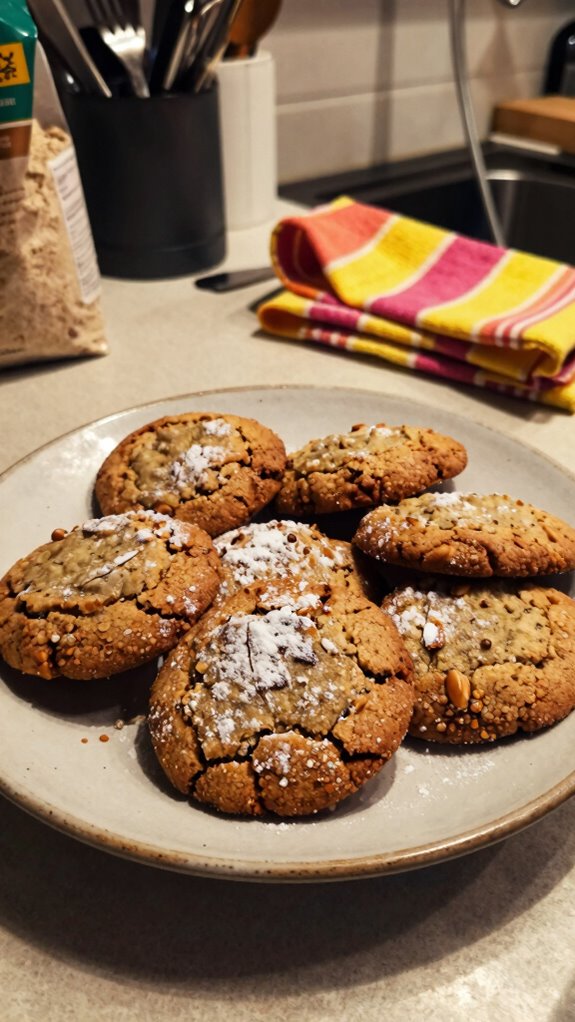
How can I make my gluten-free Italian cookies look as delightful as they taste?
I love using simple plating techniques like stacking cookies or arranging them in a colorful dish.
Adding dessert garnishes, such as fresh berries or a sprig of mint, elevates the presentation.
Drizzling a bit of melted chocolate enhances visual appeal while adding an extra touch of indulgence.
What other dishes can I pair it with?
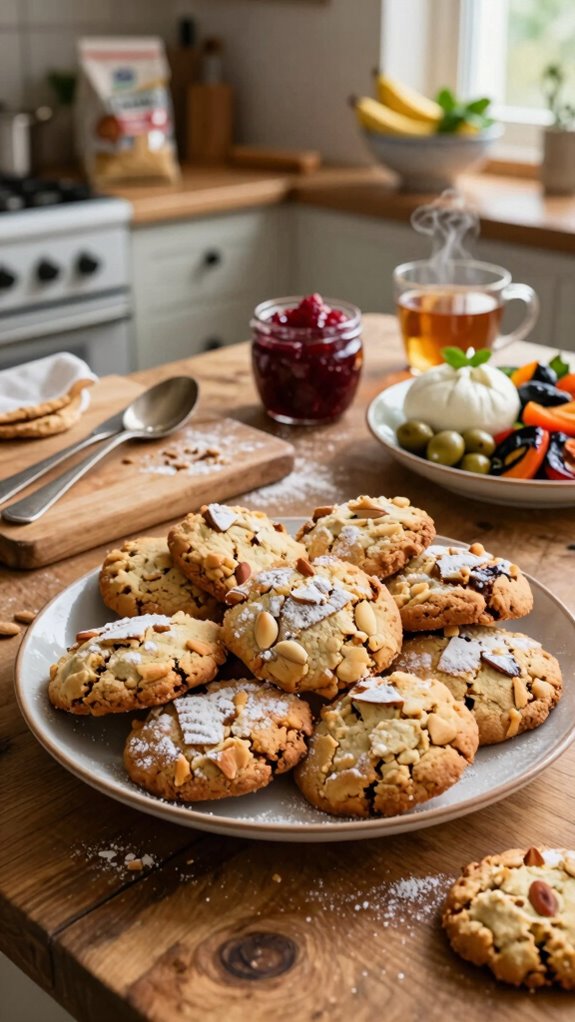
Gluten-free Italian cookies aren’t just a treat on their own; they can be a delightful addition to a variety of dishes.
For great cookie pairings, try serving them with a scoop of gelato or as a garnish for fruit salads.
You can also crumble them over yogurt for a quick dessert idea that’s both indulgent and light. Enjoy experimenting with different combinations!
What drinks can I pair it with?
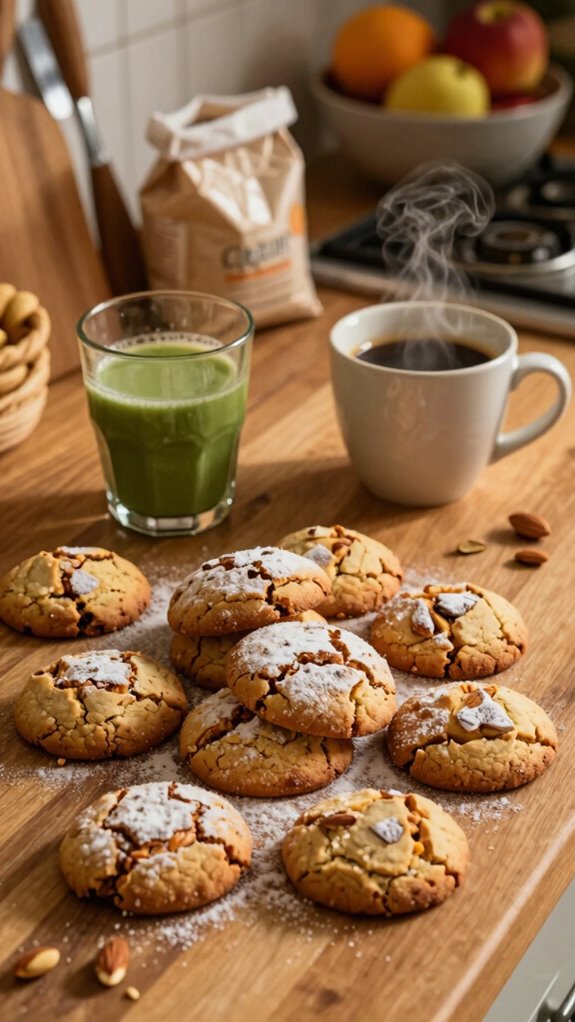
What drinks can elevate the experience of enjoying gluten-free Italian cookies?
I love pairing them with a rich espresso or a creamy latte for the perfect coffee pairings.
For a more indulgent touch, dessert wines like Vin Santo enhance the almond flavor beautifully.
Both options complement the sweetness of the cookies, making each bite even more delightful.
Give them a try!
Frequently Asked Questions
Can I Substitute Almond Flour With Another Gluten-Free Flour?
Absolutely! I’ve used gluten-free substitutes like coconut flour or oat flour. Just remember, they’ll change the baking texture, so you might need to adjust liquids or ratios for the best results. Happy baking!
How Do I Store Leftover Cookies Properly?
I usually store leftover cookies in an airtight container at room temperature. For longer freshness, I refrigerate them. Avoiding moisture is key; consider separating layers with parchment paper to maintain their delightful texture and flavor!
Are These Cookies Suitable for Diabetics?
I find these cookies can be suitable for diabetics since almond flour typically has a lower glycemic index. However, always watch your portion sizes to manage blood sugar effectively. It’s best to consult a healthcare professional too.
Can I Add Chocolate Chips to the Recipe?
Absolutely, I love adding chocolate chips! They enhance the cookie texture and bring delicious chocolate flavor. It’s a perfect combination that makes the cookies even more delightful. Give it a try; you won’t regret it!
What Is the Nutritional Information for These Cookies?
The cookies typically have about 100 calories each, depending on the ingredients. I love how almond flour adds healthy fats and protein, making them a tasty treat while still providing some nutritional benefits!