I recently tried my hand at making Vegan Iced Sugar Cookies with Aquafaba Royal Icing, and I was pleasantly surprised by the results. The cookies are soft, buttery, and surprisingly easy to decorate with that glossy icing. What’s interesting is how adaptable this recipe can be, fitting various occasions and dietary needs. Curious about how to create the perfect batch or variations to impress your guests? Let’s explore further.
What kind of recipe is it?
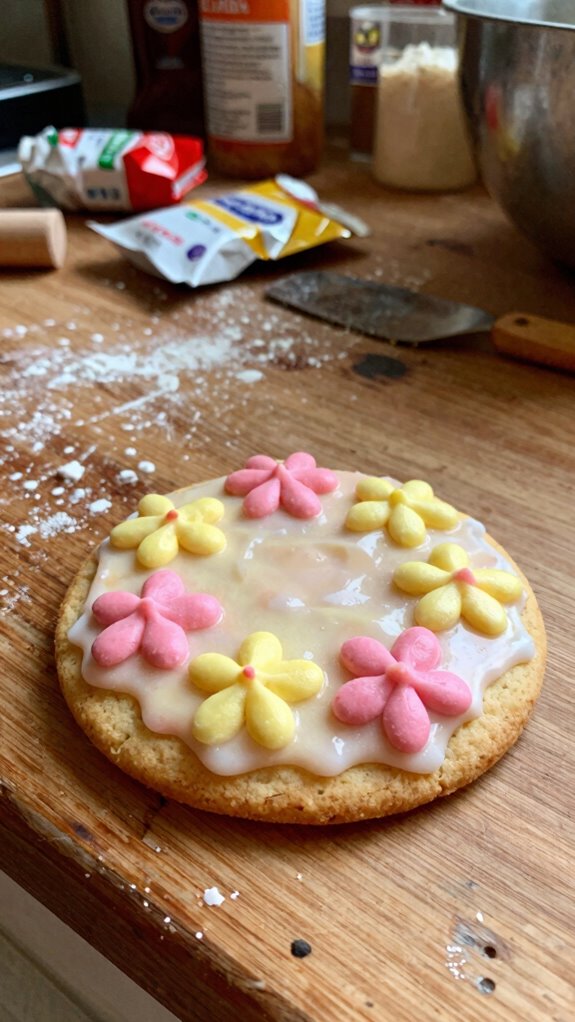
The Vegan Iced Sugar Cookie is a delightful, plant-based treat perfect for anyone craving a sweet indulgence without the use of animal products.
This recipe features a soft, buttery texture and a sweet, vanilla-flavored dough, topped with a vibrant, colorful icing that can be customized for any occasion.
Its appealing look and taste make it ideal for parties, holidays, or simply satisfying a sweet tooth.
This dish is perfect for vegans, those with dairy or egg allergies, and dessert lovers looking for a guilt-free treat!
Preparation Time
| Recipe Details | Information |
|---|---|
| Difficulty of the Recipe | Easy |
| Preparation Time | 15 minutes |
| Number of Servings | 24 cookies |
Ingredients
| Ingredient | Quantity |
|---|---|
| All-purpose flour | 2 ½ cups |
| Granulated sugar | 1 cup |
| Vegan butter | ½ cup (1 stick) |
| Baking powder | 1 teaspoon |
| Baking soda | ½ teaspoon |
| Salt | ¼ teaspoon |
| Vanilla extract | 1 teaspoon |
| Non-dairy milk | 3 tablespoons |
| Powdered sugar | 2 cups (for icing) |
| Almond milk (or non-dairy milk) | 2-3 tablespoons (for icing consistency) |
| Food coloring (optional) | As desired |
Notes:
- Ensure that the vegan butter is softened at room temperature for easier mixing.
- Adjust the amount of non-dairy milk in the icing to achieve your desired consistency.
Essential Kitchen Equipment
| Tool/Equipment | Purpose | Alternative Option |
|---|---|---|
| Mixing Bowls (Large and Medium) | Used for mixing dough ingredients and preparing icing. | Any large bowl or a sturdy pot can work. |
| Measuring Cups (Dry and Liquid) | Essential for accurately measuring dry and wet ingredients. | A kitchen scale can be used for dry ingredients. |
| Measuring Spoons | Necessary for measuring small quantities of ingredients like baking powder and vanilla extract. | teaspoon or tablespoon from your cutlery set. |
| Stand Mixer or Hand Mixer | Efficiently blends dough and icing ingredients to ensure smooth consistency. | Mixing by hand using a wooden spoon or whisk works, but requires more effort. |
| Rubber Spatula | Helps to scrape down sides of bowls and mix ingredients evenly. | A large spoon or your hands can be alternatives, though less efficient. |
| Wooden Spoon | Ideal for creaming the vegan butter and sugar together. | A sturdy plastic spoon or a fork can be used in a pinch. |
| Baking Sheets (2-3) | Needed for baking the cookies, allowing multiple trays for batch baking. | Any flat oven-safe pan can work temporarily. |
| Parchment Paper or Silicone Mats | Prevents cookies from sticking to the baking sheets while ensuring easy cleanup. | Dust the baking sheets with flour or spray with non-stick cooking spray. |
| Cookie Scoop or Spoon | Allows for uniform cookie sizes, ensuring even baking. | A regular spoon can be used, though cookie sizes may vary. |
| Cooling Rack | Essential for cooling baked cookies evenly after baking. | A wire rack or any flat surface can serve as a cooling area. |
| Oven Thermometer | Ensures accurate oven temperature for proper baking results. | Verify oven temperature with a simple bake test using a standard recipe. |
Cooking Steps
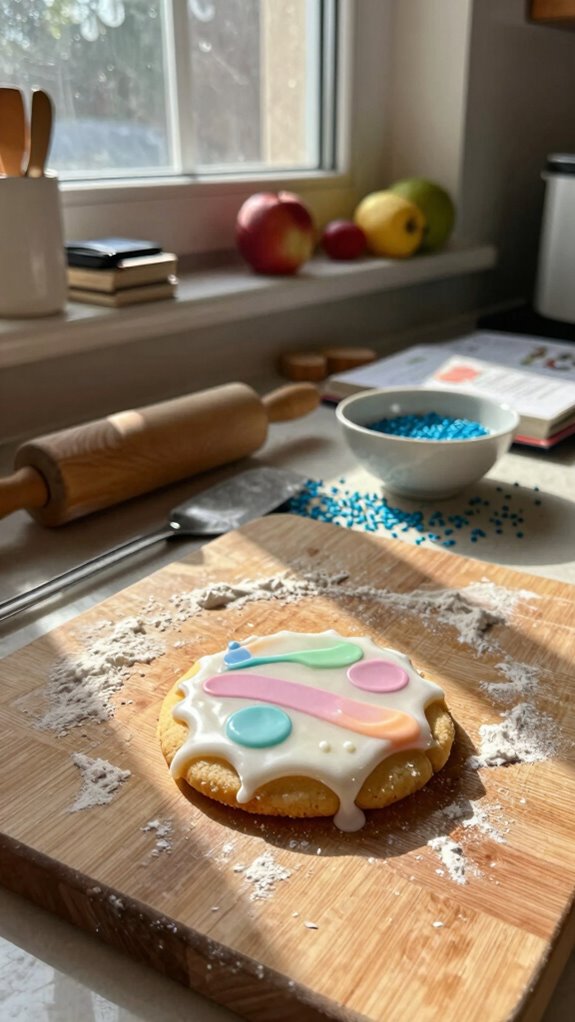
1. Mise en Place: Gather all ingredients, measuring out 240 ml (1 cup) of granulated sugar, 120 ml (½ cup) of vegan butter, 60 ml (¼ cup) of non-dairy milk, 5 ml (1 tsp) of vanilla extract, 250 g (2 cups) of all-purpose flour, 5 g (1 tsp) of baking powder, and a pinch of salt.
2. Preheat Oven: Preheat the oven to 175°C (350°F), positioning the oven rack in the center.
3. Prepare Baking Sheets: Line baking sheets (2-3) with parchment paper or silicone mats to prevent sticking.
4. Cream Butter and Sugar: In a large mixing bowl, combine 120 ml (½ cup) of vegan butter and 240 ml (1 cup) of granulated sugar.
Using a stand mixer fitted with a paddle attachment (or a hand mixer), mix on medium speed for 2-3 minutes until light and fluffy.
5. Add Wet Ingredients: Reduce mixer speed to low. Gradually add 60 ml (¼ cup) of non-dairy milk and 5 ml (1 tsp) of vanilla extract, mixing until just combined.
6. Combine Dry Ingredients: In a separate medium mixing bowl, whisk together 250 g (2 cups) of all-purpose flour, 5 g (1 tsp) of baking powder, and a pinch of salt.
7. Mix Dry and Wet Ingredients: Slowly add the dry ingredients to the wet ingredients in the large bowl.
Use a rubber spatula to fold the mixture until no dry flour remains but be careful not to overmix. The cookie dough should be cohesive yet slightly soft.
8. Scoop Dough: Using a cookie scoop or spoon, portion out dough balls approximately 30 ml (2 tablespoons) in size.
Place them on the prepared baking sheets, spacing them about 5 cm (2 inches) apart.
9. Bake Cookies: Transfer baking sheets to the preheated oven. Bake for 10-12 minutes or until the edges are lightly golden and the tops are set.
The cookies will be soft but will firm up as they cool.
10. Cool Cookies: Remove the baking sheets from the oven and allow the cookies to cool on the sheets for 5 minutes.
Then, transfer them to a cooling rack to cool completely.
11. Resting: Let the cookies rest on the cooling rack for at least 15 minutes for optimal texture before icing or serving.
Ensure that the cookies are slightly firm to the touch and lightly golden on the edges before removing from the oven; they should feel soft but not doughy in the center.
Variations
- Lemon Zest Cookies: Add the zest of 1 lemon (approximately 10 g) for a refreshing citrus flavor.
- Chocolate Chip Cookies: Mix in 150 g (1 cup) of dairy-free chocolate chips into the dough for a classic twist.
- Pumpkin Spice Cookies: Replace 120 ml (½ cup) of non-dairy milk with 120 g (½ cup) of pumpkin puree and add 5 g (1 tsp) of pumpkin pie spice.
- Almond Flour Cookies: Substitute 100 g (1 cup) of all-purpose flour with almond flour for a gluten-free option, adjusting the non-dairy milk to 40 ml (2.5 tbsp) as needed to keep dough consistency.
- Matcha Green Tea Cookies: Add 10 g (2 tsp) of matcha powder to the dry ingredients for a unique flavor and vibrant color.
- Cocoa Cookies: Replace 30 g (¼ cup) of all-purpose flour with cocoa powder for chocolate-flavored cookies.
- Oatmeal Raisin Cookies: Mix in 100 g (1 cup) of oats and 80 g (½ cup) of raisins for a chewy texture.
- Air-Fried Cookies: Use an air fryer set at 160°C (320°F) and cook the cookies for 8-10 minutes for a healthier cooking method.
Tips on plating and presentation
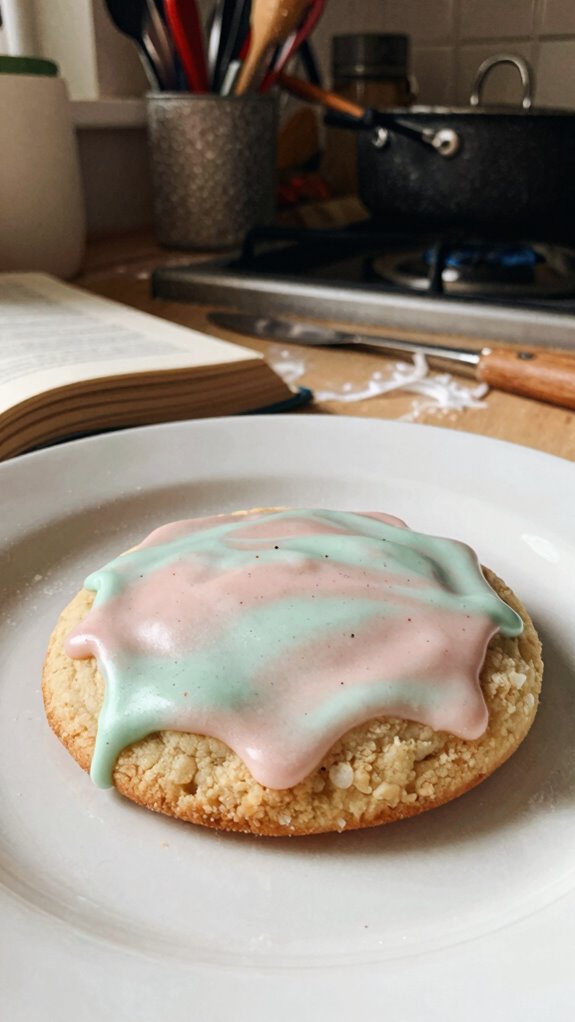
While presenting your vegan iced sugar cookies, it’s essential to make them visually appealing to entice your guests.
I love using creative plating techniques, such as stacking cookies on colorful plates or arranging them in a fun pattern.
For a polished look, try using different presentation styles like tiered stands or cookie boxes, which can elevate your treats and create that wow factor.
What other dishes can I pair it with?
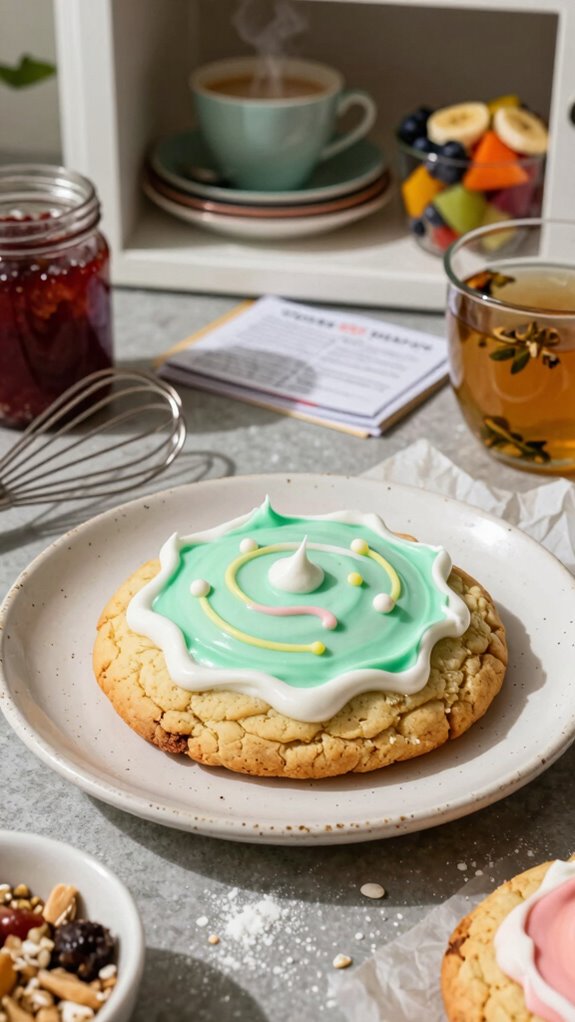
After creating a stunning presentation for your vegan iced sugar cookies, you might wonder what other dishes would complement them perfectly.
I love pairing them with a light fruit salad or a rich vegan chocolate mousse. The refreshing fruit offers delightful flavor contrasts, while the mousse adds depth to your dessert pairings.
Together, they create a balanced and beautiful dessert table everyone will enjoy!
What drinks can I pair it with?
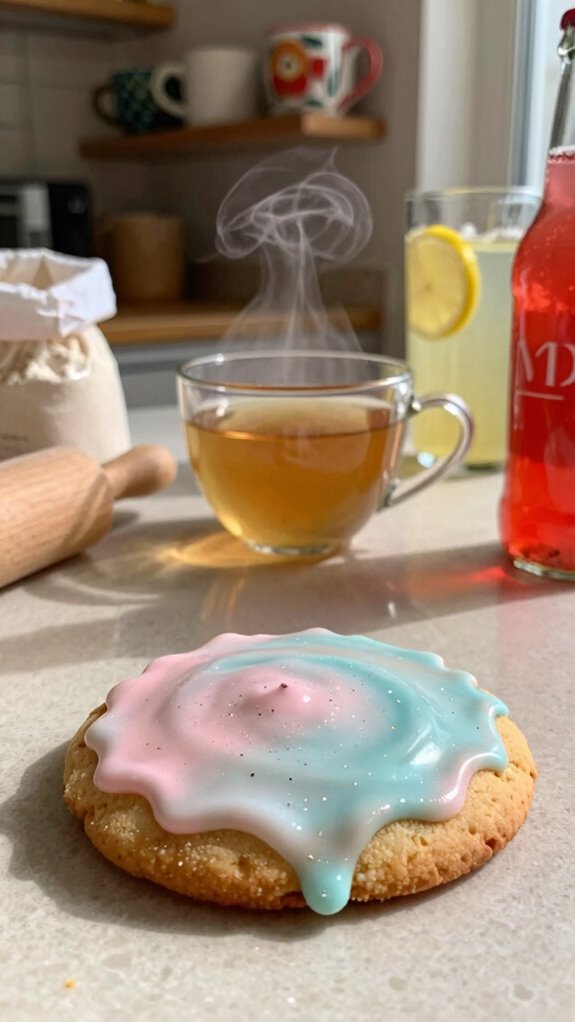
What drinks can enhance the delightful experience of enjoying vegan iced sugar cookies?
I love pairing them with a light, fruity cocktail, like a berry spritzer, which complements the sweetness perfectly.
For a non-alcoholic option, I often opt for herbal tea selections, like chamomile or peppermint.
Both choices elevate the cookies’ flavors while providing a refreshing balance that you’ll truly enjoy!
Frequently Asked Questions
Can I Substitute Aquafaba With Another Ingredient?
Yes, you can definitely substitute aquafaba! I’ve had success using silken tofu or applesauce as egg replacement options. Experimenting with different substitutes for aquafaba can lead to delicious results in your recipes. Give it a try!
How Long Do the Cookies Stay Fresh?
These cookies stay fresh for about a week if stored in an airtight container. For freshness tips, I usually keep them at room temperature away from direct sunlight. It really helps maintain their delightful taste!
Is This Recipe Gluten-Free?
Yes, this recipe can be gluten-free! I use gluten-free flours and baking substitutes to create delicious cookies. Just make sure to check the labels when choosing your ingredients for the best results.
Can I Freeze the Cookies?
Yes, you can freeze the cookies! Just follow some freezing tips to maintain their quality. Keep in mind there might be a texture difference once thawed, but they’ll still taste delicious. Enjoy your treats!
What Are the Nutritional Benefits of Aquafaba?
Aquafaba’s nutritional profile is impressive; it’s a low-calorie, plant-based alternative packed with protein and fiber. I love using it because it adds moisture without added fats, making my recipes healthier and still delicious!