I’ve been experimenting with Dark Chocolate German Lebkuchen Cookies made from 60% cocoa, and they’re a refined take on the classic treat. The blend of rich chocolate and warm spices creates something truly special. If you’re looking to impress at your next gathering, these cookies are a fantastic choice. But there’s more to consider when preparing these delights. Let’s explore the details that can elevate your baking experience.
What kind of recipe is it?
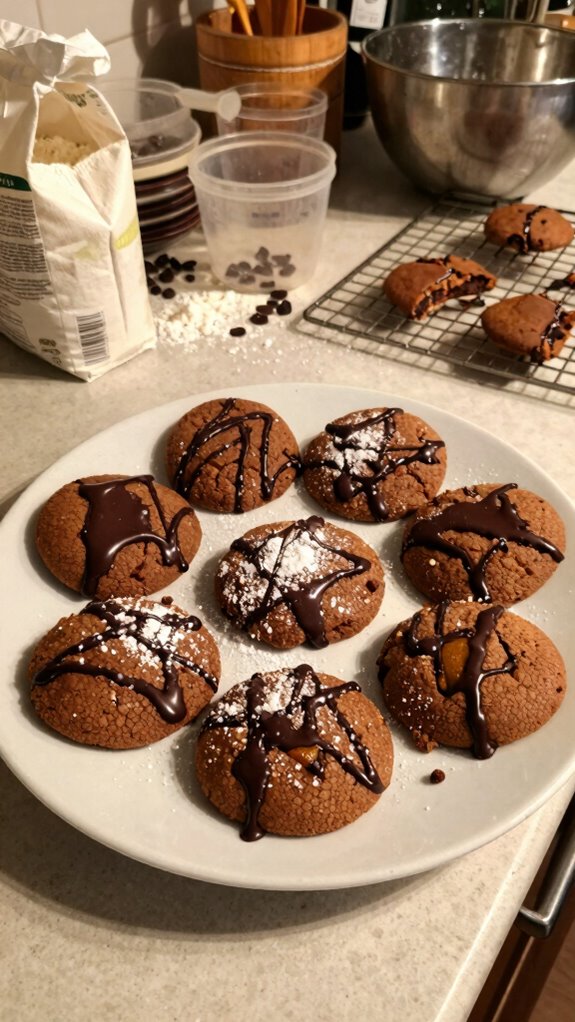
Dark Chocolate German Lebkuchen Cookies are a delightful twist on a traditional festive treat, celebrated for their rich flavors and aromatic spices, such as cinnamon and cloves.
These cookies are made using high-quality dark chocolate, giving them a luxurious texture and depth of flavor.
They’re perfect for holiday gatherings, cozy winter evenings, or as sweet gifts for loved ones.
Ideal for chocolate enthusiasts and those seeking to indulge in a unique taste of German baking, these cookies offer a perfect blend of tradition and decadence.
Preparation Time
| Attribute | Details |
|---|---|
| Difficulty of Recipe | Moderate |
| Preparation Time | Approximately 1 hour 30 minutes |
| Number of Servings | Makes about 24 cookies |
Ingredients
| Ingredient | Quantity |
|---|---|
| Dark chocolate (70% cocoa) | 200 grams (7 oz) |
| All-purpose flour | 250 grams (2 cups) |
| Ground almonds | 150 grams (1½ cups) |
| Sugar | 150 grams (¾ cup) |
| Honey | 150 grams (⅔ cup) |
| Unsweetened cocoa powder | 30 grams (¼ cup) |
| Baking powder | 1 teaspoon |
| Ground cinnamon | 1 teaspoon |
| Ground ginger | 1 teaspoon |
| Ground nutmeg | ½ teaspoon |
| Salt | ½ teaspoon |
| Eggs | 2 large |
| Vanilla extract | 1 teaspoon |
| Icing sugar (for decoration) | 100 grams (¾ cup) |
| Water (for icing) | 1-2 tablespoons |
| Optional toppings | Chopped nuts or candied citrus peel |
This table includes all the necessary ingredients along with their quantities for making Dark Chocolate German Lebkuchen Cookies.
Essential Kitchen Equipment
| Tool/Equipment | Purpose | Alternative Option |
|---|---|---|
| Mixing Bowls (Large & Medium) | Used for combining dry ingredients, wet ingredients, and eventually mixing all components together. | Any large bowl can work; use a large pot or container if no mixing bowls are available. |
| Measuring Cups (Dry & Liquid) | Essential for accurately measuring flour, sugar, honey, and liquid ingredients. | A standard coffee mug or glass can serve as a makeshift measuring cup (just remember their sizes). |
| Measuring Spoons | For precise measurement of smaller quantities like baking powder, salt, and spices. | Any small spoon can be used; just ensure to keep the measurements consistent. |
| Stand Mixer or Hand Mixer | Ideal for thoroughly mixing batter and ingredients together, especially when using eggs. | A whisk or fork can be used for manual mixing, though it requires more effort. |
| Rubber Spatula | Perfect for scraping down the sides of bowls and folding in ingredients without over-mixing. | A wooden spoon can also work for folding, though not as effectively in scraping. |
| Wooden Spoon | Great for mixing ingredients, especially when combining thicker batter. | Any sturdy utensil, like a heatproof silicone spatula, can work in place of a wooden spoon. |
| Baking Sheets (2-3) | Used to hold cookies during baking; multiple sheets allow for baking in batches. | An oven-safe dish or a flat, oven-safe surface can substitute for baking sheets in a pinch. |
| Parchment Paper or Silicone Mats | Provides a non-stick surface for baking cookies without the need for extra grease. | Lightly greased baking sheets can work if parchment or silicone is not available. |
| Cookie Scoop or Spoon | Helps in portioning uniform cookies for even baking. | Two spoons can be used to scoop and shape the dough manually. |
| Cooling Rack | Allows cookies to cool properly, preventing sogginess. | A clean dish rack or any flat surface can work as an alternative cooling area. |
| Oven Thermometer | Ensures the oven is at the correct temperature for baking, which is crucial for proper results. | If unavailable, as a temporary measure, you can check if your oven heats adequately by testing with a recipe that uses a similar temperature. |
This table provides an overview of essential kitchen equipment required for making Dark Chocolate German Lebkuchen Cookies, along with budget-friendly alternatives.
Cooking Steps
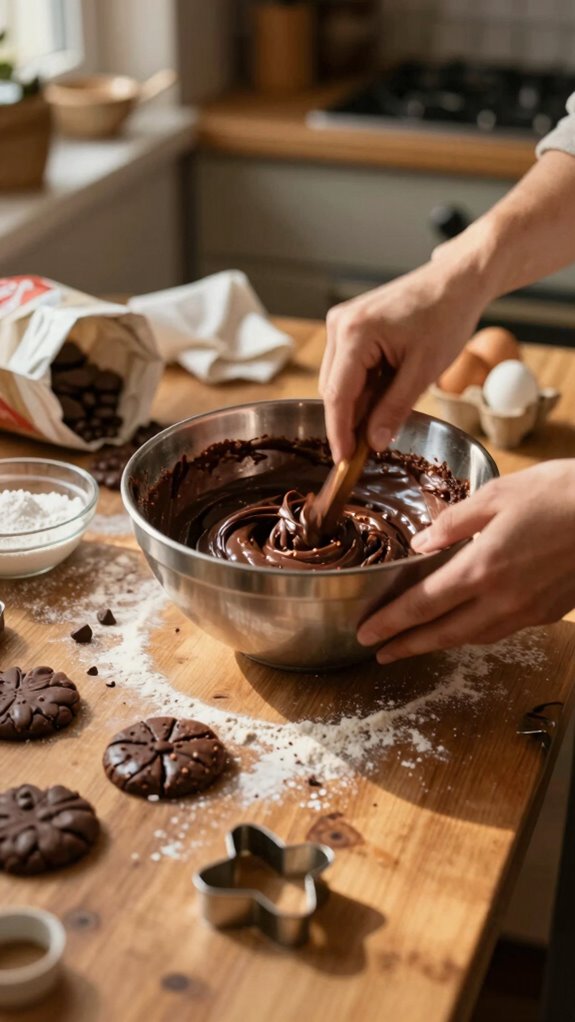
1. Mise en Place: Gather all ingredients: 300 g (2 ½ cups) all-purpose flour, 200 g (1 cup) semi-sweet dark chocolate (chopped), 120 g (½ cup) honey, 150 g (¾ cup) granulated sugar, 100 g (¾ cup) unsalted butter (room temperature), 1 large egg, 5 g (1 tsp) baking powder, 5 g (1 tsp) ground cinnamon, 2 g (½ tsp) ground cloves, 2 g (½ tsp) ground nutmeg, and 5 g (1 tsp) salt.
2. Preheat Oven: Preheat the oven to 175 °C (350 °F). Position the oven rack in the center.
3. Prepare Baking Sheets: Line 2-3 baking sheets with parchment paper or silicone mats.
4. Melt Chocolate: In a heatproof bowl over a saucepan of simmering water (double boiler method), melt 200 g chopped dark chocolate, stirring occasionally until smooth. Remove from heat and let cool slightly.
5. Combine Wet Ingredients: In a large mixing bowl, combine 100 g unsalted butter and 150 g granulated sugar. Using a stand mixer with a paddle attachment (or a hand mixer), beat at medium speed until the mixture is light and fluffy, about 2-3 minutes.
Add the large egg and 120 g honey, and mix until well combined.
6. Incorporate Chocolate: Gradually add the melted chocolate to the wet mixture, beating until fully incorporated.
7. Mix Dry Ingredients: In a separate medium bowl, whisk together 300 g all-purpose flour, 5 g baking powder, 5 g ground cinnamon, 2 g ground cloves, 2 g ground nutmeg, and 5 g salt until evenly distributed.
8. Combine Mixtures: Gradually add the dry mixture to the wet mixture. Use a rubber spatula to fold gently until no flour streaks remain, but avoid over-mixing to maintain the cookies’ tender texture.
9. Scoop Cookies: Using a cookie scoop or two spoons, portion out equal amounts of dough (about 30-40 g per cookie) and place them about 5 cm (2 inches) apart on the prepared baking sheets.
10. Bake: Place the baking sheets in the preheated oven. Bake for 10-12 minutes until they appear slightly puffed and their edges are set, with a soft center.
The aroma will be rich and chocolaty.
11. Cooling: Remove from the oven and allow the cookies to cool on the baking sheets for about 5 minutes before transferring them to a Cooling rack. Let them cool completely.
12. Rest for Flavor Development: Allow cookies to rest at room temperature for at least 1 hour before serving to enhance their flavor and texture.
Ensure to monitor the cookies for doneness; they should be soft in the center and slightly firm on the edges with a glossy appearance. Desirable cooling should leave them chewy on the inside.
Variations
- Nutty Delight: Fold in 100 g (1 cup) of chopped nuts like walnuts or hazelnuts into the dough for extra crunch and flavor.
- Spiced Citrus: Add the zest of 1 orange and 1 lemon along with an additional 2 g (½ tsp) of ground ginger for a refreshing citrus-spice twist.
- Gluten-Free Lebkuchen: Substitute 300 g (2 ½ cups) all-purpose flour with a gluten-free flour blend to make the cookies gluten-free.
- Vegan Version: Replace 100 g (¾ cup) unsalted butter with coconut oil or vegan butter and the egg with a flax egg (1 tbsp ground flaxseed mixed with 3 tbsp water) for a dairy-free and egg-free option.
- Peppermint Mocha: Add 5 g (1 tsp) of peppermint extract and swap 30 g (1/4 cup) of dark chocolate with crushed peppermint candies for a seasonal twist.
- Chili Chocolate: Incorporate 1 g (1/4 tsp) of cayenne pepper or chili powder into the dry ingredients for a spicy kick that pairs well with the sweetness of chocolate.
- Baked in Jars: Instead of baking on sheets, layer cookie dough in small mason jars and bake for a fun and rustic presentation.
- Molasses Magic: Replace 120 g (½ cup) honey with 120 g (½ cup) molasses for a deeper, more robust flavor profile typical of traditional gingerbread.
Tips on plating and presentation
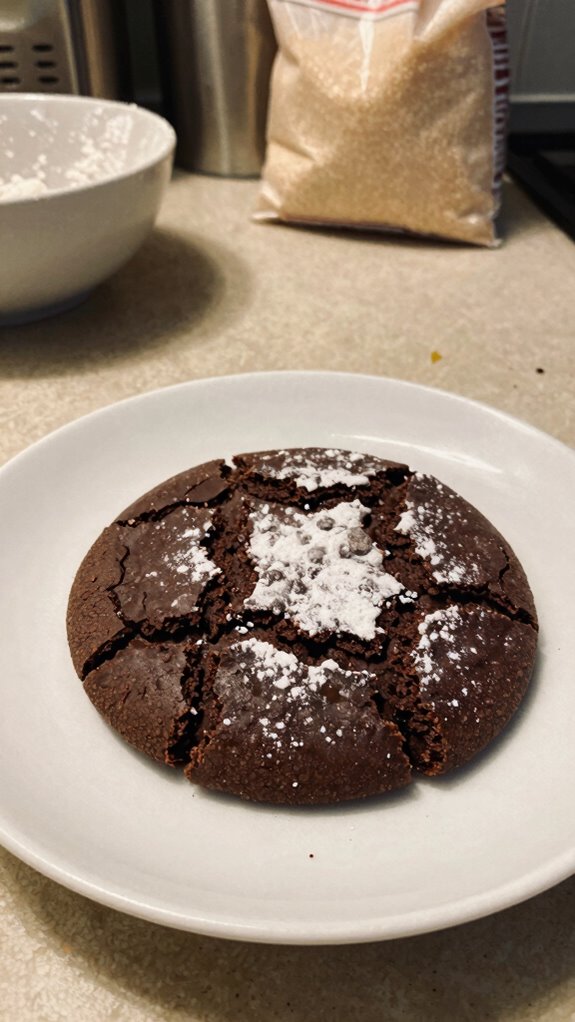
When it comes to plating and presentation, these Dark Chocolate German Lebkuchen cookies can truly shine with a few thoughtful touches.
I like to use simple plating techniques—like arranging them on a rustic wooden board.
For garnish options, a dusting of powdered sugar or a sprinkle of crushed nuts adds visual appeal.
These small details elevate the overall experience and make your cookies pop!
What other dishes can I pair it with?
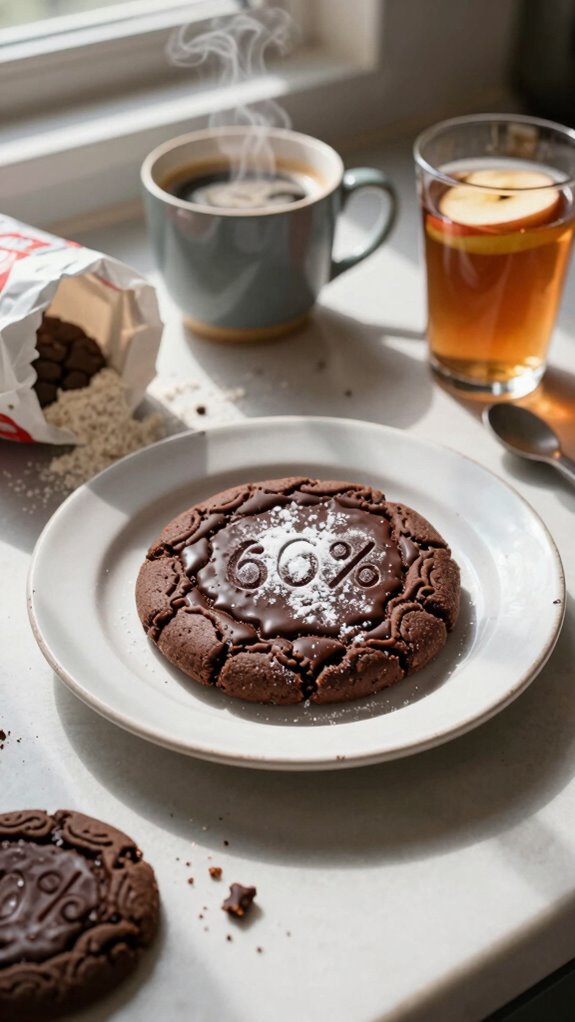
How can you take your Dark Chocolate German Lebkuchen cookies experience to the next level? Consider delightful cookie pairings like creamy vanilla ice cream or rich mascarpone cheese.
These flavor combinations balance the cookie’s sweetness with creamy textures. You can also serve them with spiced fruit compotes or alongside a selection of cheeses for an elegant touch that highlights their unique flavors beautifully.
What drinks can I pair it with?
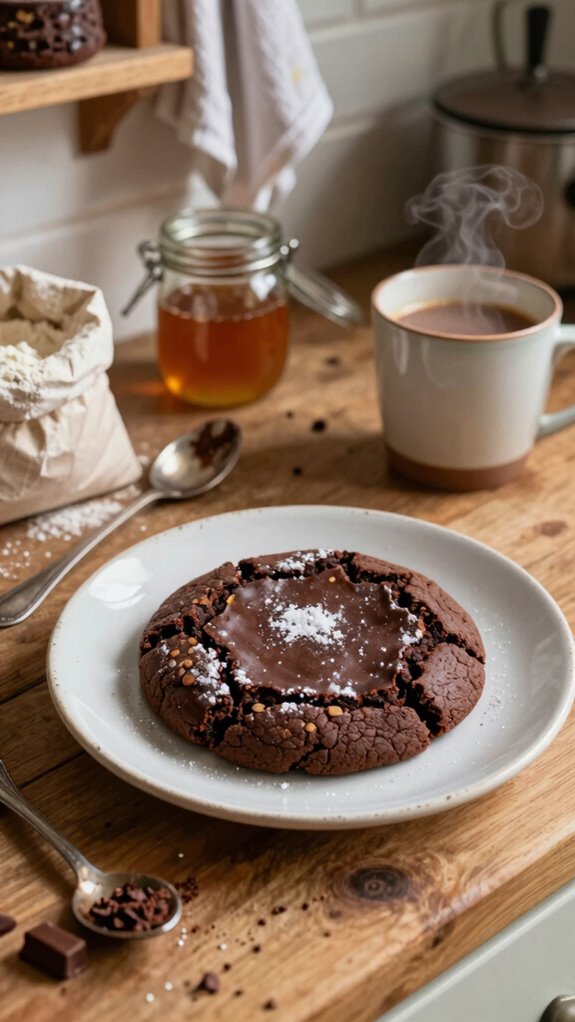
What drinks can elevate your Dark Chocolate German Lebkuchen experience?
I love pairing it with a rich red wine for a delightful contrast.
For those cozy moments, spiced chai tea brings out the cookie’s spice notes perfectly.
If you’re a coffee lover, try a bold espresso; it enhances the chocolate’s depth.
Seasonal selections like hot cocoa also work wonderfully, creating harmonious flavor contrasts!
Frequently Asked Questions
Can I Use Gluten-Free Flour for This Recipe?
Absolutely, I’ve used gluten-free alternatives in my baking. Just substitute gluten-free flour for regular flour in the recipe. It works well and still delivers delicious results, ensuring I don’t miss out on tastes!
How Long Do the Cookies Stay Fresh?
These cookies stay fresh for about a week. I recommend storing them in an airtight container to maintain freshness. For longer storage, try freezing them—just thaw when you’re ready to enjoy.
Can I Freeze the Lebkuchen Cookies?
Absolutely, I can freeze the lebkuchen cookies! I recommend wrapping them tightly to prevent freezer burn. For optimal cookie storage, use an airtight container, and they’ll stay delicious for up to three months. Happy baking!
Is There a Nut-Free Version of This Recipe?
Yes, I’ve found nut-free alternatives for this recipe! I recommend using allergy-friendly options like sunflower seed butter or pumpkin seed butter. They work great and keep the cookies deliciously tasty without compromising on flavor.
What Are the Origins of German Lebkuchen?
Lebkuchen’s origins trace back to Nuremberg in the late 14th century. I love how traditional baking methods have evolved, blending spices and honey, creating a delightful treat that showcases Germany’s rich culinary history!