When I first tried gluten-free shortbread made with almond flour, I was pleasantly surprised by the rich, nutty flavor it delivered. This recipe is straightforward, and it yields a delightful batch of cookies that satisfy those who avoid gluten without compromising on taste. If you’re curious about how to whip these up, the preparation involves just a handful of ingredients and a few simple steps that are worth exploring further.
What kind of recipe is it?
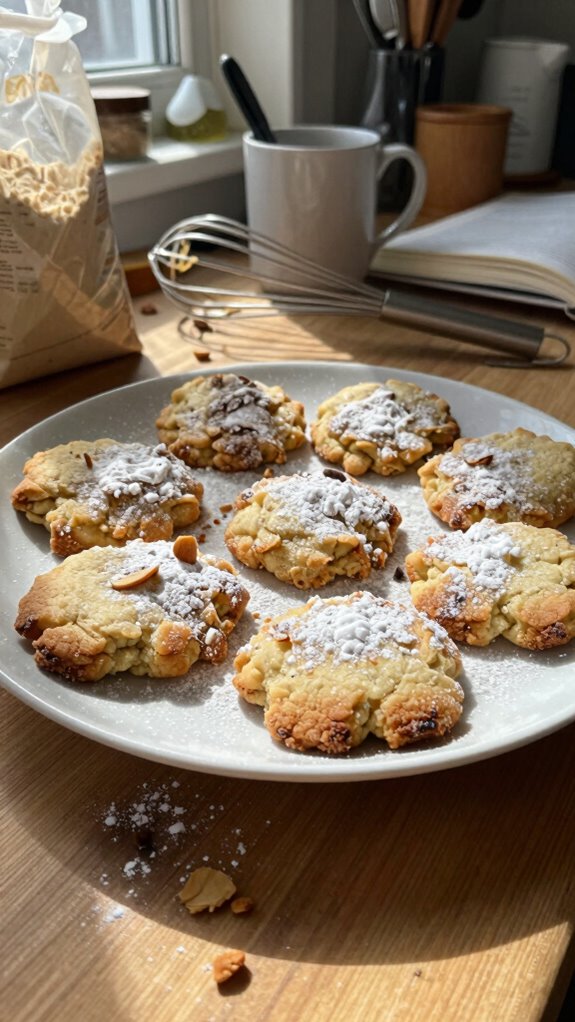
Gluten-Free Shortbread with Almond Flour is a delightful twist on the classic buttery treat, designed for those seeking a gluten-free option.
This recipe highlights the nutty flavor and delicate texture of almond flour, making it rich and satisfying without compromising on taste.
Perfect for tea time or as a sweet snack, this shortbread caters to gluten-sensitive individuals while tempting cookie lovers everywhere.
Easy to prepare, it’s an ideal choice for anyone wanting to indulge in a scrumptious dessert that everyone can enjoy.
Preparation Time
| Attribute | Details |
|---|---|
| Difficulty of the Recipe | Easy |
| Preparation Time | 15 minutes |
| Number of Servings | Approximately 12 cookies |
Ingredients
| Ingredient | Quantity |
|---|---|
| Almond flour | 2 cups |
| Butter (unsalted) | 1 cup (softened at room temperature) |
| Sugar | 1/2 cup |
| Vanilla extract | 1 teaspoon |
| Salt | 1/4 teaspoon |
| Baking soda | 1/4 teaspoon |
| Optional: Almond extract | 1/2 teaspoon (for extra flavor) |
Essential Kitchen Equipment
| Tool/Equipment | Purpose | Alternative Option |
|---|---|---|
| Mixing Bowls (Large & Medium) | For mixing ingredients together; a large bowl is used for dry ingredients, and a medium bowl can be reserved for wet ingredients. | Use any large, deep dish or even a large pot. |
| Measuring Cups (Dry & Liquid) | For accurately measuring out the almond flour, butter, and sugar. Dry measuring cups are used for dry ingredients, and liquid measuring cups are for wet ingredients. | Use a standard cup (8 oz) but be cautious of accuracy. |
| Measuring Spoons | To measure out small quantities like salt, vanilla extract, and baking soda. | Use a standard tablespoon and teaspoon, but adjust measurements accordingly. |
| Stand Mixer or Hand Mixer | For mixing ingredients effectively, particularly to cream butter and sugar until light and fluffy. | A whisk or wooden spoon can work but will require more effort. |
| Rubber Spatula | For scraping down the sides of the bowl to ensure all ingredients are well combined. | A wooden spoon can also be used, though it’s less effective for scraping. |
| Wooden Spoon | For stirring and combining ingredients during preparation. | Any spoon can be used, though a sturdy one is ideal. |
| Baking Sheets (2-3) | To place the shortbread cookies on while baking; multiple sheets are useful for baking in batches. | An inverted cake pan can serve as a makeshift baking sheet. |
| Parchment Paper or Silicone Mats | To line baking sheets, preventing cookies from sticking and making cleanup easier. | Lightly greased baking sheets can be used as a substitute. |
| Cookie Scoop or Spoon | For portioning out the cookie dough into uniform sizes, ensuring even baking. | A regular tablespoon can be used to scoop out dough, though it may not yield perfectly shaped cookies. |
| Cooling Rack | For allowing cookies to cool down after baking; provides airflow to prevent sogginess. | A plate or cutting board can work in a pinch. |
| Oven Thermometer | To ensure your oven is at the correct temperature for baking; helps achieve the best results. | If unavailable, familiarize yourself with your oven’s quirks, like if it runs hot or cold. |
Cooking Steps
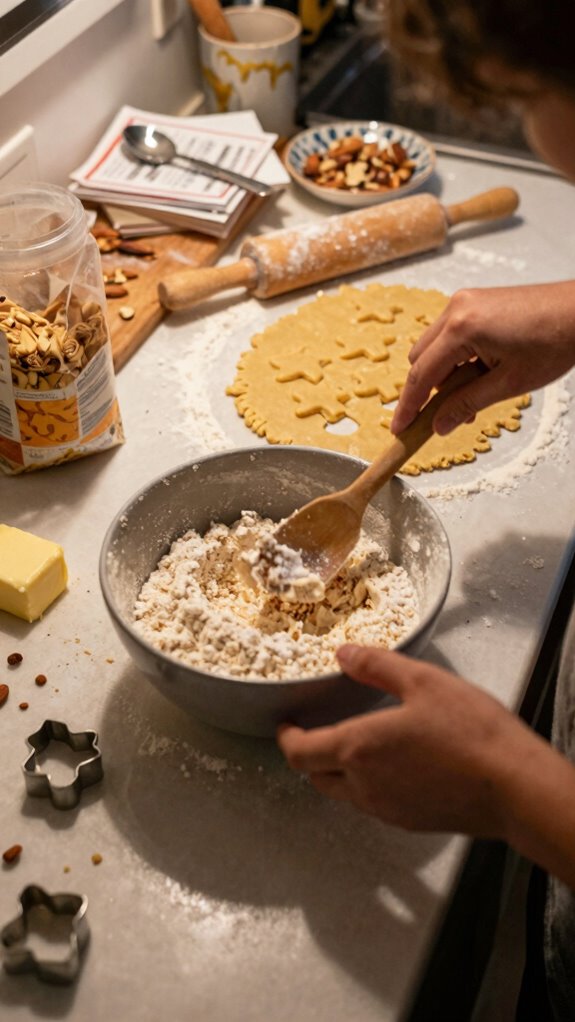
- Prepare for Cooking: Gather all ingredients and equipment. Measure 240 g (2 cups) of almond flour, 120 g (½ cup) of unsalted butter (softened), 60 g (⅓ cup) of granulated sugar, 1 tsp of vanilla extract, and ¼ tsp of salt. Set your mixing bowls, measuring cups, and utensils within reach.
- Preheat the Oven: Set your oven to 160°C (320°F). Position an oven rack in the middle of the oven to allow even heat distribution during baking.
- Line the Baking Sheets: Line 2-3 baking sheets with parchment paper or silicone baking mats. Ensure the sheets are flat and ready for the cookie dough.
- Mix Dry Ingredients: In a large mixing bowl, combine 240 g (2 cups) of almond flour and ¼ tsp of salt. Stir with a wooden spoon until well blended.
- Cream Butter and Sugar: In a medium mixing bowl, use a stand mixer or hand mixer on medium speed to cream together 120 g (½ cup) of softened unsalted butter and 60 g (⅓ cup) of granulated sugar. Beat for approximately 2-3 minutes until the mixture is light and fluffy.
- Incorporate Vanilla: Add 1 tsp of vanilla extract to the butter and sugar mixture. Mix for an additional 30 seconds until fully incorporated.
- Combine Mixtures: Gradually add the dry almond flour mixture to the creamed butter and sugar. Use a rubber spatula to fold the mixture gently until combined and a cohesive dough forms. Ensure no dry almond flour remains at the bottom of the bowl.
- Portion the Dough: Use a cookie scoop or a tablespoon to portion out the dough into uniform balls (about 30 g each). Place them about 5 cm (2 inches) apart on the lined baking sheets.
- Flatten the Cookies: Gently flatten each cookie dough ball with the palm of your hand to form a disc shape, approximately 1 cm (½ inch) thick.
- Bake the Shortbread: Place the baking sheets in the preheated oven. Bake for 18-20 minutes or until the edges of the cookies turn light golden brown. Keep an eye on them to avoid overbaking; they should produce a subtly sweet aroma without being overly dark.
- Cool the Cookies: Remove the baking sheets from the oven. Let the cookies cool on the baking sheets for about 5 minutes. Then, transfer them carefully to a cooling rack to cool completely. This prevents sogginess by allowing air circulation.
- Store Properly: Once cooled, store the gluten-free shortbread in an airtight container at room temperature for up to one week. Enjoy the delicate, crumbly texture and delightful almond flavor.
Variations
- Chocolate Chip Almond Shortbread: Mix in 100 g (⅔ cup) of dairy-free chocolate chips for a sweet, chocolatey twist.
- Lemon Zest Shortbread: Add the zest of 1 large lemon (about 10 g) to the dough for a fresh, citrusy flavor boost.
- Coconut Macadamia Shortbread: Incorporate 60 g (½ cup) of chopped macadamia nuts and 20 g (¼ cup) of shredded coconut for a tropical flair.
- Vegan Almond Shortbread: Replace unsalted butter with 120 g (½ cup) of coconut oil and use agave syrup instead of granulated sugar (60 g / ⅓ cup).
- Matcha Green Tea Shortbread: Add 2 tsp (5 g) of matcha green tea powder to the dry ingredients for a vibrant color and earthy flavor.
- Pumpkin Spice Shortbread: Mix in 60 g (⅓ cup) of pumpkin puree and 1 tsp of pumpkin spice to create a seasonal favorite for autumn.
- Chai-Spiced Shortbread: Include 1 tsp of ground cinnamon, ½ tsp of ground ginger, and ¼ tsp of ground cardamom to the dry mix for a warm spiced flavor.
- Air Fryer Shortbread: Prepare as usual and cook in an Air Fryer at 160°C (320°F) for 8-10 minutes for a quicker, crunchier result.
Tips on plating and presentation
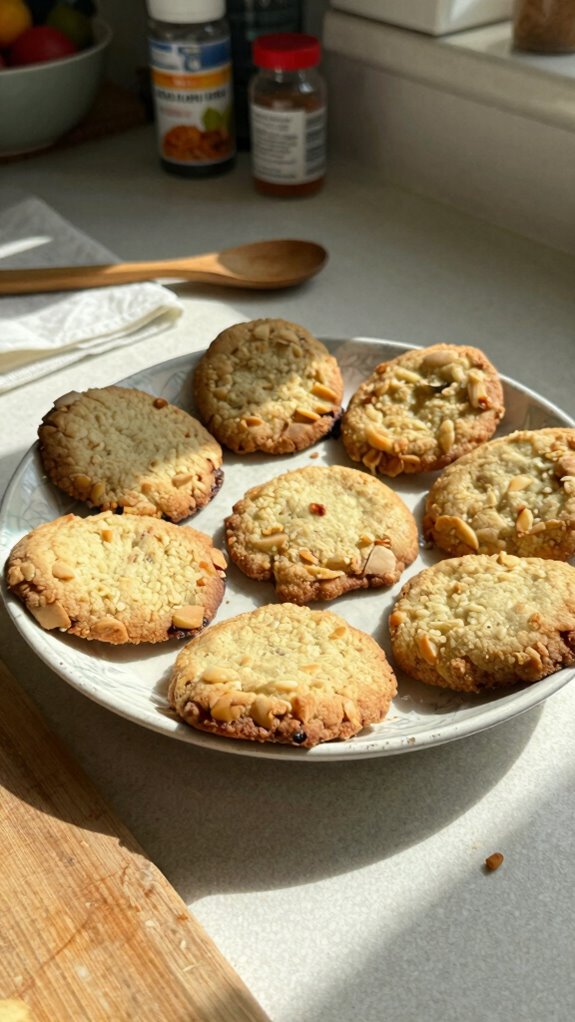
How can you make your gluten-free shortbread not only delicious but also visually appealing?
Try using simple plating techniques, like stacking the shortbread or arranging it in a circle. For garnish ideas, sprinkle powdered sugar or drizzle with chocolate.
Adding fresh berries or mint leaves can elevate the presentation, making your treats irresistible.
With just a few touches, you’ll wow your guests!
What other dishes can I pair it with?
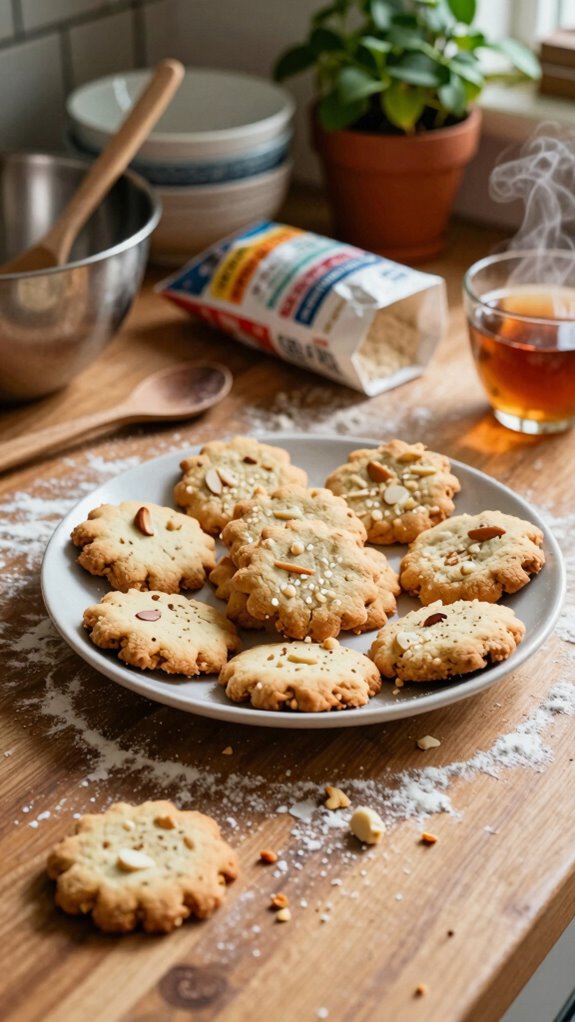
After impressing your guests with visually appealing gluten-free shortbread, you might wonder what dishes to pair it with for an even more delightful spread.
I love including a variety of fresh fruits, nuts, and chocolates on my dessert platters.
For tea pairings, lemon or chamomile blends elevate the experience, complementing the buttery flavor of the shortbread beautifully.
Enjoy experimenting!
What drinks can I pair it with?
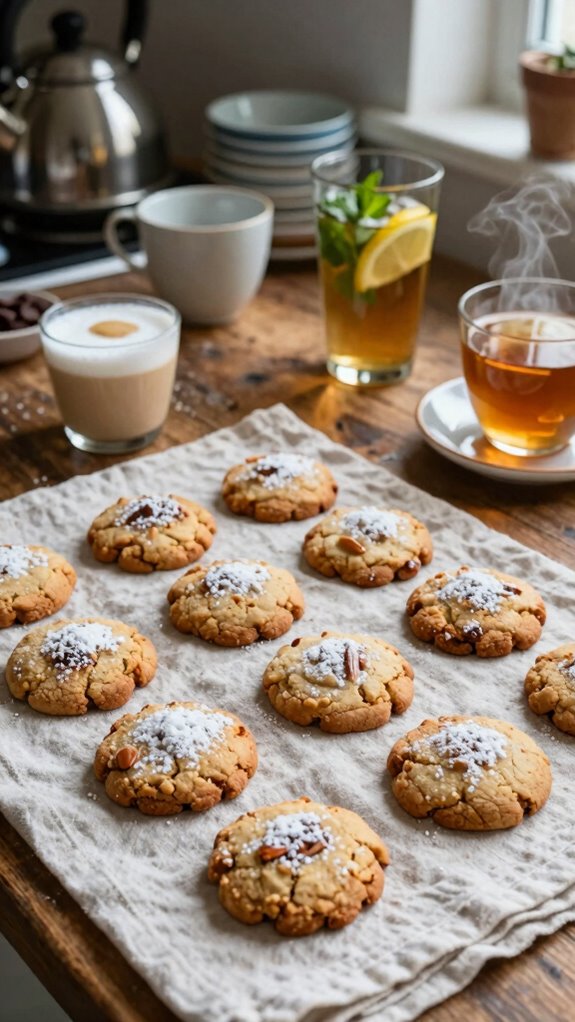
To truly enhance the experience of enjoying gluten-free shortbread, I recommend pairing it with beverages that complement its rich, buttery flavor.
For tea pairings, consider a light Earl Grey or chamomile to bring out the sweetness.
If you’re leaning towards coffee choices, a smooth latte or a classic cappuccino will balance the shortbread’s texture perfectly.
Enjoy these combinations for a delightful treat!
Frequently Asked Questions
Can I Substitute Almond Flour With Other Gluten-Free Flours?
Yes, you can definitely substitute almond flour with other gluten-free flours. I’ve found that combining oat flour or coconut flour can create great flour combinations that maintain flavor and texture, giving you plenty of substitute options!
How Long Can You Store Gluten-Free Shortbread?
I usually store my shortbread in an airtight container for up to two weeks at room temperature. For longer shelf life, I freeze them. Storing cookies properly keeps them fresh and delicious for more enjoyment!
Is This Recipe Suitable for Vegan Diets?
Yes, this recipe can be suitable for vegan diets. I often use vegan substitutes like coconut oil or flaxseed. Adjusting baking techniques helps ensure the texture remains delightful while keeping it plant-based. Enjoy experimenting!
Can I Add Chocolate or Other Flavors to the Dough?
Absolutely! You can add chocolate variations or other flavor enhancements to the dough easily. I love mixing in cocoa powder or vanilla extract for extra richness. Experiment and enjoy the delicious results in your treats!
What Are the Nutritional Benefits of Almond Flour?
Almond flour’s great for me! It boasts high fiber content, healthy fats, and impressive nutrient density. Plus, it helps stabilize blood sugar levels, making it a smart choice in my baking and cooking adventures.