I’ve always found comfort in the simplicity of shortbread cookies, but adding browned butter takes them to another level. The nutty aroma that fills my kitchen while they bake is nothing short of inviting. These cookies are versatile—perfect for any gathering or just a quiet moment with tea. If you’re curious about how to achieve that warm, crumbly texture and rich flavor, keep going. There’s more to uncover about this delightful recipe that you won’t want to miss.
What kind of recipe is it?
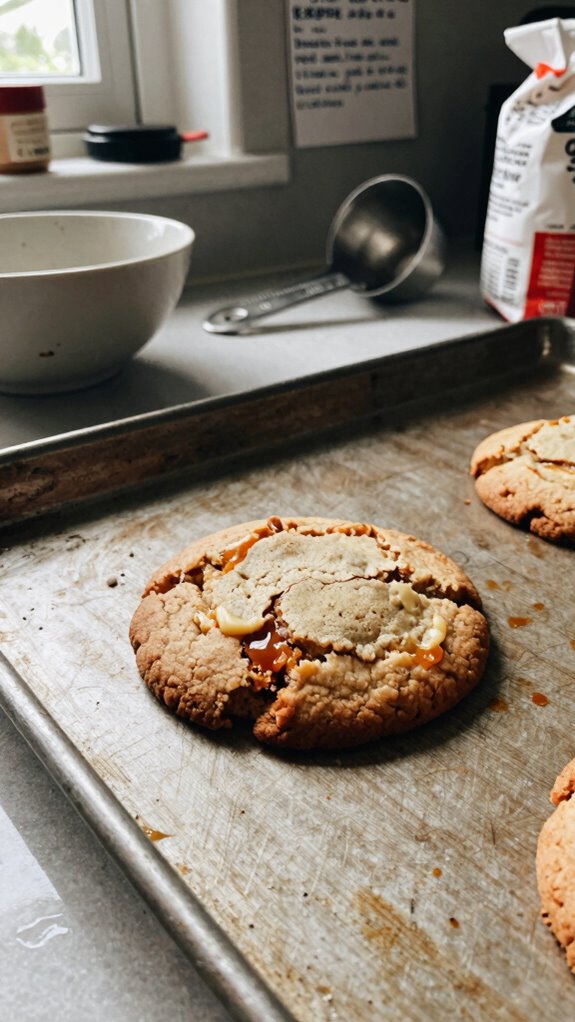
Brown Butter Shortbread Cookies are a delightful twist on the classic buttery treat, featuring the rich, nutty flavor of brown butter that elevates their taste profile.
These cookies are characterized by their crumbly texture and aromatic warmth, making them irresistible for both casual snacking and elegant gatherings.
Ideal for baking enthusiasts and anyone looking to impress friends and family, these cookies are perfect for holiday celebrations or afternoon tea.
Their simplicity and depth of flavor make them a must-try for anyone who loves homemade baked goods.
Preparation Time
| Category | Details |
|---|---|
| Difficulty of the Recipe | Easy |
| Preparation Time | 15 minutes (plus chilling time) |
| Number of Servings | Approximately 24 cookies |
Ingredients
| Ingredient | Quantity |
|---|---|
| Unsalted Butter | 1 cup (2 sticks) |
| Granulated Sugar | ¾ cup |
| Powdered Sugar | ¼ cup |
| All-purpose Flour | 2 cups |
| Salt | ½ teaspoon |
| Vanilla Extract | 1 teaspoon |
Essential Kitchen Equipment
| Tool/Equipment | Purpose | Alternative Option |
|---|---|---|
| Mixing Bowls (Large & Medium) | Used for mixing the ingredients together, allowing for both small and large batches. | Any large bowl or even a deep plate can work in a pinch. |
| Measuring Cups (Dry & Liquid) | Essential for accurately measuring flour, sugars, and butter to ensure proper ratios. | Use empty food containers (like yogurt cups) as makeshift measuring cups, ensuring to research equivalent measurements. |
| Measuring Spoons | Used for measuring smaller quantities like salt and vanilla extract to ensure accurate flavoring. | Use the spoons from your kitchen, keeping in mind that a tablespoon is about three teaspoons. |
| Stand Mixer or Hand Mixer | Provides efficiency and uniform mixing, especially for creaming butter and sugars. | Mix by hand with a wooden spoon; it will require more effort but is budget-friendly. |
| Rubber Spatula | Ideal for scraping down the sides of bowls and transferring dough to baking sheets. | A metal or wooden spoon can also work for scraping, though it may not be as thorough. |
| Wooden Spoon | Useful for combining ingredients and mixing dough by hand. | A sturdy plastic spoon can serve as a substitute. |
| Baking Sheets (2-3) | Essential for placing cookie dough in the oven; ensures even baking and easy removal. | Reusable aluminum foil or pizza trays may work if you don’t have enough baking sheets. |
| Parchment Paper or Silicone Mats | Prevents cookies from sticking to the baking sheet and promotes even baking. | Lightly greasing the baking sheet with butter can work, though it may not be as effective. |
| Cookie Scoop or Spoon | Helps portion out equal amounts of dough for uniform cookies. | Any spoon can be used, but a measuring spoon ensures consistent cookie sizes. |
| Cooling Rack | Allows cookies to cool evenly after baking, preventing sogginess. | A plate or countertop can be a makeshift cooling surface; just ensure there’s enough airflow. |
| Oven Thermometer | Ensures the oven is at the correct temperature for baking cookies. | Regularly check with an oven timer or test baking one cookie to gauge temperature. |
Cooking Steps
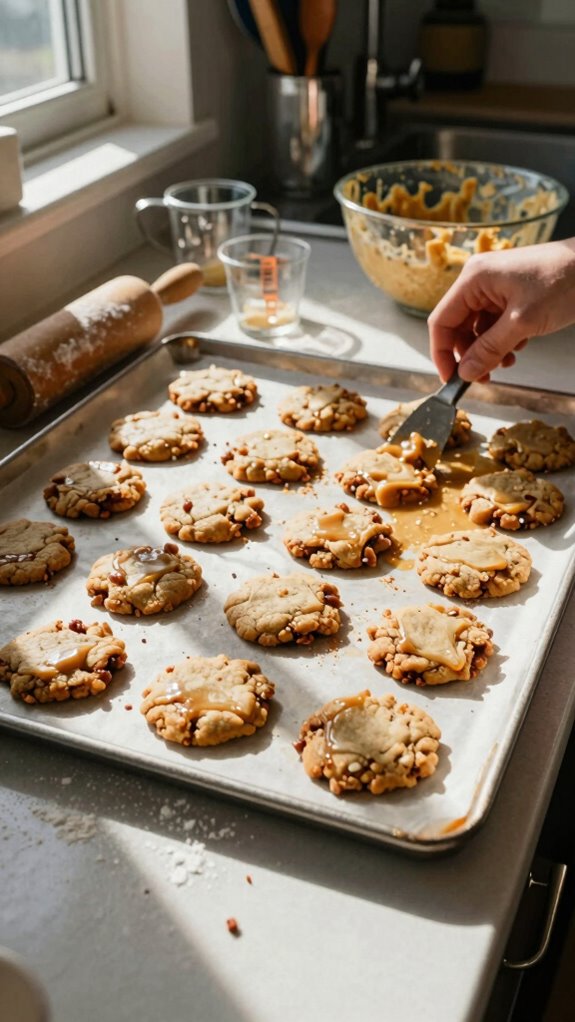
1. Mise en place: Gather all ingredients: 225 g (1 cup) unsalted butter, 150 g (3/4 cup) granulated sugar, 1/2 tsp sea salt, 1 tsp pure vanilla extract, and 300 g (2 1/2 cups) all-purpose flour. Prepare a large mixing bowl and a rubber spatula.
2. Preheat the oven: Preheat the oven to 150°C (300°F) and position the oven rack in the center. Line two baking sheets with parchment paper or silicone mats.
3. Brown the butter: In a medium saucepan over medium heat, melt 225 g (1 cup) unsalted butter. Continue to cook, stirring frequently, until the butter is golden brown and has a nutty aroma, about 5-7 minutes.
Remove from heat and let it cool slightly.
4. Mix the sugar and butter: In a large mixing bowl, combine the browned butter (allow to cool slightly but should still be warm) and 150 g (3/4 cup) granulated sugar.
Use a stand mixer fitted with a paddle attachment or a hand mixer on medium speed to beat the mixture until light and fluffy, about 2-3 minutes.
5. Add flavorings: Add 1/2 tsp sea salt and 1 tsp pure vanilla extract to the butter-sugar mixture and mix until incorporated.
6. Incorporate flour: Gradually add 300 g (2 1/2 cups) all-purpose flour to the mixture.
Mix on low speed or with a rubber spatula until just combined; don’t overmix. The dough should be soft and somewhat crumbly.
7. Portion the dough: Using a cookie scoop or a spoon, portion out rounded tablespoons of dough and place them on the lined baking sheets, about 5 cm (2 inches) apart.
8. Chill the dough: Cover the baking sheets with plastic wrap and chill the cookie dough in the refrigerator for 30 minutes to firm up.
9. Bake the cookies: Once chilled, transfer the baking sheets to the preheated oven, ensuring both sheets are on the center rack.
Bake for 20-25 minutes or until the edges are lightly golden. Avoid over-baking; the cookies should remain pale in the center.
10. Cool the cookies: After baking, remove the baking sheets from the oven and allow cookies to cool on the sheets for 5 minutes.
Then transfer to a cooling rack to cool completely.
11. Serve: Enjoy the cookies once cooled. They should have a rich, nutty aroma with a crisp edge and a melt-in-your-mouth texture.
Variations
- Maple Walnut Shortbread: Substitute 50 g (1/4 cup) of granulated sugar with maple syrup and add 100 g (1 cup) chopped walnuts for a sweet, nutty flavor.
- Chocolate Chip Shortbread: Fold in 150 g (1 cup) of semi-sweet chocolate chips to the dough for a delightful chocolate twist.
- Lemon Zest Shortbread: Add the zest of 2 lemons and a tablespoon of lemon juice to the butter-sugar mixture for a bright, citrusy flavor.
- Gluten-Free Shortbread: Replace all-purpose flour with 300 g (2 1/2 cups) gluten-free all-purpose flour blend for a gluten-free variation.
- Dairy-Free Shortbread: Use 225 g (1 cup) dairy-free margarine instead of unsalted butter for a dairy-free option.
- Vegan Shortbread: Substitute 225 g (1 cup) unsalted butter with 225 g (1 cup) coconut oil or vegan butter, and use a flax egg for binding (1 tablespoon flaxseed meal + 2.5 tablespoons water).
- Spiced Shortbread: Incorporate 1 tsp of ground cinnamon and 1/4 tsp of ground nutmeg into the mixture for a warm, cozy flavor profile.
- Seasonal Pumpkin Spice Shortbread: Add 100 g (1/2 cup) pumpkin purée and 1 tsp pumpkin spice to the dough for a seasonal twist perfect for fall.
Tips on plating and presentation
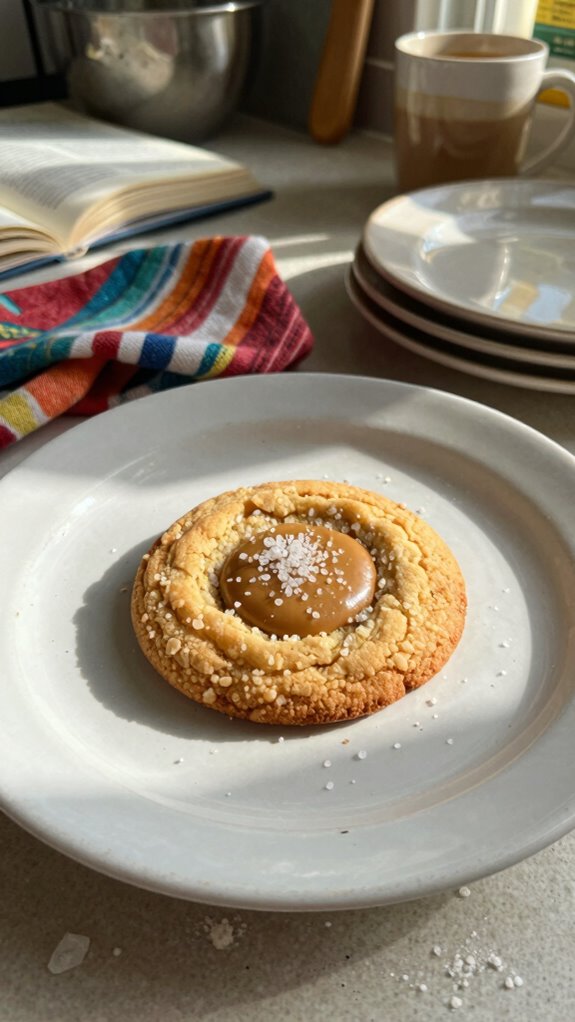
How can I make my Brown Butter Shortbread Cookies look as delicious as they taste?
I love incorporating simple plating techniques, like stacking the cookies or arranging them in a circular pattern. Using decorative plates enhances their appeal, too.
Consider employing elegant presentation styles, such as dusting powdered sugar on top or adding fresh berries for a pop of color—your guests will be impressed!
What other dishes can I pair it with?
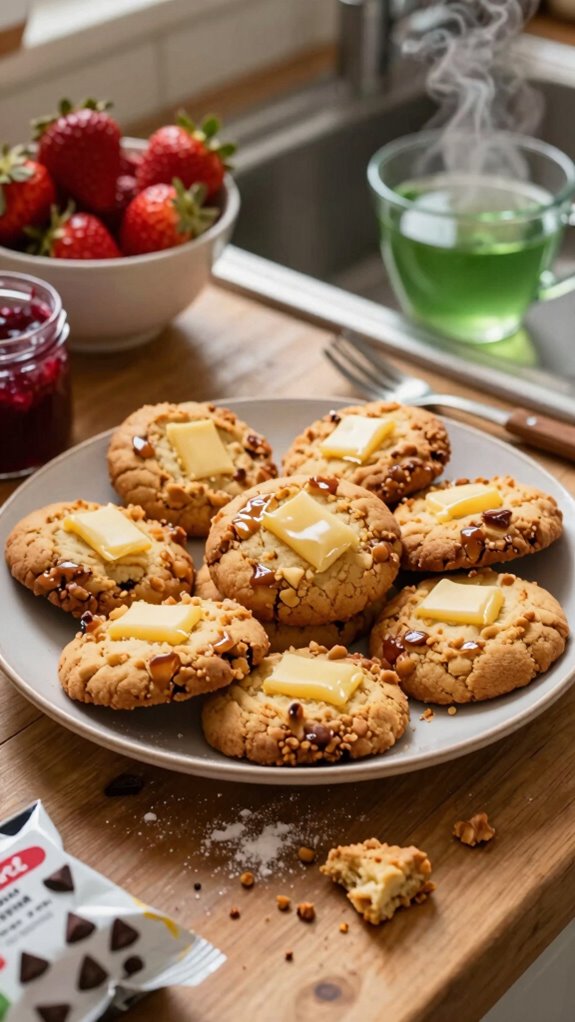
While savoring my Brown Butter Shortbread Cookies, I often think about the delightful companions that can elevate the experience even further.
These cookies pair beautifully with rich chocolate truffles or a tangy fruit tart.
I love including them on dessert platters alongside lemon bars or macarons, creating a diverse selection that keeps everyone coming back for more delicious cookie pairings.
What drinks can I pair it with?
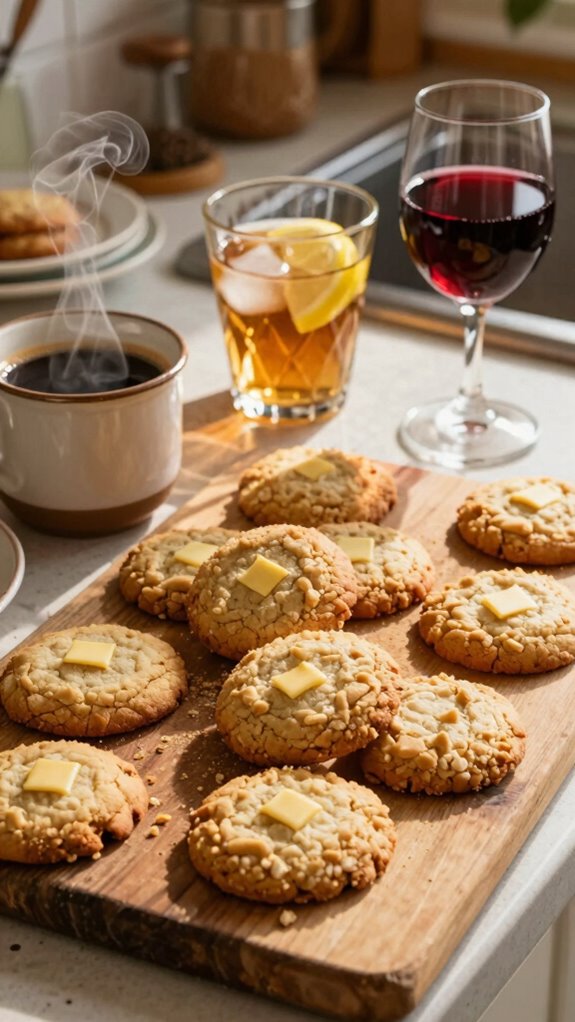
What drinks can truly enhance the enjoyment of my Brown Butter Shortbread Cookies?
I love pairing them with a rich, bold coffee that brings out the buttery notes.
For a lighter touch, a fragrant herbal tea pairing complements the sweetness beautifully.
Experimenting with different coffee flavors or tea varieties can lead to delightful discoveries, enhancing each bite of my delicious cookies!
Frequently Asked Questions
Can I Use Gluten-Free Flour Instead of Regular Flour?
Yes, you can use gluten-free flour! I recommend trying a blend designed for baking. Remember to adjust your liquids and keep some baking tips handy for best results. Experimenting with recipe variations can be fun too!
How Should I Store Leftover Brown Butter Shortbread Cookies?
I store my leftover cookies in an airtight container at room temperature. This keeps them fresh and prevents them from drying out. They usually last about a week, but they never last that long!
Can I Freeze the Dough for Later Use?
Yes, I can freeze the dough for later use! Just shape it into a log, wrap it tightly, and ensure the dough’s consistency is right for slicing. Thaw overnight in the fridge before baking.
What Is the Shelf Life of Baked Cookies?
Baked cookies typically last about one week at room temperature. I recommend storing them in an airtight container to maintain cookie texture preservation and ensure their baked cookie longevity for as long as possible.
Are There Any Nut Allergies to Consider in This Recipe?
Yes, nut allergies are a concern. I suggest using nut alternatives like sunflower seed butter or allergy substitutions such as oat flour to keep the recipe safe and delicious for everyone enjoying the treats.