When I first discovered gluten-free shortbread made with almond flour, I was intrigued by its potential. The rich, buttery flavor and delicate texture caught my attention right away. I wanted to see how this twist on traditional shortbread could transform simple gatherings into something special. If you’re curious about how to create these delightful cookies and their perfect pairings, stick around to explore some easy steps and tips.
What kind of recipe is it?
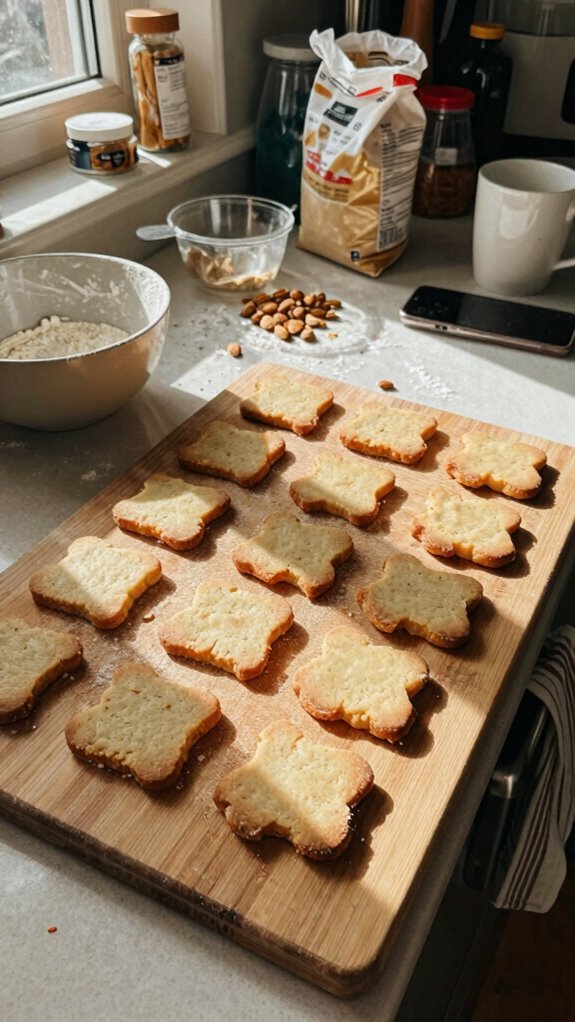
Gluten-Free Shortbread is a delightful, buttery treat that caters to those with gluten sensitivities or celiac disease, ensuring everyone can indulge in a classic dessert.
This recipe is characterized by its crumbly texture and rich flavor, achieved using gluten-free flours such as almond or rice flour. It’s an ideal choice for tea parties, holiday gatherings, or simply as a comforting snack.
Cooking this shortbread not only brings joy to those with dietary restrictions but also allows anyone to enjoy a delicious, homemade treat.
Preparation Time
| Category | Details |
|---|---|
| Difficulty of the Recipe | Easy |
| Preparation Time | 15 minutes |
| Number of Servings | Approximately 12 servings |
Ingredients
| Ingredient | Quantity |
|---|---|
| Gluten-free all-purpose flour | 2 cups |
| Unsalted butter, softened | 1 cup (2 sticks) |
| Granulated sugar | ¾ cup |
| Powdered sugar | ¼ cup |
| Vanilla extract | 1 teaspoon |
| Salt | ½ teaspoon |
| Optional: Chocolate chips or nuts | ½ cup (if desired) |
Notes:
- Ensure that the gluten-free all-purpose flour blend is suitable for baking.
- Make sure the butter is at room temperature for easy mixing.
- For added flavor, consider using a flavored extract like almond instead of vanilla.
Essential Kitchen Equipment
| Tool/Equipment | Purpose | Alternative Option |
|---|---|---|
| Mixing Bowls (large & medium) | Used for mixing ingredients; larger bowl for dry ingredients, and medium for wet ingredients. | Any large bowl and medium bowl from your kitchen. |
| Measuring Cups (dry & liquid) | Essential for accurately measuring flour, sugar, and other ingredients. | Use a standard glass cup for liquids, and any cup for dry measurements to maintain proportions. |
| Measuring Spoons | For measuring small amounts of ingredients like vanilla and salt. | Teaspoons and tablespoons from your regular cutlery can be used in a pinch. |
| Stand Mixer or Hand Mixer | Useful for creaming butter and sugar together effectively and quickly. | Mixing by hand with a wooden spoon, though it may take more effort. |
| Rubber Spatula | Great for scraping down the sides of bowls and transferring batter without wasting any. | A large spoon or any flat wooden utensil can work as an alternative. |
| Wooden Spoon | Ideal for mixing dough and incorporating ingredients especially when a mixer is not used. | Any sturdy spoon you have on hand can serve this purpose. |
| Baking Sheets (2-3) | Provides a flat surface for baking cookies evenly; you may need more for batch baking. | Any flat oven-safe tray or even an oven-safe casserole dish can work as a substitute. |
| Parchment Paper or Silicone Mats | Helps prevent cookies from sticking to the baking sheets and promotes even baking. | Lightly greasing the baking sheets or using aluminum foil can be a temporary alternative. |
| Cookie Scoop or Spoon | Ensures even portions when dropping cookie dough onto baking sheets. | Use a tablespoon or a regular spoon for portioning, though sizes may vary. |
| Cooling Rack | Allows cookies to cool evenly and prevents them from becoming soggy. | A large plate or tray can be used, though it may not provide airflow underneath. |
| Oven Thermometer | Used to ensure the oven is at the correct temperature for baking, which is essential for proper cookie texture. | A regular kitchen thermometer can sometimes be used to check the temperature inside. |
Tips:
- Consider borrowing equipment if you’re on a tight budget or just starting out.
- Always check your tool’s condition before use; worn-out utensils might affect the baking process.
Cooking Steps
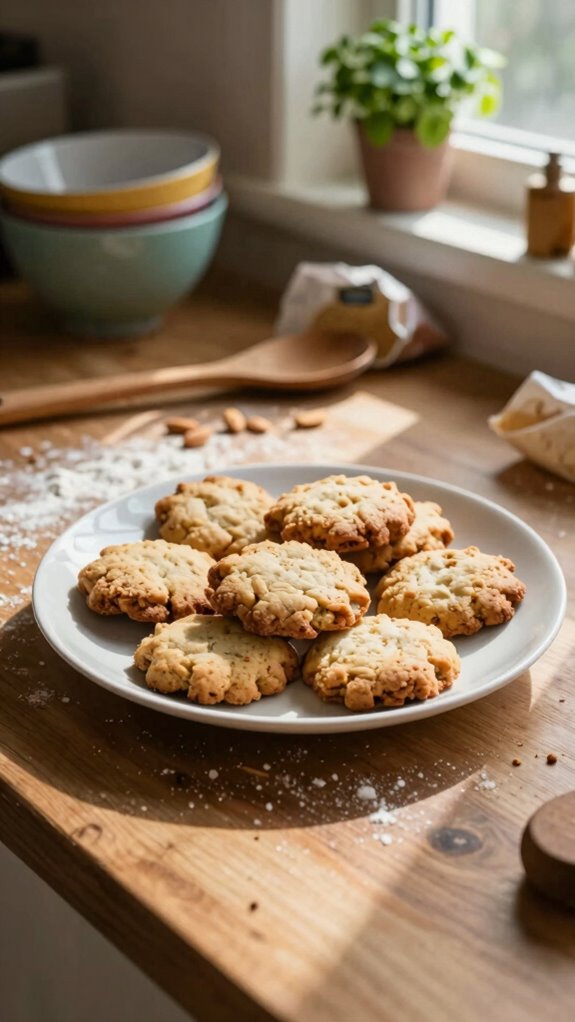
1. Mise en Place: Gather all ingredients and equipment. Measure out 240 g (2 cups) of gluten-free flour, 120 g (½ cup) of unsalted butter (softened), 60 g (¼ cup) of powdered sugar, 5 ml (1 teaspoon) of vanilla extract, and a pinch of salt.
2. Preheat Oven: Preheat your oven to 160 °C (320 °F) and adjust the oven rack to the middle position.
3. Prepare Baking Sheet: Line a baking sheet (30 cm x 40 cm) with parchment paper or silicone mats to prevent sticking.
4. Mix Dry Ingredients: In a large mixing bowl, whisk together the gluten-free flour and pinch of salt until evenly combined.
5. Cream Butter and Sugar: In a medium mixing bowl, use a stand mixer with the paddle attachment or a hand mixer on medium speed to cream the softened butter and powdered sugar together until light and fluffy; this should take about 3–5 minutes.
The mixture should appear pale and have a smooth texture.
6. Add Vanilla: With the mixer running, add 5 ml (1 teaspoon) of vanilla extract to the butter-sugar mixture until fully incorporated.
7. Combine Wet and Dry Ingredients: Gradually add the flour mixture to the creamed butter and sugar using a rubber spatula on low speed until just combined, creating a soft dough.
8. Shape Cookies: Use a cookie scoop or tablespoon to portion the dough into 20-25 equal pieces, rolling them gently into balls.
Place them spaced 5 cm (2 inches) apart on the prepared baking sheet.
9. Flatten Cookies: Gently flatten each dough ball with the bottom of a glass or your hand until they’re about 1 cm (½ inch) thick.
10. Bake Cookies: Place the baking sheet in the preheated oven and bake for 15–20 minutes, or until the edges are slightly golden.
The cookies should have a pleasant buttery aroma.
11. Cool: Once baked, remove the cookies from the oven and allow them to Cool on the baking sheet for 5 minutes.
Then, transfer them to a cooling rack to cool completely, which will ensure they maintain their crisp texture.
12. Serve: Once cooled, the cookies are ready to enjoy. Store any leftovers in an airtight container at room temperature.
Variations
- Chocolate Chip Shortbread: Fold in 100 g (¾ cup) of dairy-free chocolate chips for a rich, sweet twist on classic shortbread.
- Lemon Rosemary Shortbread: Add the zest of 1 lemon and 1 tablespoon fresh chopped rosemary for a refreshing herbal and citrus flavor.
- Nutty Almond Shortbread: Substitute half of the gluten-free flour with 120 g (1 cup) almond flour for a nutty taste and texture.
- Coconut Macadamia Shortbread: Incorporate 60 g (½ cup) of shredded unsweetened coconut and 60 g (½ cup) chopped macadamia nuts for a tropical flair.
- Maple Pecan Shortbread: Replace powdered sugar with 60 ml (¼ cup) maple syrup and add 60 g (½ cup) chopped pecans for a fall-inspired, naturally sweetened cookie.
- Chai Spiced Shortbread: Mix in 2 teaspoons chai spice blend (cinnamon, cardamom, ginger, and cloves) for a warming flavor profile, perfect for colder months.
- Vegan Shortbread: Use 120 g (½ cup) coconut oil instead of butter and flaxseed meal as a binding agent (1 tablespoon ground flaxseed mixed with 2.5 tablespoons water) for a dairy-free, plant-based version.
- Air Fryer Shortbread: Shape the dough into small patties and use an air fryer set at 160 °C (320 °F) for about 10-12 minutes for a quick and crispy alternative cooking method.
Tips on plating and presentation
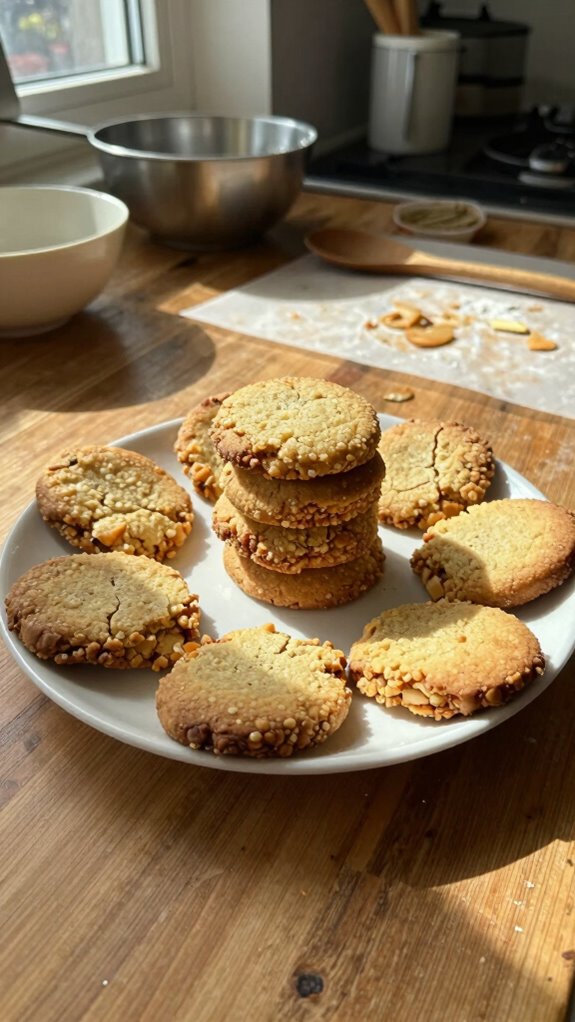
While the taste of gluten-free shortbread is undoubtedly the star of the show, how you present it can elevate the overall experience.
I love using simple garnishing techniques like dusting powdered sugar or drizzling melted chocolate. For serving suggestions, arrange the shortbread on a beautiful platter or stack them in a clear jar for a charming touch.
It’s all about that visual appeal!
What other dishes can I pair it with?
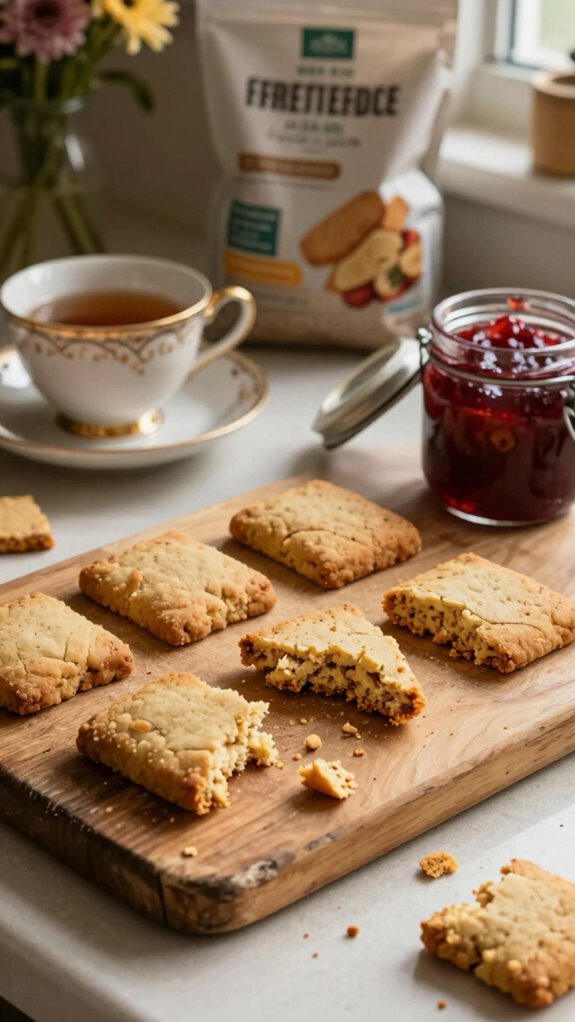
Have you ever wondered what delicious dishes can complement gluten-free shortbread?
I love pairing it with rich chocolate desserts for a sweet indulgence.
For a unique twist, consider savory contrasts like cheese platters or fig jams.
The creamy textures and bold flavors enhance the shortbread’s buttery notes.
These dessert pairings and savory contrasts truly elevate your dining experience to something memorable!
What drinks can I pair it with?
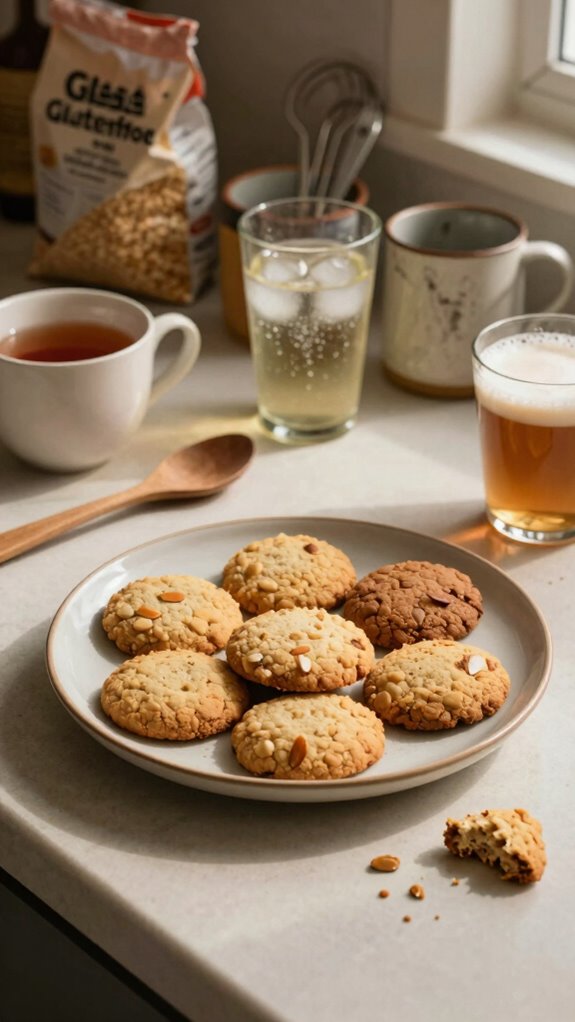
When you’re looking for the perfect drink to complement gluten-free shortbread, I often find that a warm cup of herbal tea works wonders.
The subtle flavors in chamomile or peppermint make fantastic tea pairings.
If you prefer coffee options, a light roast with hints of vanilla or nut can enhance the shortbread’s almond flavor.
Both choices are delightful companions!
Frequently Asked Questions
Can I Use Regular Flour Instead of Almond Flour?
I wouldn’t recommend using regular flour instead of almond flour. Flour comparisons show they provide different baking textures, and almond flour gives a delightful, nutty crunch that regular flour just can’t replicate.
How Should I Store Leftover Shortbread?
I store shortbread in an airtight container at room temperature to maximize freshness. If I want it to last longer, I’ll freeze some, letting it thaw naturally when I’m ready to enjoy it again.
Is Almond Flour Suitable for Nut Allergies?
Almond flour isn’t suitable for those with nut allergies, as it comes from almonds. I always recommend checking almond benefits and considering nut allergy precautions before using it in recipes. Safety first, right?
Can I Freeze the Shortbread Dough?
Yes, you can freeze the shortbread dough! I use freezing techniques like wrapping it tightly in plastic wrap to ensure dough preservation. Just thaw it in the fridge before baking, and you’re good to go!
What Are Some Gluten-Free Substitutes for Butter?
When I need gluten-free substitutes for butter, I often use coconut oil or vegan butter. They both work well in recipes, providing a similar texture and moisture that keeps my baked goods deliciously rich.