When I first experimented with gluten-free iced sugar cookies using almond flour, I was pleasantly surprised by the results. The texture was soft and chewy, not what I expected at all. Plus, the subtle nuttiness added a nice touch. If you’re curious about how to achieve this delightful twist on a classic treat, you’ll want to stick around as I break down the process and share some creative decorating ideas.
What kind of recipe is it?
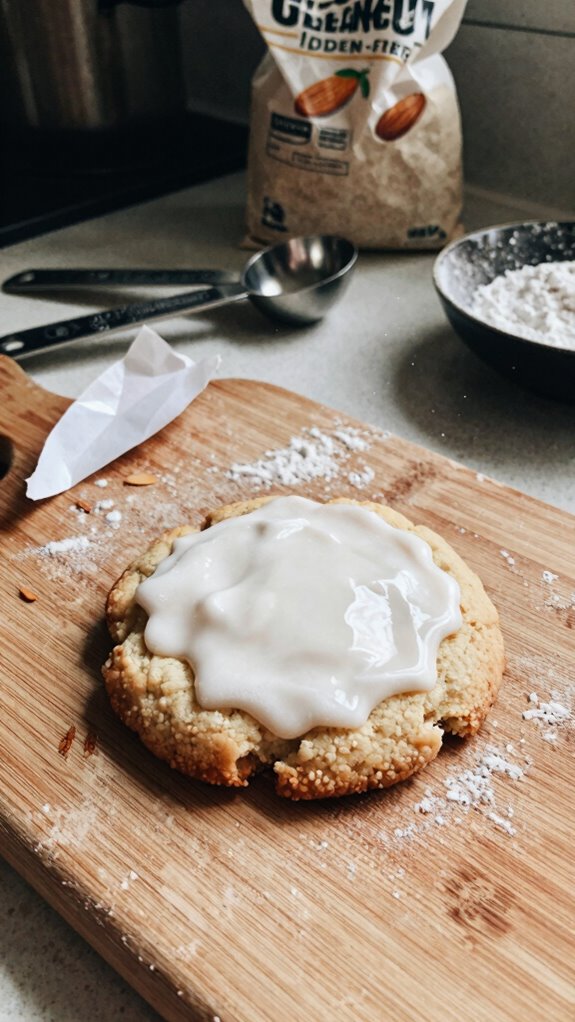
Gluten-Free Iced Sugar Cookies are a delightful treat perfect for any occasion, combining the classic taste of sugar cookies with a gluten-free twist.
These cookies are soft, chewy, and topped with a sweet, shiny icing that adds a burst of flavor and color.
They’re ideal for those with gluten sensitivities or celiac disease, ensuring that everyone can indulge in a sweet snack without worry.
Perfect for family gatherings, parties, or just a cozy night at home, these cookies are sure to please cookie lovers of all ages.
Preparation Time
| Feature | Details |
|---|---|
| Difficulty of Recipe | Easy |
| Preparation Time | 30 minutes |
| Number of Servings | Approximately 24 cookies |
Ingredients
| Ingredient | Quantity |
|---|---|
| Gluten-free all-purpose flour | 2 ½ cups |
| Baking powder | 1 teaspoon |
| Salt | ½ teaspoon |
| Unsalted butter | ¾ cup (1 ½ sticks) |
| Granulated sugar | 1 cup |
| Brown sugar | ½ cup |
| Large egg | 1 |
| Vanilla extract | 1 teaspoon |
| Almond extract (optional) | ½ teaspoon (optional) |
| Icing sugar (confectioners’ sugar) | 2 cups |
| Milk or water (for icing) | 2-3 tablespoons |
| Food coloring (optional) | As desired |
Essential Kitchen Equipment
| Tool/Equipment | Purpose | Alternative Option |
|---|---|---|
| Mixing Bowls (Large & Medium) | Used to combine ingredients thoroughly; large bowls are ideal for mixing dry ingredients, while medium bowls are better for wet ingredients or smaller amounts. | Use any large container, such as Tupperware or large pots. |
| Measuring Cups (Dry & Liquid) | Essential for accurately measuring flour, sugar, and liquids; ensures recipe proportions are correct for baking. | Use disposable cups or water bottles marked with measurements. |
| Measuring Spoons | Used for precise measurements of smaller quantities like baking powder and extracts. | Use a regular spoon and estimate, but this is less accurate. |
| Stand Mixer or Hand Mixer | Facilitates easy and efficient mixing, especially for creaming butter and sugar. | A whisk can be used manually, though it requires more effort. |
| Rubber Spatula | Helps to scrape down the sides of bowls and mix ingredients without wasting any. | A wooden spoon can substitute for mixing, but won’t scrape as well. |
| Wooden Spoon | Used for mixing ingredients, particularly for thicker doughs. | A sturdy plastic spoon works as an alternative. |
| Baking Sheets (2-3) | Provides a flat surface for placing cookie dough while baking. | Any oven-safe tray or pan can be used in a pinch. |
| Parchment Paper or Silicone Mats | Prevents sticking and makes for easy cleanup after baking cookies. | Greasing the baking sheets with butter or oil can be an alternative. |
| Cookie Scoop or Spoon | Used to portion cookie dough evenly, ensuring uniform size and baking consistency. | A regular spoon can be used to drop dough, but may lead to uneven sizes. |
| Cooling Rack | Allows cookies to cool evenly after baking, preventing sogginess. | A plate or countertop can be used, but it won’t allow for airflow. |
| Oven Thermometer | Helps ensure the accuracy of oven temperature for even baking. | If not available, it’s best to rely on the oven’s built-in temperature gauge, but keep in mind it may not be precise. |
Cooking Steps
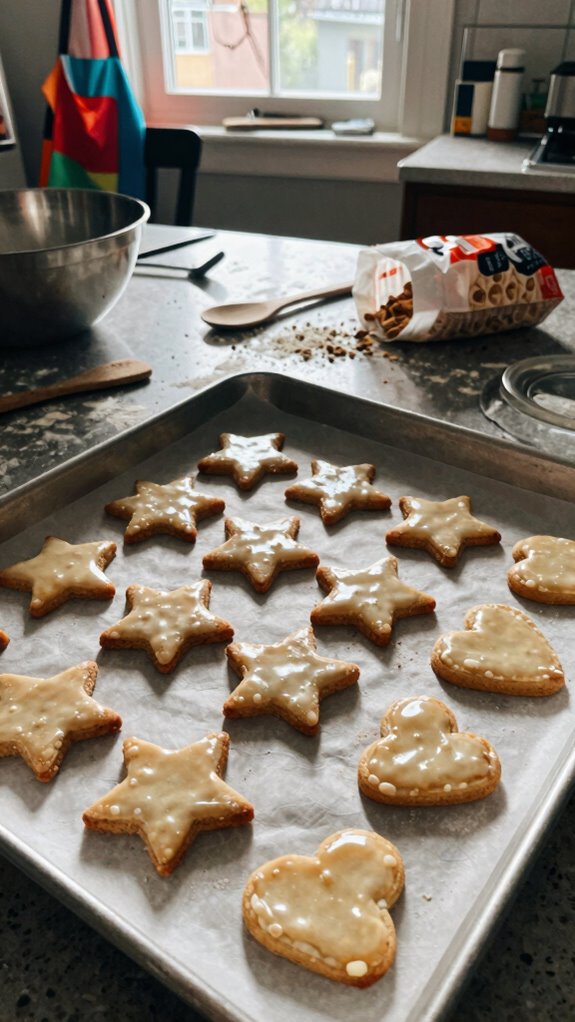
- Prepare mise en place: Gather all ingredients and tools required including gluten-free flour, sugar, butter, eggs, baking powder, vanilla extract, and almond extract. Ensure measuring cups and spoons are ready.
- Preheat the oven: Set your oven to 180°C (350°F) and place the oven rack in the center position.
- Line baking sheets: Prepare two baking sheets (approximately 33 x 46 cm or 13 x 18 inches) by lining them with parchment paper or silicone mats to prevent sticking.
- Mix dry ingredients: In a large mixing bowl, whisk together 240 g (2 cups) of gluten-free flour, 5 g (1 teaspoon) of baking powder, and a pinch of salt until uniform. Set aside.
- Cream butter and sugar: In a medium mixing bowl, use a stand mixer or hand mixer on medium speed to beat together 170 g (3/4 cup) of softened unsalted butter and 200 g (1 cup) of granulated sugar until the mixture is light and fluffy, about 2–3 minutes.
- Combine wet ingredients: To the butter and sugar mixture, add 1 large egg, 5 ml (1 teaspoon) of vanilla extract, and 5 ml (1 teaspoon) of almond extract. Mix on medium speed until fully incorporated, about 1 minute.
- Combine wet and dry ingredients: Gradually add the dry ingredients to the wet mixture. Mix on low speed just until combined, taking care not to overmix. The dough should be soft and slightly sticky.
- Chill the dough: Cover the mixing bowl with plastic wrap and refrigerate the dough for at least 30 minutes. This helps to firm up the dough, making it easier to handle.
- Scoop cookie dough: After chilling, remove dough from the refrigerator. Use a cookie scoop or spoon to portion out the dough into rounds, approximately 30 g (2 tablespoons) each, and place them spaced 5 cm (2 inches) apart on the lined baking sheets.
- Flatten cookies: Gently flatten each cookie round with the bottom of a glass or your hand, achieving a thickness of about 1.5 cm (0.6 inches).
- Bake cookies: Place the baking sheets in the preheated oven at 180°C (350°F) and bake for 10–12 minutes. The cookies should be lightly golden around the edges and remain soft in the center.
- Cool cookies: Remove baking sheets from the oven and allow the cookies to cool on the sheets for 5 minutes before transferring them to a cooling rack to cool completely.
- Rest and serve: Allow the cookies to rest at room temperature for at least 15 minutes after transferring to the cooling rack. The cookies should firm up slightly as they cool.
Enjoy your gluten-free iced sugar cookies once they’re completely cool and ready for icing.
Variations
- Lemon Zest Iced Sugar Cookies: Add zest from 1 lemon to the dough for a refreshing citrus flavor.
- Chocolate Chip Gluten-Free Cookies: Fold in 100 g (1 cup) gluten-free chocolate chips into the dough before baking for a decadent twist.
- Vegan Sugar Cookies: Substitute butter with 170 g (3/4 cup) coconut oil and the egg with 60 ml (1/4 cup) unsweetened applesauce to create a dairy-free and egg-free treat.
- Matcha Green Tea Cookies: Incorporate 5 g (1 teaspoon) of matcha powder into the dry ingredients for an earthy flavor and vibrant color.
- Cinnamon-Sugar Coated Cookies: Before baking, roll the cookie rounds in a mix of 50 g (1/4 cup) granulated sugar and 5 g (1 teaspoon) cinnamon for a cozy, spiced exterior.
- Peanut Butter Swirl Cookies: Swirl in 120 g (1/2 cup) creamy peanut butter into the dough for a nutty flavor and rich texture.
- Pumpkin Spice Cookies: Replace 80 g (1/3 cup) of flour with pumpkin puree and add 5 g (1 teaspoon) of pumpkin spice for a seasonal autumn flavor.
- Air Fryer Sugar Cookies: Use an air fryer at 180°C (350°F) and cook for 8-10 minutes, perfect for a quick and less traditional baking method.
Tips on plating and presentation
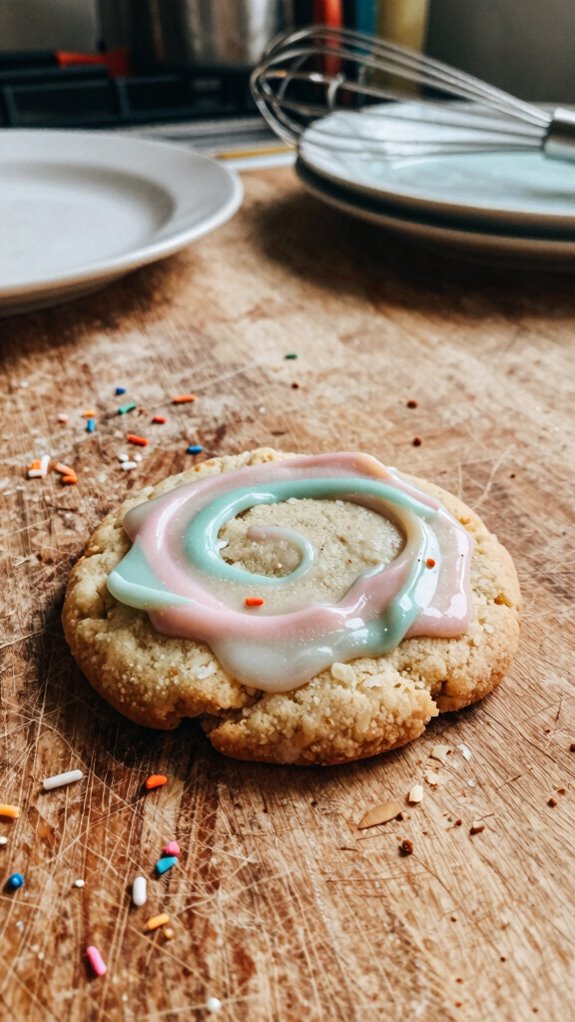
When it comes to plating and presentation, I believe that the visual appeal of your gluten-free iced sugar cookies can elevate the entire dessert experience.
Use simple plating techniques like stacking or arranging cookies in a decorative pattern.
Experiment with different presentation styles, such as placing them on colorful plates or adding edible flowers for a stunning touch that impresses your guests.
What other dishes can I pair it with?
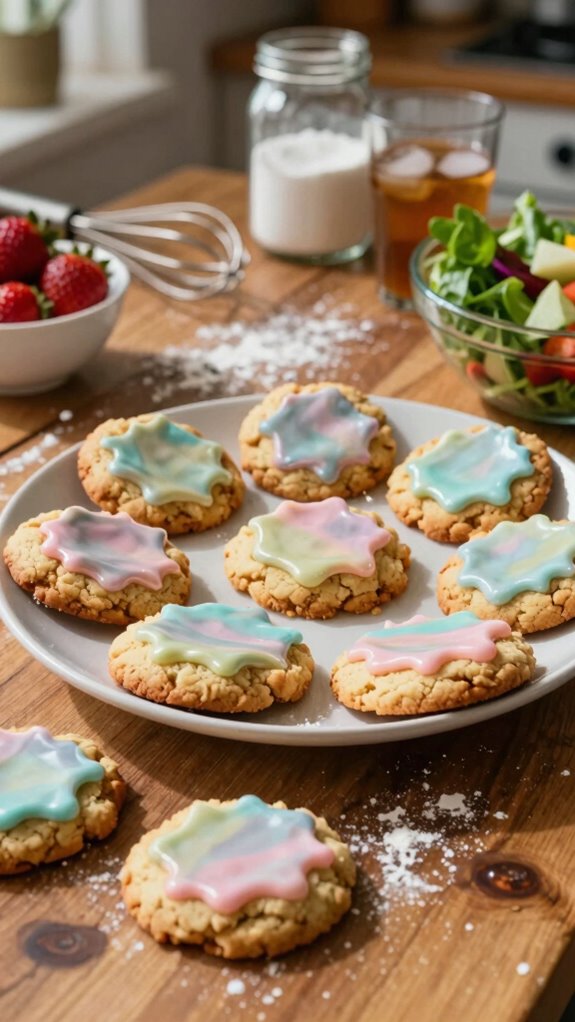
After you’ve beautifully plated your gluten-free iced sugar cookies, think about what other dishes can complement their sweetness.
I love pairing them with a selection of dessert pairings like rich chocolate brownies or fruity tartlets.
You can also create delightful cookie assortments featuring different flavors, like lemon or peanut butter cookies, to give your guests a variety of treats to enjoy.
What drinks can I pair it with?
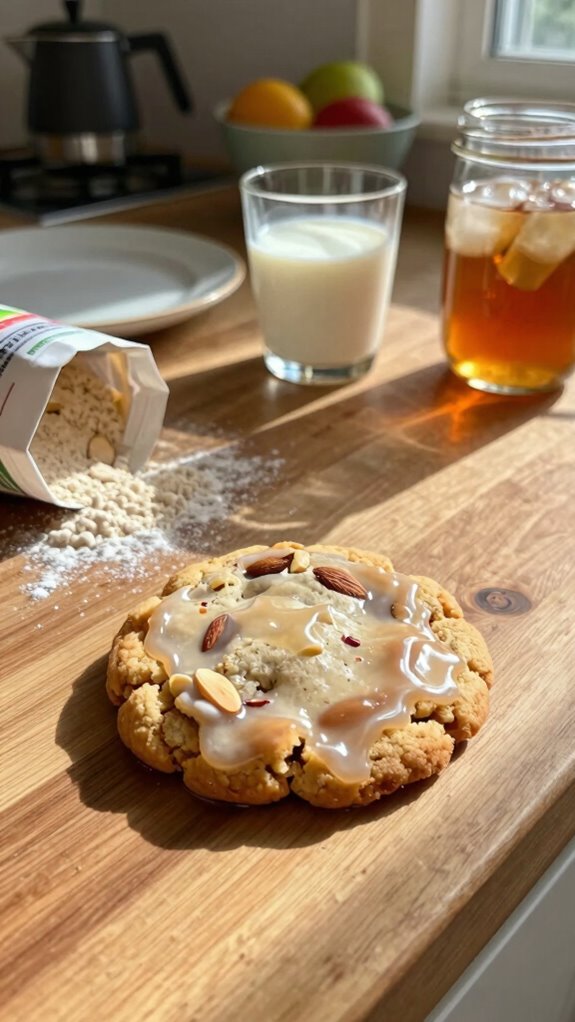
To elevate your gluten-free iced sugar cookies even further, consider pairing them with a selection of refreshing beverages.
I’ve found that a rich cup of coffee pairs beautifully, enhancing the sweetness of the cookies. For a lighter option, I love a fragrant herbal tea; chamomile or peppermint works wonders.
These combinations make for a delightful treat during any occasion!
Frequently Asked Questions
Can I Use Other Flours Instead of Almond Flour?
Absolutely, I’ve used rice flour and coconut flour in my baking. Just remember, the texture and flavor will change a bit, so it’s fun to experiment and find what works best for you!
How Long Do These Cookies Stay Fresh?
These cookies stay fresh for about a week at room temperature if stored properly in an airtight container. For longer shelf life, I’d suggest refrigerating or freezing them to maintain their deliciousness and texture.
Can I Freeze Iced Sugar Cookies?
Yes, you can freeze iced sugar cookies! For freezing, pack them between layers of parchment paper in an airtight container. When ready to enjoy, thaw them in the fridge for best results. Happy baking!
Are There Any Nut-Free Alternatives to Almond Flour?
Absolutely! I love using coconut flour or oat flour as nut-free alternatives. They both work great in many recipes, and it’s fun experimenting with different textures and flavors to find what I enjoy most!
How Can I Achieve a Thicker Icing Consistency?
To achieve a thicker icing consistency, I usually add more powdered sugar and reduce the liquid slightly. It’s all about balance; just adjust until I reach the desired thickness for my icing.