I’ve always appreciated the simplicity of a good shortbread cookie, but when it’s dipped in dark chocolate, it truly transforms. The buttery richness combined with the bold flavor of the chocolate creates a unique experience. Trust me, these cookies are more than just a treat; they’re an indulgence. Want to know how to recreate this tempting dessert in your own kitchen? Let’s explore the process and discover some delightful variations.
What kind of recipe is it?
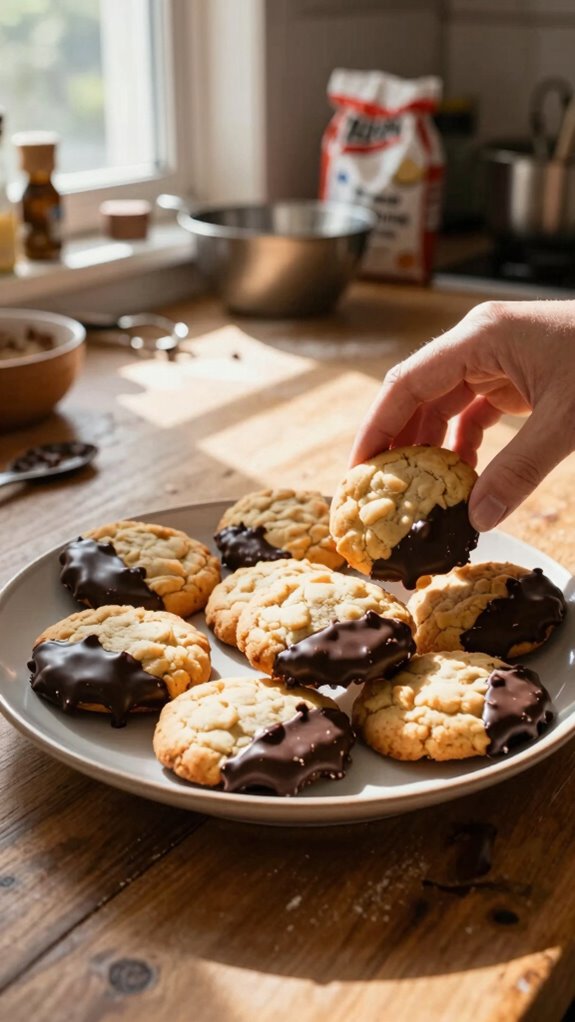
Shortbread cookies are a classic, buttery treat characterized by their crumbly texture and rich flavor. Made with just three simple ingredients—flour, sugar, and butter—these cookies offer a melt-in-your-mouth experience that’s both indulgent and satisfying.
They’re perfect for any occasion, whether enjoyed with tea or shared at gatherings, making them suitable for both casual bakers and experienced chefs alike. Ideal for those seeking a delightful homemade dessert, shortbread cookies appeal to all ages and can easily be customized with add-ins like chocolate or nuts.
Preparation Time
| Aspect | Details |
|---|---|
| Difficulty of the Recipe | Easy |
| Preparation Time | 15 minutes |
| Number of Servings | Approximately 24 cookies |
Ingredients
| Ingredient | Quantity |
|---|---|
| All-purpose flour | 2 cups (250 grams) |
| Unsalted butter | 1 cup (226 grams), softened |
| Granulated sugar | 1/2 cup (100 grams) |
| Confectioners’ sugar | 1/4 cup (30 grams) |
| Vanilla extract | 1 teaspoon |
| Salt | 1/4 teaspoon |
Essential Kitchen Equipment
| Tool/Equipment | Purpose | Alternative Option |
|---|---|---|
| Mixing Bowls (Large and Medium) | To combine ingredients in the proper proportions. A large bowl is perfect for mixing dough, while a medium bowl can be used for smaller ingredient mixtures. | Use any large, deep container that can accommodate the dough, such as a pot or deep dish. |
| Measuring Cups (Dry and Liquid) | Essential for accurately measuring flour, sugar, and butter to ensure the recipe proportions are correct. | Use a standard cup that is marked for different measurements, or use a food scale for exact measurements. |
| Measuring Spoons | For measuring smaller quantities like vanilla extract and salt. Accuracy is key in baking! | Use any small spoon to approximate, but be careful with accuracy; a 5 mL medicine spoon can work in a pinch for liquid measures. |
| Stand Mixer or Hand Mixer | To quickly and effectively combine the ingredients, especially when creaming the butter and sugars together. | Mixing by hand with a wooden spoon or a whisk, though this will require more effort. |
| Rubber Spatula | Ideal for scraping down the sides of bowls and transferring dough without wasting any ingredients. | A plastic or silicone utensil can serve the same purpose. |
| Wooden Spoon | Great for mixing dough and combining ingredients manually, especially tougher doughs. | Any sturdy spoon can work, though wooden spoons are preferred for durability and ease of handling. |
| Baking Sheets (2-3) | Provides a flat, even surface for baking the cookies in the oven. Multiple sheets allow for batch baking. | Any flat oven-safe tray can work, though not ideal for ensuring even cooking. |
| Parchment Paper or Silicone Mats | Helps prevent sticking and ensures easy removal of cookies from baking sheets. It also leads to even baking for more uniform results. | Lightly grease the baking sheets with butter or a cooking spray, but be cautious as this can cause sticking. |
| Cookie Scoop or Spoon | For evenly portioning out the cookie dough to ensure they bake uniformly. | Use a tablespoon to drop spoonfuls of dough onto the baking sheet for a rough approximation. |
| Cooling Rack | Allows cookies to cool evenly after baking, preventing them from becoming soggy from steam. | Use any flat surface, such as a plate or cutting board, but be wary that cookies may not cool as effectively. |
| Oven Thermometer | To ensure that your oven is at the correct temperature, as baking requires precise heat settings. | Use the built-in oven thermometer if available, or check it with a standard oven-proof meat thermometer if necessary. |
Cooking Steps
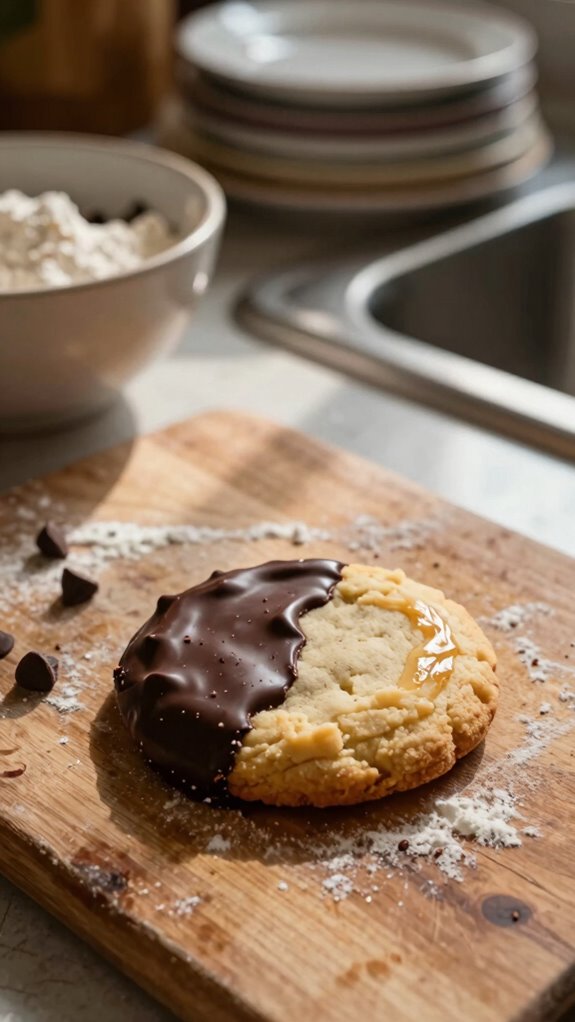
1. Gather and measure all ingredients: 225 g (2 sticks) unsalted butter at room temperature, 100 g (1/2 cup) granulated sugar, 225 g (1 3/4 cup) all-purpose flour, 100 g (1/2 cup) cornstarch, and 1 g (1/4 tsp) salt.
Set up your tools: a large mixing bowl, rubber spatula, and a baking sheet lined with parchment paper.
2. Preheat the oven to 150 °C (300 °F). Position the oven rack in the center to ensure even baking.
3. In the large mixing bowl, add the room temperature butter and granulated sugar.
Using a stand mixer with the paddle attachment (or a hand mixer), beat the mixture on medium speed for 2-3 minutes until it becomes light and fluffy. Scrape down the sides of the bowl halfway through to ensure even mixing.
4. Gradually sift the all-purpose flour, cornstarch, and salt into the butter-sugar mixture.
Mix on low speed just until the ingredients are combined, approximately 1 minute. The dough should be soft and slightly crumbly.
5. Use a rubber spatula to bring the dough together in the bowl, ensuring there are no dry bits remaining.
6. Scoop the dough using a cookie scoop or tablespoon and portion it onto the prepared baking sheet, spacing them about 5 cm (2 inches) apart.
The cookies will spread slightly while baking.
7. Bake in the preheated oven for 30-35 minutes, or until the edges are lightly golden and the tops no longer look wet.
The cookies should feel firm to the touch, indicating they’re done.
8. Remove the baking sheet from the oven and let the cookies cool on the sheet for about 10 minutes to firm up before transferring them to a cooling rack.
Gently slide a spatula under each cookie to prevent sticking.
9. Allow the cookies to cool completely on the cooling rack for an additional 20-30 minutes.
They’ll firm up further as they cool.
10. Enjoy your shortbread cookies once they’ve cooled, noticing the crisp edges and tender, buttery texture.
Variations
- Chocolate Chip Shortbread: Add 150 g (1 cup) of semi-sweet chocolate chips to the dough for a sweet, chocolatey twist.
- Lemon Zest Shortbread: Incorporate the zest of 1 medium lemon (about 10 g) into the dough for a refreshing citrus flavor.
- Gluten-Free Shortbread: Substitute all-purpose flour with 225 g (1 3/4 cups) gluten-free flour blend to make this cookie suitable for gluten-sensitive eaters.
- Dairy-Free Shortbread: Use 225 g (2 sticks) of dairy-free butter instead of regular unsalted butter for a dairy-free alternative.
- Vegan Shortbread: Replace butter with 225 g (2 sticks) of coconut oil and use flaxseed meal to bind the mixture (1 tbsp flaxseed meal mixed with 2.5 tbsp water).
- Cranberry Orange Shortbread: Mix in 100 g (1 cup) of dried cranberries and the zest of 1 orange (about 10 g) for a festive flavor combination.
- Matcha Green Tea Shortbread: Add 15 g (2 tbsp) of matcha green tea powder to the flour mixture for a unique and slightly earthy taste.
- Peanut Butter Shortbread: Include 100 g (1/2 cup) of smooth peanut butter in the dough to add protein and a nutty flavor.
Tips on plating and presentation
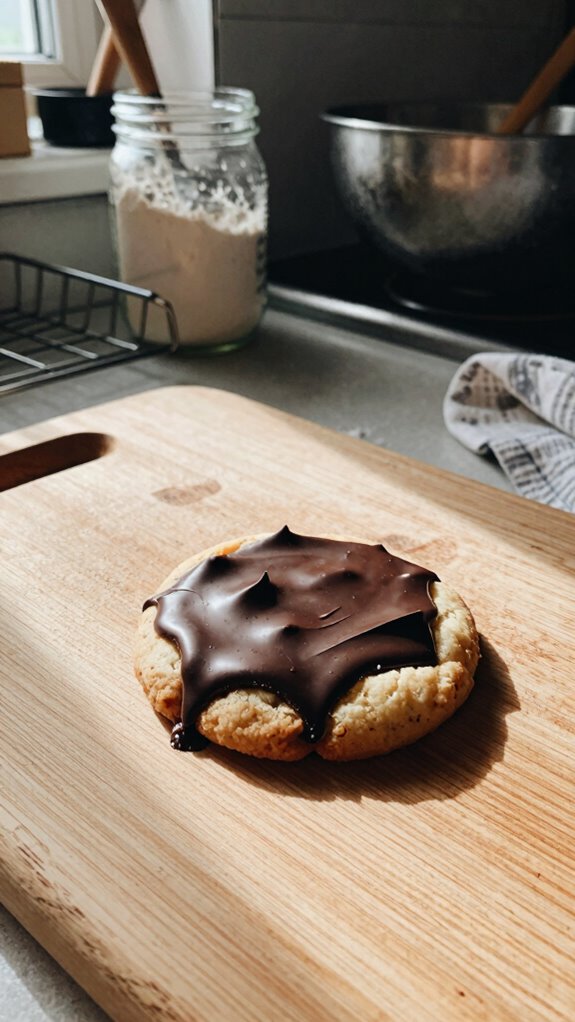
While shortbread cookies are delicious on their own, presenting them beautifully can elevate your dessert experience.
I recommend using simple plating techniques like stacking or arranging them on a decorative plate. Experiment with various presentation styles, adding fresh berries or edible flowers for color.
A drizzle of dark chocolate can enhance the visual appeal while complementing the cookie’s flavor. Enjoy showcasing your creation!
What other dishes can I pair it with?
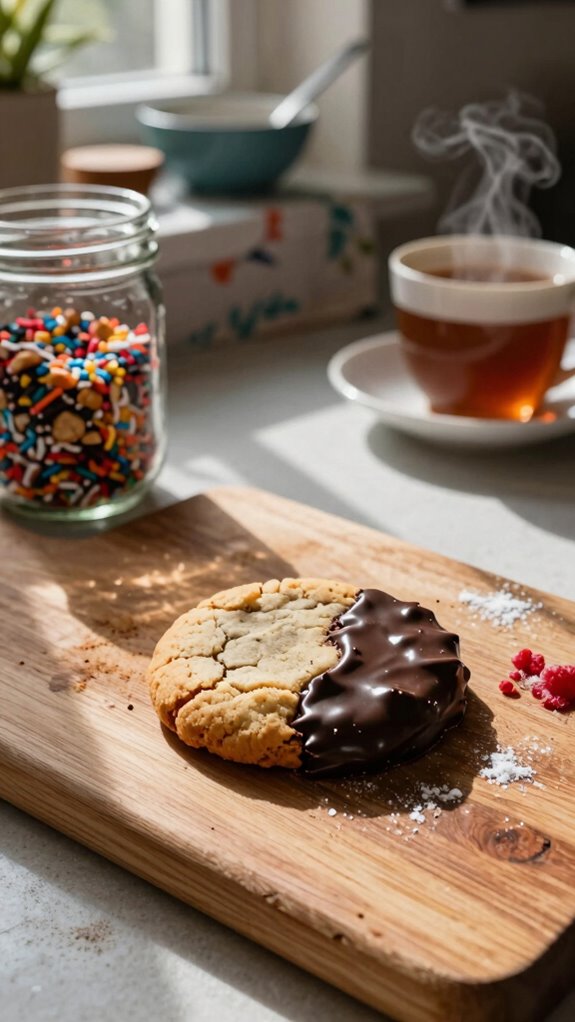
Although shortbread cookies are delightful on their own, they pair wonderfully with a variety of dishes that can enhance your dessert spread.
I love arranging them on dessert platters alongside fresh fruits, like berries, or creamy cheeses.
For tea pairings, a light Earl Grey or chamomile complements the buttery flavors beautifully.
Try pairing these for a truly delightful experience!
What drinks can I pair it with?
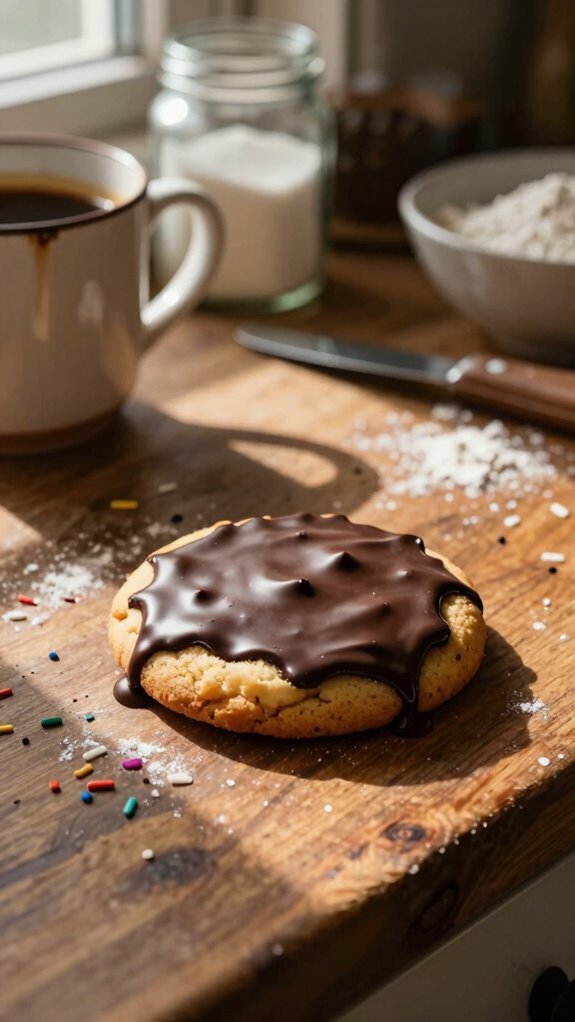
What drinks can elevate the enjoyment of shortbread cookies? I find that a strong coffee blend perfectly balances the sweetness, while a creamy Earl Grey tea pairing adds a delightful twist.
If you’re in the mood for something different, a rich hot chocolate can seal the deal. Each drink enhances the buttery goodness, making every bite even more indulgent.
Enjoy experimenting!
Frequently Asked Questions
Can I Use White Chocolate Instead of Dark Chocolate?
Sure, I’ve used white chocolate instead of dark chocolate before. The flavor comparisons are interesting; white chocolate’s sweetness brings a different vibe. I love experimenting with white chocolate alternatives to find unique combinations!
How Should I Store Leftover Shortbread Cookies?
I always store leftover shortbread cookies in an airtight container for the best storage. This keeps them fresh longer, preventing them from getting stale or losing their delightful texture. Enjoy your treats even after a few days!
Are Shortbread Cookies Gluten-Free?
No, traditional shortbread cookies aren’t gluten-free, as they typically use wheat flour. However, I’ve enjoyed baking alternatives using gluten-free options like almond or rice flour, and they turn out deliciously crispy!
Can I Freeze the Dipped Cookies for Later?
Yes, I can freeze the dipped cookies for later! I wrap them tightly using freezing techniques to maintain their texture. Just remember to thaw them slowly for the best taste and consistency once you’re ready to enjoy.
How Long Do the Cookies Stay Fresh?
They’ll stay fresh for about two weeks at room temperature. For best flavor retention, I recommend storing them in an airtight container; that way, their shelf life remains optimal, and I can enjoy them longer!