When I think about cookies, Brown Butter Shortbread certainly comes to mind. The combination of rich, nutty flavors and that perfectly crumbly texture is hard to resist. I love how simple ingredients can create such a delightful treat. If you’re curious about how to whip these up, there are a few key steps and tips to consider. Let’s explore what makes these cookies special and how you can elevate your own baking experience.
What kind of recipe is it?
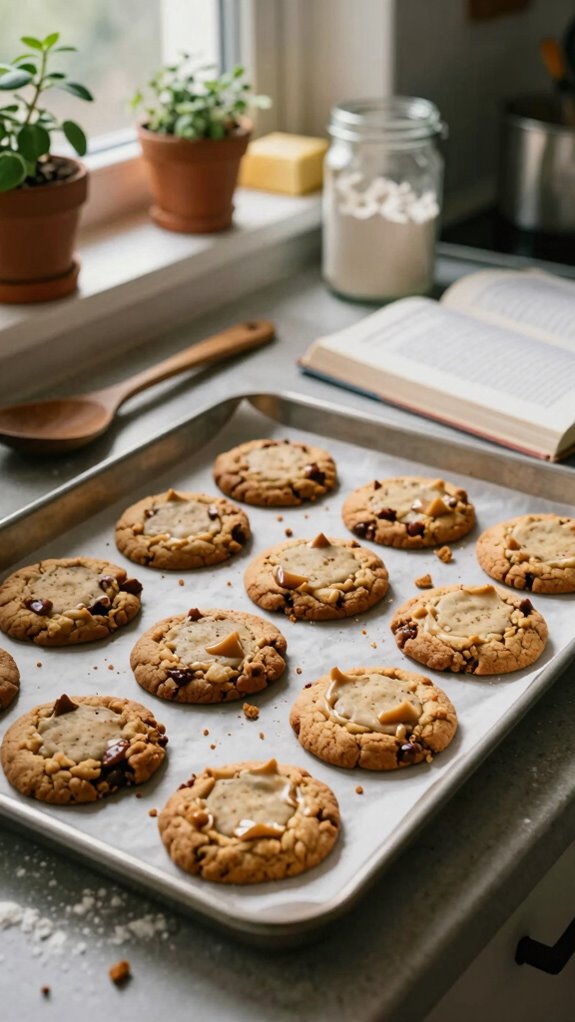
Brown Butter Shortbread Cookies are a delightful twist on a classic treat, featuring a rich, nutty flavor from the brown butter that elevates the traditional shortbread experience.
With their crumbly texture and melt-in-your-mouth quality, these cookies are perfect for both casual snacking and special occasions.
The simplicity of the recipe makes it accessible for bakers of all skill levels, while the sophisticated taste appeals to anyone looking for a delicious homemade cookie.
Indulge in these charming treats for cozy gatherings or as a thoughtful gift for loved ones.
Preparation Time
| Category | Details |
|---|---|
| Difficulty of the Recipe | Easy |
| Preparation Time | 15 minutes |
| Number of Servings | Approximately 24 cookies |
Ingredients
| Ingredient | Quantity |
|---|---|
| Unsalted Butter | 1 cup (2 sticks) |
| Granulated Sugar | 1/2 cup |
| Brown Sugar | 1/4 cup |
| All-purpose Flour | 2 cups |
| Sea Salt | 1/2 teaspoon |
| Vanilla Extract | 1 teaspoon |
| Optional: Chopped Nuts or Chocolate Chips | 1/2 cup (if desired) |
Essential Kitchen Equipment
| Tool/Equipment | Purpose | Alternative Option |
|---|---|---|
| Mixing Bowls (Large & Medium) | Used for combining ingredients—larger bowl for dry ingredients, medium for wet. | Any large bowl (e.g., salad bowl) can be used for mixing. |
| Measuring Cups (Dry & Liquid) | Essential for accurately measuring ingredient quantities. | Use a kitchen scale for more precise measurements if available. |
| Measuring Spoons | Used to measure smaller quantities of ingredients like salt and vanilla extract. | A tablespoon from your silverware can work in practice. |
| Stand Mixer or Hand Mixer | Helps cream the butter and sugar together smoothly and quickly. | A whisk can be used, but it requires more effort and time. |
| Rubber Spatula | Ideal for scraping down sides of bowls and folding ingredients. | A regular spatula or wooden spoon can serve the same purpose. |
| Wooden Spoon | Perfect for mixing dough and combining tougher ingredients. | Any sturdy utensil can work, including a silicone spatula. |
| Baking Sheets (2-3) | Used to place the cookies on while baking. | Any flat oven-safe tray can be used, just ensure it’s lined. |
| Parchment Paper or Silicone Mats | Helps prevent sticking and ensures even baking on baking sheets. | Greasing the baking sheets can be a temporary substitute. |
| Cookie Scoop or Spoon | Useful for scooping uniform cookie dough portions. | A regular spoon can be used, but the size may vary. |
| Cooling Rack | Allows cookies to cool evenly without becoming soggy. | A plate or countertop can be used to cool cookies, though it won’t be as effective. |
| Oven Thermometer | Helps ensure your oven is at the correct temperature for baking. | If unavailable, preheat your oven for a few extra minutes but monitor closely. |
Cooking Steps
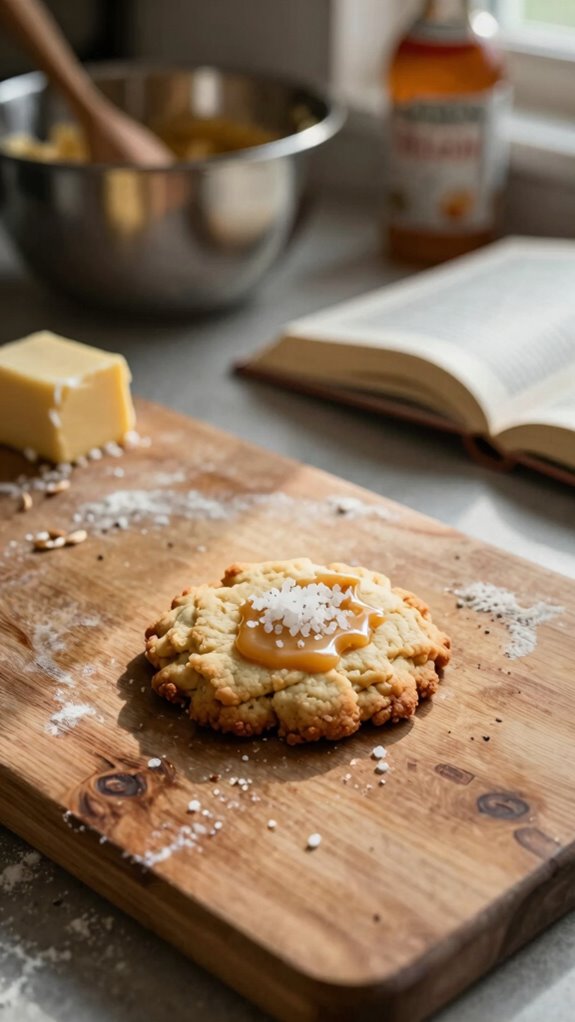
- Begin by preparing your mise en place: measure 225 g (1 cup) unsalted butter, 100 g (1/2 cup) powdered sugar, 275 g (2 1/4 cups) all-purpose flour, and 1/2 tsp salt. Set aside an additional 25 g (1/4 cup) powdered sugar for dusting later.
- Preheat your oven to 175 °C (350 °F) and adjust the oven rack to the middle position. If using convection mode, reduce the temperature to 160 °C (325 °F).
- In a medium-sized mixing bowl, brown the butter. Place 225 g (1 cup) of unsalted butter in a medium saucepan over medium heat. Cook, stirring frequently, until the butter melts and begins to brown, approximately 5-8 minutes. Watch closely for a nutty aroma and a golden-brown color.
- Once the butter has browned, remove it from heat immediately and let it cool slightly for about 5-10 minutes. The butter should still be warm but not hot.
- In a large mixing bowl, combine the browned butter and 100 g (1/2 cup) powdered sugar. Using a stand mixer fitted with the paddle attachment (or a hand mixer), beat on medium speed until the mixture is smooth and creamy, about 2-3 minutes.
- Gradually add 275 g (2 1/4 cups) of all-purpose flour and 1/2 tsp salt to the butter-sugar mixture. Mix on low speed until just combined, scraping down the sides of the bowl with a rubber spatula as necessary. The dough should come together and be slightly crumbly but hold its shape when pressed.
- Turn the dough out onto a floured work surface; shape it into a log approximately 5 cm (2 inches) in diameter. Wrap the log tightly in plastic wrap and refrigerate for at least 30 minutes to firm up.
- After chilling, remove the dough from the refrigerator and preheat your oven to 175 °C (350 °F), if it has cooled down. Line two baking sheets with parchment paper or silicone mats.
- Slice the chilled dough into 1 cm (1/2 inch) thick rounds and place them on the prepared baking sheets, leaving about 5 cm (2 inches) between cookies.
- Bake in the preheated oven on the middle rack for 12-15 minutes, or until the edges are lightly golden and the centers remain pale. Allow them to cool in the pan for 5 minutes.
- After cooling on the baking sheet, transfer the cookies to a wire cooling rack. Dust with the remaining 25 g (1/4 cup) powdered sugar while still warm. Let cool completely before serving.
Variations
- Almond Shortbread: Substitute 100 g (1/2 cup) of all-purpose flour with almond flour for a nutty flavor and delicate texture.
- Matcha Green Tea Shortbread: Incorporate 2 tbsp (30 g) of matcha powder into the flour mix for a vibrant color and earthy flavor.
- Lavender Infusion: Add 1 tbsp (7 g) of culinary dried lavender buds to the butter while browning to infuse a floral aroma.
- Dairy-Free Variation: Replace 225 g (1 cup) of unsalted butter with 225 g (1 cup) of coconut oil for a dairy-free version that still delivers great texture.
- Vegan Shortbread: Use 225 g (1 cup) of vegan butter and replace powdered sugar with coconut sugar in equal measure for a plant-based twist.
- Chocolate Chip Twist: Fold in 100 g (1/2 cup) of dairy-free chocolate chips into the dough for a chocolaty bite in every cookie.
- Pumpkin Spice Shortbread: Add 1 tsp (2 g) of pumpkin pie spice and 75 g (1/3 cup) of pure pumpkin puree for a seasonal autumn treat.
- Air-Fried Shortbread: Shape the dough into balls and cook them in an air fryer at 160 °C (320 °F) for 10-12 minutes for a lower-fat alternative.
Tips on plating and presentation
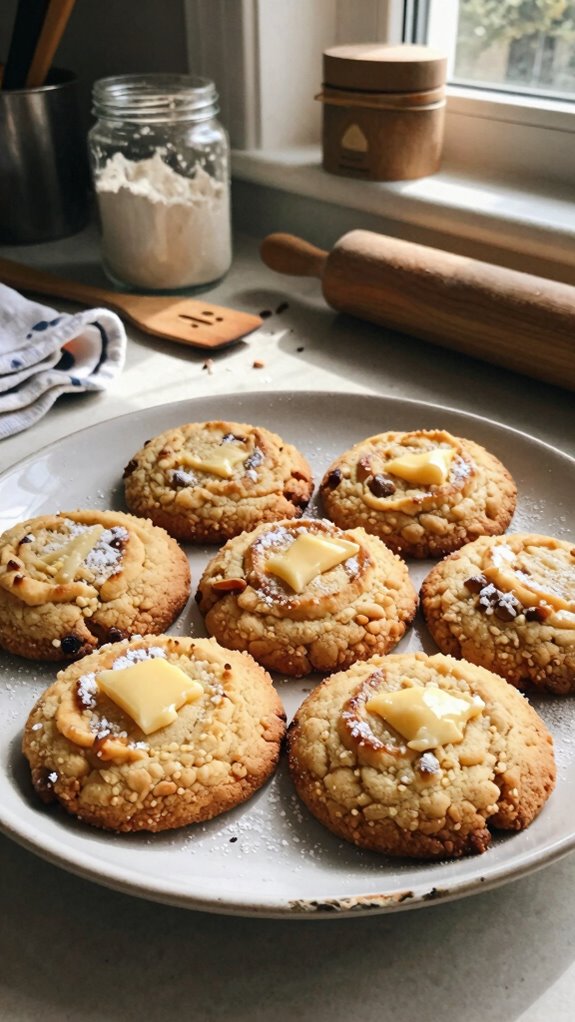
While plating your brown butter shortbread cookies, consider the overall aesthetic to make them truly special.
I love using simple garnishes like a dusting of powdered sugar or a drizzle of chocolate for cookie garnishing tips.
You can also display them on a beautiful serving platter with fresh herbs or seasonal fruits for stunning serving ideas that elevate the entire dessert experience.
What other dishes can I pair it with?
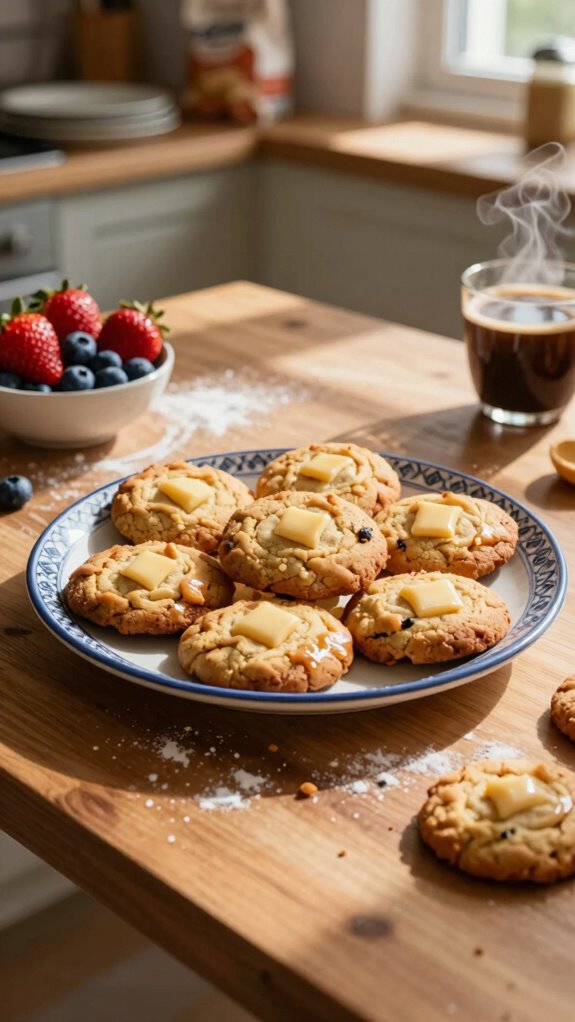
Have you ever thought about what delightful dishes pair perfectly with brown butter shortbread cookies?
I love serving them alongside a scoop of creamy vanilla ice cream or a rich chocolate mousse for a decadent experience.
For lighter pairing suggestions, fresh berries with whipped cream work wonderfully.
These dessert options elevate the cookies and create a delightful balance of flavors that you’ll truly enjoy.
What drinks can I pair it with?
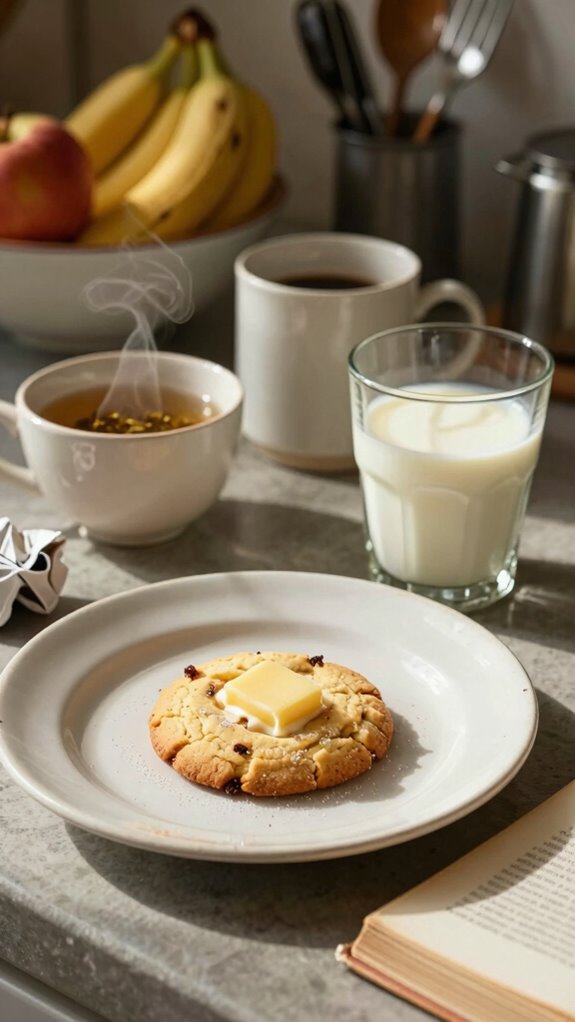
When I’m enjoying brown butter shortbread cookies, I love to think about the perfect drinks to accompany them.
For a delightful pairing, I often reach for a sweet dessert wine that complements the nuttiness.
If I’m in the mood for coffee, a rich espresso or a velvety latte enhances the cookie’s buttery flavor beautifully.
These combos truly elevate my treat experience!
Frequently Asked Questions
Can I Freeze Brown Butter Shortbread Cookies?
Sure, I freeze my cookies all the time! I use airtight containers for freezing techniques. When thawing, I let them sit at room temperature first, ensuring they stay delicious and fresh for later enjoyment.
How Long Do These Cookies Stay Fresh?
These cookies stay fresh for about two weeks at room temperature. To maximize shortbread shelf life, store them in an airtight container. I always prioritize ingredient freshness for the best flavor and texture!
What Is the Best Way to Store Them?
To store them effectively, I use airtight containers and keep them in a cool, dry place. For best freshness, I also practice temperature control, ensuring they stay away from heat and moisture. Packaging tips matter!
Can I Substitute Different Flours for This Recipe?
You can definitely substitute different flours in the recipe! Just keep in mind that using alternative flours might create texture differences; each one brings its own unique characteristics. I love experimenting with options like almond or oat flour!
Are There Any Gluten-Free Options for Shortbread Cookies?
Absolutely! I love using gluten-free flours like almond or coconut flour. If you’re looking for dairy-free options, substituting coconut oil or dairy-free margarine works great. You’ll get delicious cookies everyone can enjoy!