When I think about festive baking, the Brown Butter Buttery Spritz Cookie always comes to mind. Its rich and nutty flavor transforms the classic treat into something truly special. The unique melt-in-your-mouth texture makes it a stand-out at any gathering. But what makes these cookies so irresistible? Let’s explore the details, from preparation to presentation, that elevate this delightful recipe to the next level.
What kind of recipe is it?
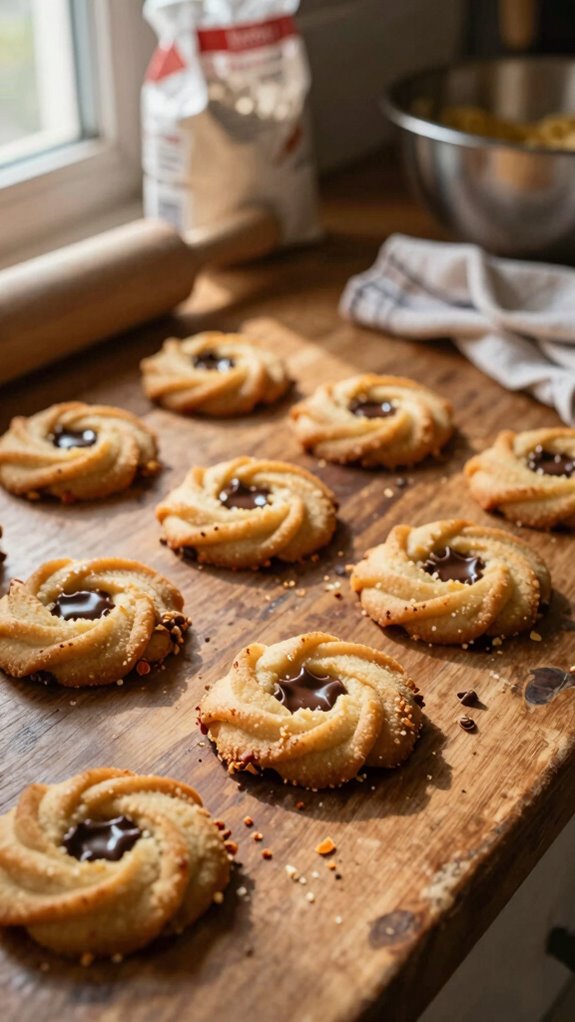
The Brown Butter Buttery Spritz Cookie is a delightful twist on a classic holiday treat, featuring the rich, nutty flavor of brown butter that adds depth and sophistication to this sweet cookie.
With its melt-in-your-mouth texture and beautifully intricate shapes created by a cookie press, it’s perfect for festive gatherings or as a charming homemade gift.
This recipe is aimed at bakers of all skill levels who want to impress with a unique and elegant dessert that stands out on any cookie platter.
Preparation Time
| Aspect | Details |
|---|---|
| Difficulty of the Recipe | Easy to Medium |
| Preparation Time | 30 minutes |
| Number of Servings | Approximately 24 cookies |
Ingredients
| Ingredient | Quantity |
|---|---|
| Unsalted butter | 1 cup (2 sticks) |
| Granulated sugar | 3/4 cup |
| Brown sugar | 1/4 cup |
| Vanilla extract | 1 teaspoon |
| Egg | 1 large |
| All-purpose flour | 2 cups |
| Cornstarch | 1/4 cup |
| Baking soda | 1/2 teaspoon |
| Salt | 1/4 teaspoon |
| Powdered sugar (for rolling) | Optional, for finishing |
Essential Kitchen Equipment
| Tool/Equipment | Purpose | Alternative Option |
|---|---|---|
| Mixing bowls (large and medium) | Used for combining ingredients, mixing dough, and preparing the batter. | Any large bowl from your kitchen or even a sturdy plastic container. |
| Measuring cups (dry and liquid) | Essential for accurately measuring the quantities of ingredients. | Use a scale for weight measurements if cups are not available. |
| Measuring spoons | Needed to measure smaller amounts of ingredients like baking soda and salt. | Use the lids of spice jars or any small spoon available for rough measurements. |
| Stand mixer or hand mixer | Helps to efficiently cream butter and sugar, mix in wet ingredients, and achieve a uniform dough mixture. | A whisk or wooden spoon can be used for manual mixing, though it requires more effort. |
| Rubber spatula | Ideal for scraping down the sides of mixing bowls and ensuring all ingredients are incorporated. | A regular spoon can be used, although it may not be as effective at scraping. |
| Wooden spoon | Useful for mixing dough and combining ingredients to achieve a well-mixed batter. | Any sturdy spoon can work in place of a wooden spoon. |
| Baking sheets (2-3) | Used to bake the cookies; having extra sheets allows for multiple batches to be baked in succession. | Line a single sheet with parchment paper and bake in batches if limited. |
| Parchment paper or silicone mats | Provides a non-stick surface for baking cookies, preventing them from sticking to the baking sheets. | Lightly greasing the baking sheets with butter or oil can work as an alternative. |
| Cookie scoop or spoon | Essential for portioning out cookie dough for even-sized cookies. | Two teaspoons can be used to scoop out and shape cookie dough. |
| Cooling rack | Allows cookies to cool evenly while preventing them from becoming soggy. | A plate or countertop can be used, but it may trap steam and moisture. |
| Oven thermometer | Ensures the oven is at the correct temperature for baking, helping to achieve the desired cookie texture. | A simple visual check or testing with a drop of water can indicate if the oven is hot enough (if it sizzles, it’s likely ready). |
Cooking Steps
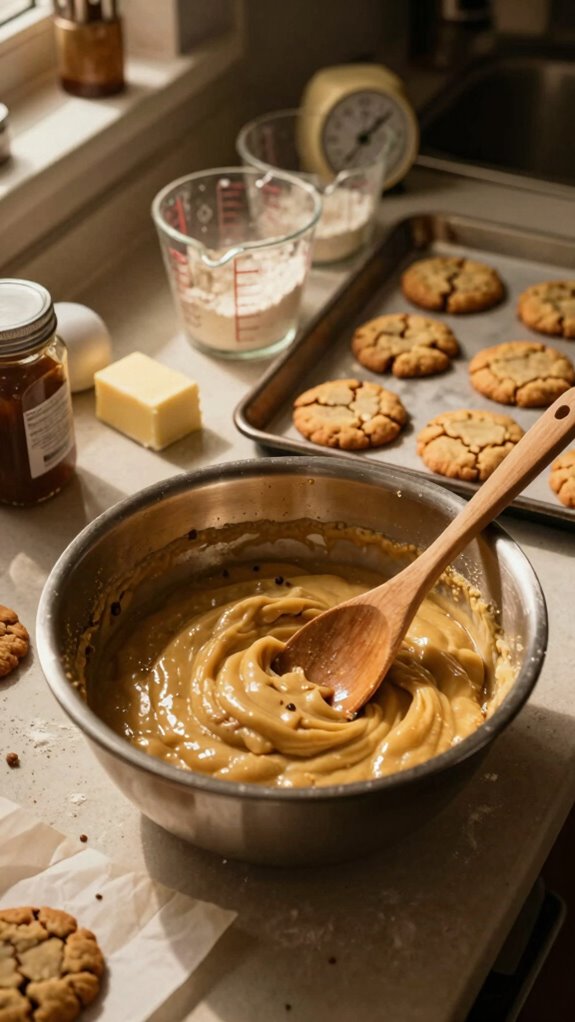
1. Prepare your mise en place: Measure out 240 g (1 ¾ cups) of all-purpose flour, 5 g (1 tsp) baking powder, 2 g (½ tsp) baking soda, and 2 g (½ tsp) salt in separate containers.
Combine and whisk the dry ingredients together in a medium mixing bowl. Set aside.
2. Preheat your oven to 180 °C (350 °F) and position the racks to allow enough space for the baking sheets. If using convection settings, reduce the temperature to 165 °C (325 °F).
3. In a medium saucepan, over medium heat, melt 170 g (¾ cup) unsalted butter. Stir the butter occasionally and continue cooking until it becomes golden brown and starts to smell nutty, approximately 5-7 minutes.
Remove from heat and let cool for about 10 minutes.
4. In a large mixing bowl, pour in the browned butter. Add 150 g (¾ cup) granulated sugar and 75 g (⅓ cup) packed light brown sugar.
Using a stand mixer fitted with a paddle attachment or a hand mixer, cream the sugars and butter together on medium speed for about 3 minutes, until light and fluffy.
5. Add 1 large egg and 5 ml (1 tsp) vanilla extract to the creamed mixture.
Mix on low speed until fully incorporated, approximately 1 minute.
6. Gradually add the dry flour mixture from step 1 to the wet ingredients, mixing on low speed until just combined and no dry flour remains, about 30 seconds.
Avoid overmixing.
7. Using a cookie scoop or two teaspoons, portion out the cookie dough and place on ungreased baking sheets or sheets lined with parchment paper, spacing them about 5 cm (2 inches) apart.
8. Bake cookies in the preheated oven for 10-12 minutes. They should be lightly golden around the edges but still soft in the center.
The presence of a slight sheen on the surface will indicate doneness, as will a nutty aroma.
9. Once baked, remove the baking sheets from the oven and allow the cookies to cool on the baking sheets for 5 minutes before transferring them to a cooling rack.
10. Let the cookies cool completely on the cooling rack for at least 15-20 minutes to ensure they set properly.
Variations
- Chocolate Chip Spritz: Incorporate 150 g (1 cup) of semi-sweet chocolate chips into the dough for a classic flavor twist.
- Almond Joy Spritz: Add 50 g (⅓ cup) of shredded coconut and 50 g (⅓ cup) of chopped almonds for a tropical twist.
- Maple Pecan Spritz: Replace granulated sugar with 150 g (¾ cup) maple sugar and add 75 g (½ cup) chopped pecans for a seasonal flavor.
- Gluten-Free Spritz: Use a gluten-free all-purpose flour blend in place of regular flour (240 g for 1 ¾ cups) for a gluten-free version.
- Vegan Spritz: Substitute the butter with 170 g (¾ cup) coconut oil and use a flax egg (1 tbsp ground flaxseed mixed with 3 tbsp water) instead of the egg for a vegan adaptation.
- Lemon Zest Spritz: Fold in 10 g (1 tbsp) of lemon zest and reduce the vanilla extract to 2.5 ml (½ tsp) for a bright, citrusy flavor.
- Spiced Pumpkin Spritz: Mix in 125 g (½ cup) of pumpkin puree and add 5 g (1 tsp) cinnamon, and 2 g (½ tsp) nutmeg for an autumn-inspired cookie.
- Chewy Oatmeal Spritz: Add 50 g (½ cup) of rolled oats to the dough for a chewy texture and heartiness without changing the original style.
Tips on plating and presentation
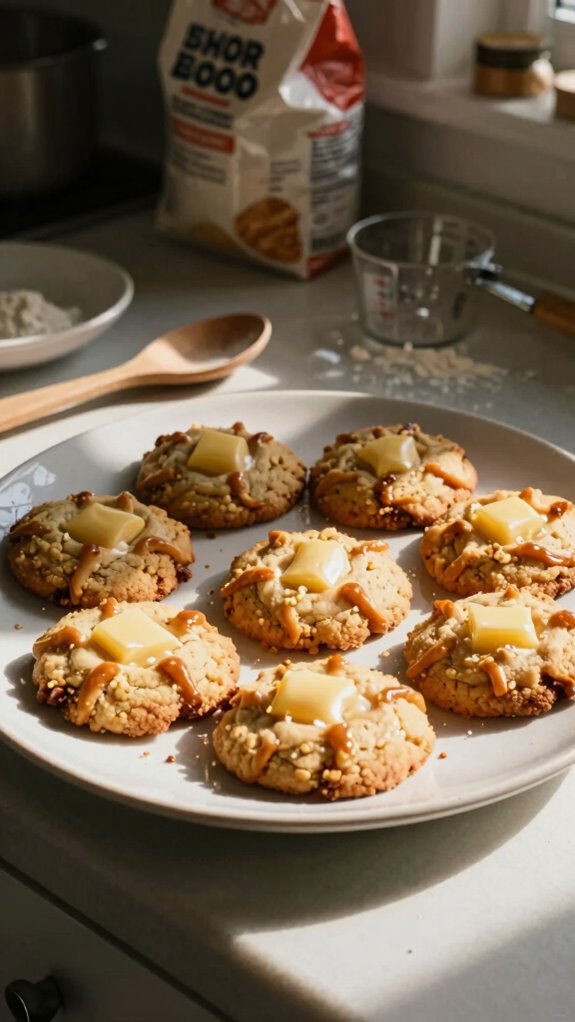
After experimenting with various delicious variations of spritz cookies, it’s time to think about how to present these treats beautifully.
Use simple garnishing techniques like drizzling chocolate or sprinkling chopped nuts to add flair.
For serving suggestions, arrange the cookies on a colorful platter, interspersed with seasonal fruits or edible flowers.
This creates an eye-catching display that’s sure to impress your guests!
What other dishes can I pair it with?
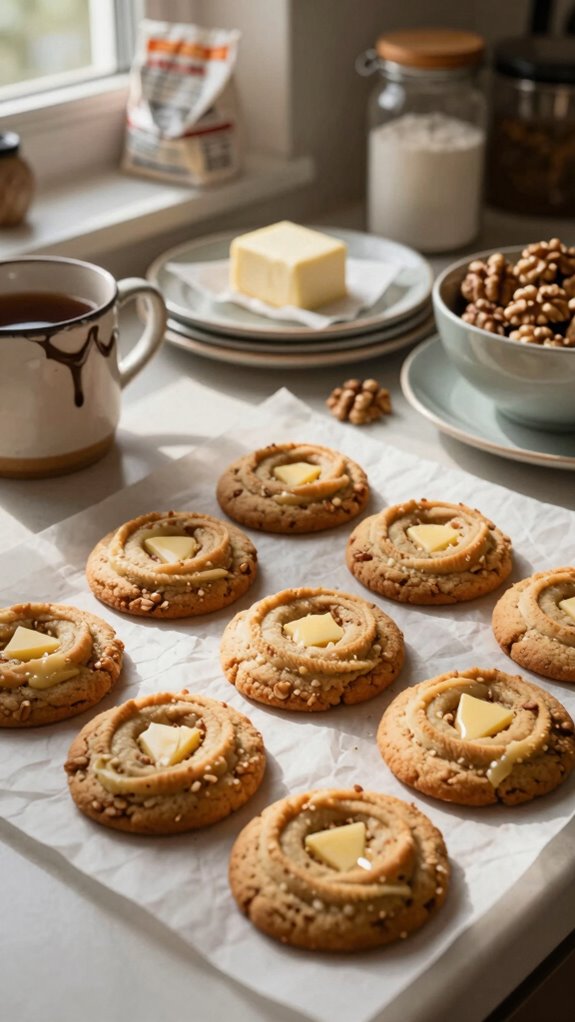
While you might think of enjoying a Brown Butter Buttery Spritz Cookie on its own, there are plenty of dishes that elevate the experience.
I love pairing these cookies with a scoop of vanilla ice cream or a slice of rich chocolate cake.
The flavor combinations create a delightful contrast that enhances the cookie pairings, making every bite even more indulgent and satisfying.
What drinks can I pair it with?
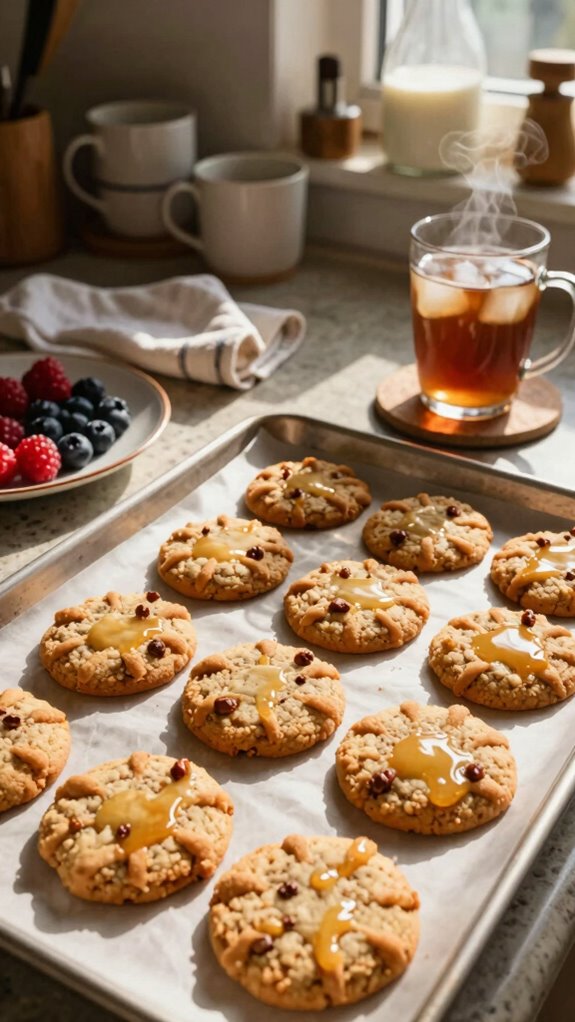
What drinks can I enjoy alongside a Brown Butter Buttery Spritz Cookie?
I love pairing it with a rich cup of coffee, as the nutty flavors enhance each bite.
For something sweeter, dessert wines like Moscato or late-harvest Riesling complement the buttery goodness beautifully.
These options bring out the cookie’s richness and create a delightful experience at any gathering.
Frequently Asked Questions
Can I Substitute the Flour in This Recipe?
You can substitute the flour in this recipe, but using different flours can change the texture. I’ve found that experimenting with flours like almond or oat can create delightful results, so don’t hesitate to try!
How Long Do These Cookies Last?
These cookies last about a week if stored properly. I recommend keeping them in an airtight container at room temperature to maintain cookie freshness. For longer storage, you can freeze them for a couple of months.
Are These Cookies Gluten-Free?
No, these cookies aren’t gluten-free. However, I’ve experimented with gluten-free options using alternative flours like almond or coconut flour, and they turn out delicious! Give it a try for a tasty twist.
Can I Freeze the Cookie Dough?
Absolutely, you can freeze the cookie dough! I often use airtight containers for dough storage, ensuring it’s well-wrapped. For best results, labeling with freezing techniques helps keep track of how long it’s been stored!
What Is Brown Butter and How Do I Make It?
To brown butter, I melt unsalted butter in a skillet until it foams and turns golden brown, releasing a nutty aroma. The benefits include enhancing flavors in recipes and adding a rich, sophisticated taste.