I often find myself turning to Brown Butter Gingerbread Cookies during the holiday season. They’re a unique take on a traditional favorite, with a rich flavor that sets them apart. The blend of spices and the nuttiness from the brown butter really brings a cozy warmth to any gathering. If you’re curious about how to make them or looking for ways to customize the recipe, there’s plenty more to explore.
What kind of recipe is it?
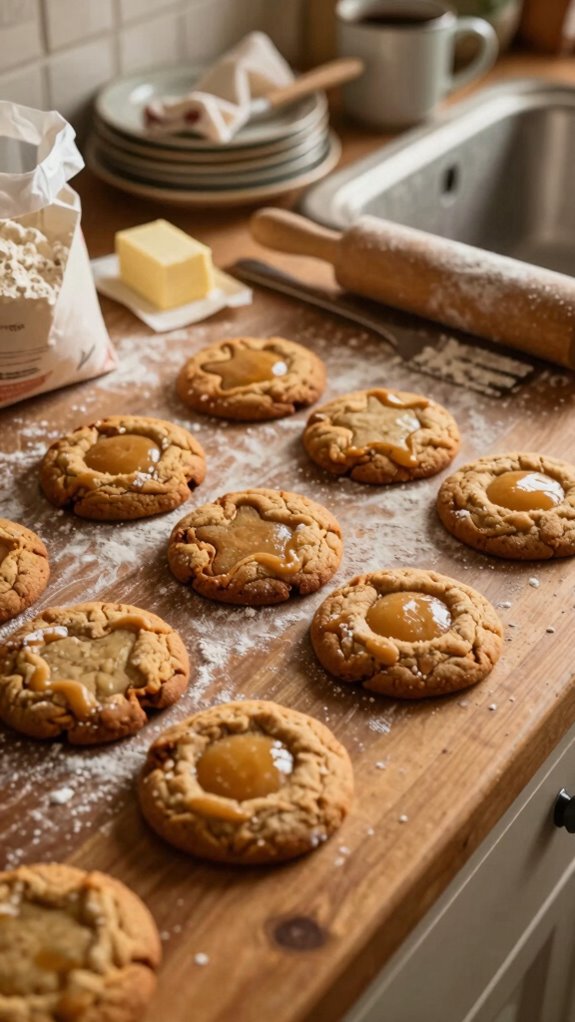
Brown Butter Gingerbread Cookies are a delightful twist on a classic holiday treat, combining the warm, aromatic flavors of ginger, cinnamon, and molasses with the rich nuttiness of brown butter.
This recipe yields soft, chewy cookies that boast a deep, caramelized flavor, making them perfect for festive gatherings or cozy nights in.
Ideal for both seasoned bakers and those new to the kitchen, these cookies not only satisfy a sweet tooth but also add a special touch to any holiday celebration.
Preparation Time
| Detail | Description |
|---|---|
| Difficulty of the Recipe | Moderate – Requires basic baking skills and attention to detail, such as browning butter and measuring ingredients accurately. |
| Preparation Time | Approximately 20 minutes for preparation and 10-12 minutes for baking, totaling around 30-32 minutes. |
| Number of Servings | Yields about 24 cookies, depending on the size you choose to make them. |
Ingredients
| Ingredient | Quantity |
|---|---|
| Unsalted Butter | 1 cup (2 sticks) |
| Brown Sugar | 1 cup packed |
| Granulated Sugar | 1/4 cup |
| Molasses | 1/2 cup |
| Ground Ginger | 2 teaspoons |
| Ground Cinnamon | 1 teaspoon |
| Ground Nutmeg | 1/2 teaspoon |
| Baking Soda | 1 teaspoon |
| Salt | 1/4 teaspoon |
| All-Purpose Flour | 3 1/4 cups |
| Egg | 1 large |
| Vanilla Extract | 1 teaspoon |
| Optional: Chopped Nuts | 1/2 cup (if desired) |
Essential Kitchen Equipment
| Tool/Equipment | Purpose | Alternative Option |
|---|---|---|
| Mixing Bowls (Large & Medium) | Used for combining ingredients and mixing wet and dry components separately. | Any large bowl from your kitchen set |
| Measuring Cups (Dry & Liquid) | Essential for accurately measuring both dry ingredients (like flour) and liquid (like molasses). | A standard coffee cup can be an alternative for liquids, but be mindful of measurements. |
| Measuring Spoons | Required for precise measurement of smaller ingredients like spices. | Use common household spoons (with caution regarding size) or a tableware spoon. |
| Stand Mixer / Hand Mixer | Makes mixing and creaming butter and sugars easier and faster. | Mixing by hand with a whisk or wooden spoon is a budget-friendly alternative. |
| Rubber Spatula | Ideal for scraping bowls and ensuring all ingredients are incorporated. | A wooden spoon can work for mixing but may not scrape as well. |
| Wooden Spoon | Useful for mixing thicker dough and blends. | A strong fork could serve as an alternative in a pinch. |
| Baking Sheets (2-3) | Used to bake the cookies; multiple sheets allow for batch baking. | Any flat baking tray or pan can work, but ensure it is oven-safe. |
| Parchment Paper / Silicone Mats | Provides a non-stick surface for baking that makes clean-up easier. | Greasing the baking sheets with butter or oil can be a substitute, though it may stick more. |
| Cookie Scoop / Spoon | Helps in portioning cookie dough evenly for uniform baking. | A regular tablespoon can be used for scooping dough if a scoop is not available. |
| Cooling Rack | Allows cookies to cool evenly and prevents them from getting soggy on the bottom. | A clean kitchen rack or even the back of a baking sheet can serve as a makeshift option. |
| Oven Thermometer | Ensures the oven is at the correct temperature for baking. | While not essential, becoming familiar with your oven’s behavior can help, though a thermometer helps achieve accuracy. |
Cooking Steps
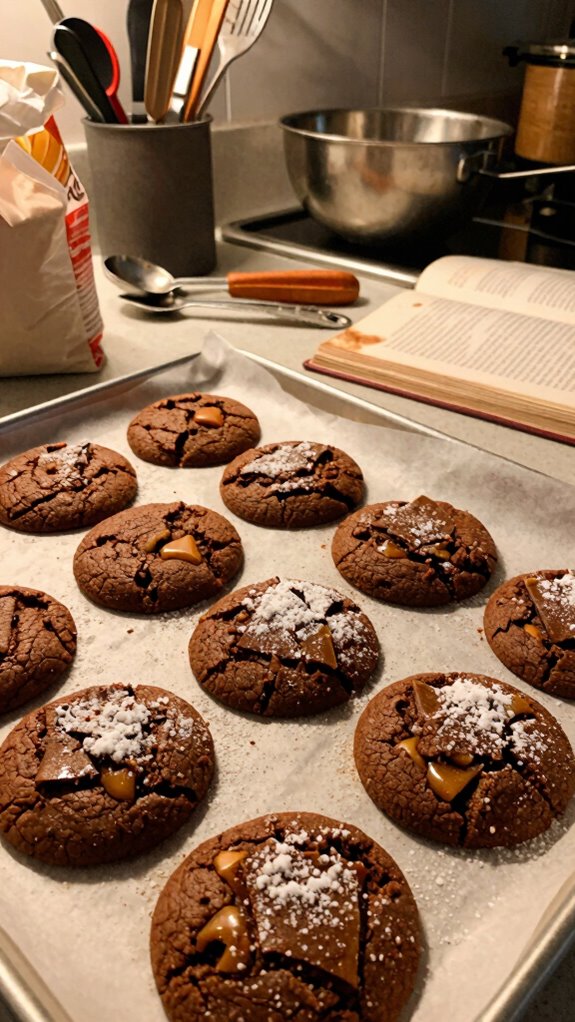
1. Preheat the oven to 175 °C (350 °F). Position the oven rack to the middle of the oven to ensure even baking.
2. Gather all ingredients and equipment for mise en place, including large and medium mixing bowls, measuring cups, measuring spoons, a stand mixer or hand mixer, rubber spatula, wooden spoon, baking sheets, parchment paper, cookie scoop, and a cooling rack.
3. In a large mixing bowl, combine 240 ml (1 cup) of unsalted butter and 200 g (1 cup) of brown sugar.
Using a stand mixer fitted with the paddle attachment, mix on medium speed until the mixture is light and fluffy, about 2–3 minutes.
4. Add 120 ml (½ cup) of molasses and 1 large egg to the butter mixture.
Continue to mix on medium speed until fully incorporated, about 1–2 minutes. The mixture should be smooth and glossy.
5. In a separate medium mixing bowl, whisk together 400 g (3 ¼ cups) of all-purpose flour, 10 g (1 tablespoon) of ground ginger, 5 g (1 teaspoon) of ground cinnamon, 2 g (½ teaspoon) of ground cloves, 5 g (1 teaspoon) of baking soda, and 2 g (½ teaspoon) of salt until well combined.
6. Gradually add the dry mixture to the wet mixture in the stand mixer, mixing on low speed until just combined.
Don’t overmix; the dough should be soft and slightly sticky.
7. Use a rubber spatula to scrape down the sides of the bowl as needed to ensure all ingredients are evenly incorporated.
8. Line two baking sheets with parchment paper.
Using a cookie scoop or a tablespoon, portion out the dough into 30 g (about 1 ounce) balls and place them on the prepared baking sheets, spacing them about 5 cm (2 inches) apart.
9. Bake the cookies in the preheated oven for 10–12 minutes, until the edges are set and the centers are soft but appear slightly puffed.
They should have a golden-brown color and a rich aroma of spices.
10. Remove the baking sheets from the oven and let the cookies cool on the sheets for 5 minutes.
Then, transfer them to a cooling rack to cool completely. The cookies will firm up as they cool.
11. Allow the cookies to rest on the cooling rack for at least 30 minutes before serving to achieve the proper texture.
Enjoy the rich aroma of warm gingerbread as they cool.
12. Store any leftover cookies in an airtight container at room temperature for up to one week.
Variations
- Citrus Zest Gingerbread: Add 1 tablespoon (15 g) of orange or lemon zest to the wet ingredients for a fresh citrus twist.
- Coconut Flour Gluten-Free: Substitute 150 g (1 ½ cups) of all-purpose flour with coconut flour and increase the liquid by adding 60 ml (¼ cup) of almond milk for a gluten-free version.
- Maple Gingerbread Cookies: Replace brown sugar with 200 g (1 cup) of maple sugar for a deeper maple flavor.
- Vegan Gingerbread Cookies: Swap the butter for 240 ml (1 cup) of coconut oil and the egg for 60 ml (¼ cup) of applesauce for a vegan adaptation.
- Chocolate Chip Gingerbread: Stir in 150 g (1 cup) of dark chocolate chips into the dough for a rich chocolate contrast.
- Nutty Gingerbread: Add 100 g (1 cup) of chopped walnuts or pecans into the dough for added texture and nuttiness.
- Spicy Chai Gingerbread: Replace the ground ginger, cinnamon, and cloves with 15 g (1 tablespoon) chai spice mix for a warm and aromatic flavor profile.
- Air Fryer Gingerbread Cookies: Shape the cookie dough into balls and cook at 160 °C (320 °F) in the air fryer for 8–10 minutes for a quick alternative baking method.
Tips on plating and presentation
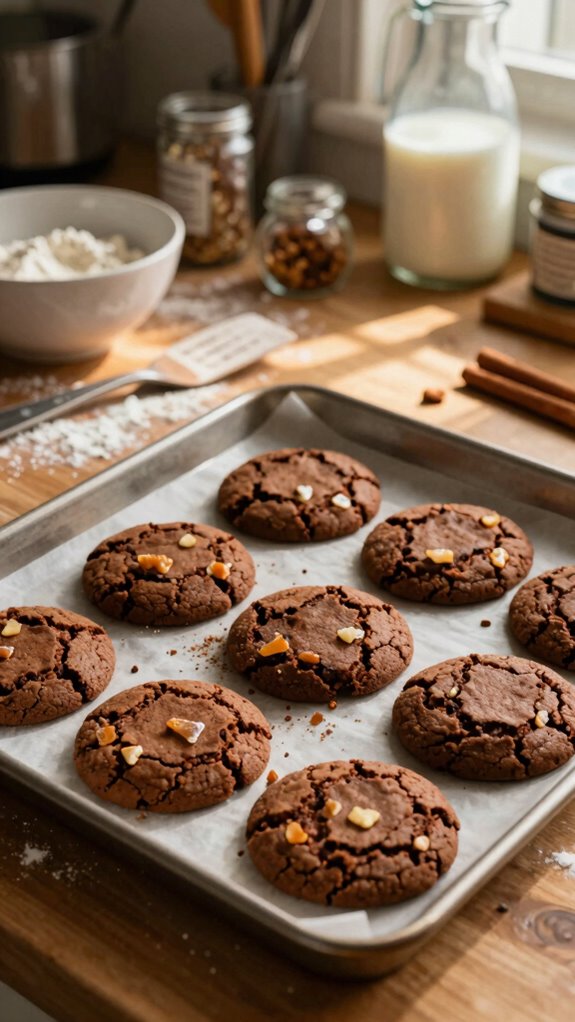
When it comes to plating and presentation, a little creativity can make your brown butter gingerbread cookies truly stand out.
I love using simple plating techniques, like stacking cookies or arranging them in a festive shape.
Consider garnish ideas like a dusting of powdered sugar or edible gold glitter for color contrast.
For serving suggestions, pair them with a warm cup of spiced tea for a cozy touch.
What other dishes can I pair it with?
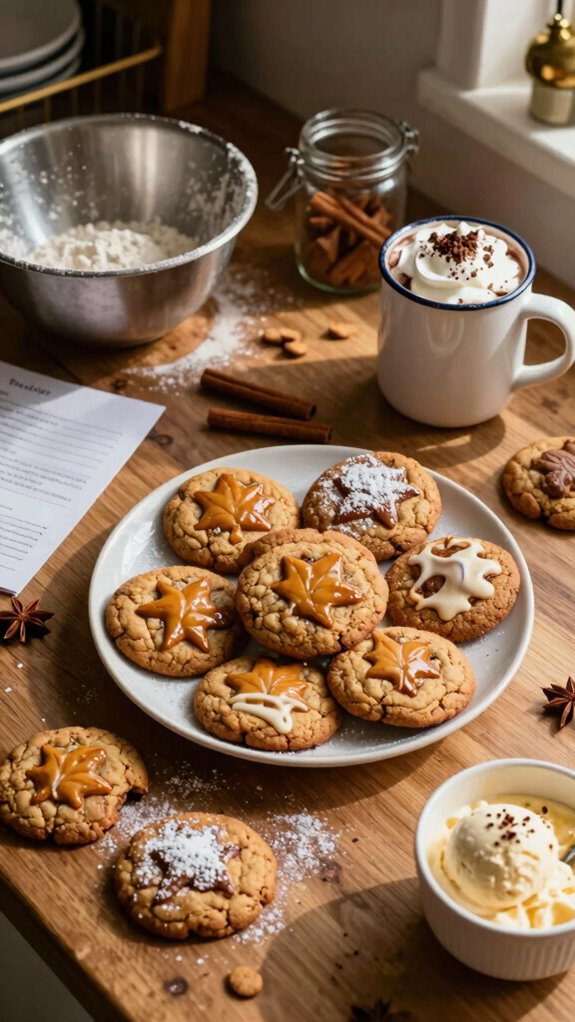
Creating an inviting atmosphere with your brown butter gingerbread cookies can be enhanced by pairing them with other complementary dishes.
I love serving them alongside a rich chocolate mousse or a light, spiced apple tart.
For a cozy vibe, throw in some pumpkin cheesecake as dessert suggestions.
These cookie pairings elevate the experience, making each bite a delightful treat to savor!
What drinks can I pair it with?
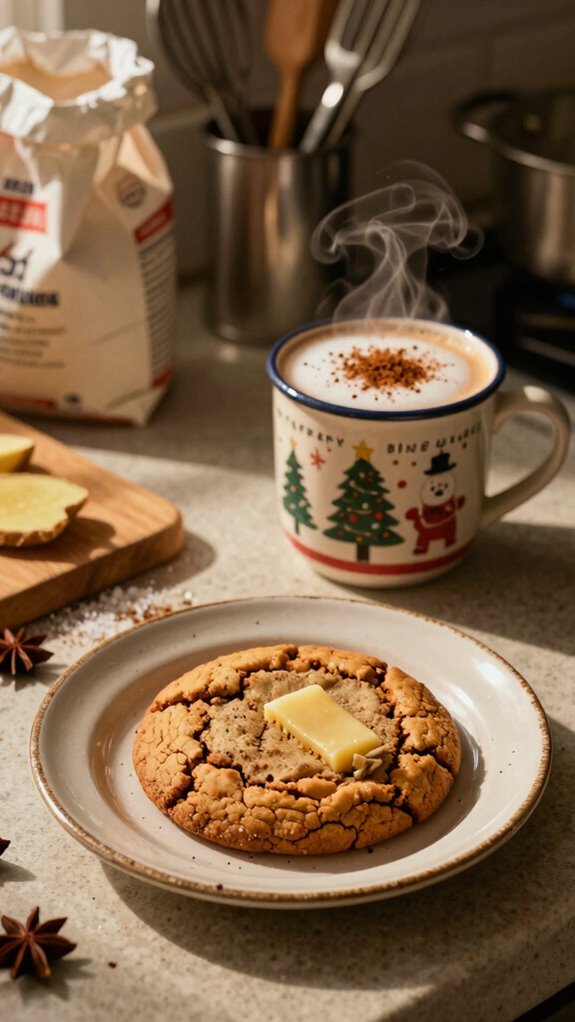
To fully enjoy the warm, spiced flavors of brown butter gingerbread cookies, I recommend pairing them with a few select drinks that complement their rich taste.
Spiced tea, with its fragrant warmth, enhances the cookie’s zest. Alternatively, a glass of mulled wine adds a festive touch, blending perfectly with the cookies’ comforting sweetness.
Trust me; your taste buds will thank you!
Frequently Asked Questions
Can I Freeze Brown Butter Gingerbread Cookies for Later Use?
Absolutely! I often use freezing techniques for cookie preservation. Just let them cool completely, wrap them tightly in plastic, then place them in an airtight container. They’ll taste fresh when you’re ready to enjoy them!
How Should I Store Leftover Brown Butter Gingerbread Cookies?
I store leftover cookies in a tightly sealed cookie container. The best storage methods include using a plastic or glass container, ensuring they stay fresh and delicious for a longer time. Enjoy them later!
What Is the Difference Between Regular and Brown Butter?
Brown butter’s richer flavor comes from toasting the milk solids, enhancing its nuttiness. I love its benefits in cooking techniques, elevating dishes with depth that regular butter simply can’t match. Give it a try!
Can I Substitute Ingredients for a Gluten-Free Version?
Absolutely! I often substitute gluten-free flours like almond or coconut flour, adjusting ingredient ratios for a perfect texture. Just remember to add a binding agent like xanthan gum to create the right consistency.
How Long Do Brown Butter Gingerbread Cookies Stay Fresh?
Brown butter gingerbread cookies stay fresh for about a week at room temperature. For longevity, I recommend storing them in an airtight container. Freshness tips include keeping them away from direct sunlight and heat.