When I first tried making Brown Butter Shortbread Cookies, I was intrigued by how a simple ingredient like butter could transform a classic treat. The rich, nutty flavor really elevates the experience, bringing a depth that ordinary shortbread just can’t match. As I mixed the ingredients, I wondered how these cookies would pair with different drinks or what variations I could experiment with. Let me share what I’ve discovered.
What kind of recipe is it?
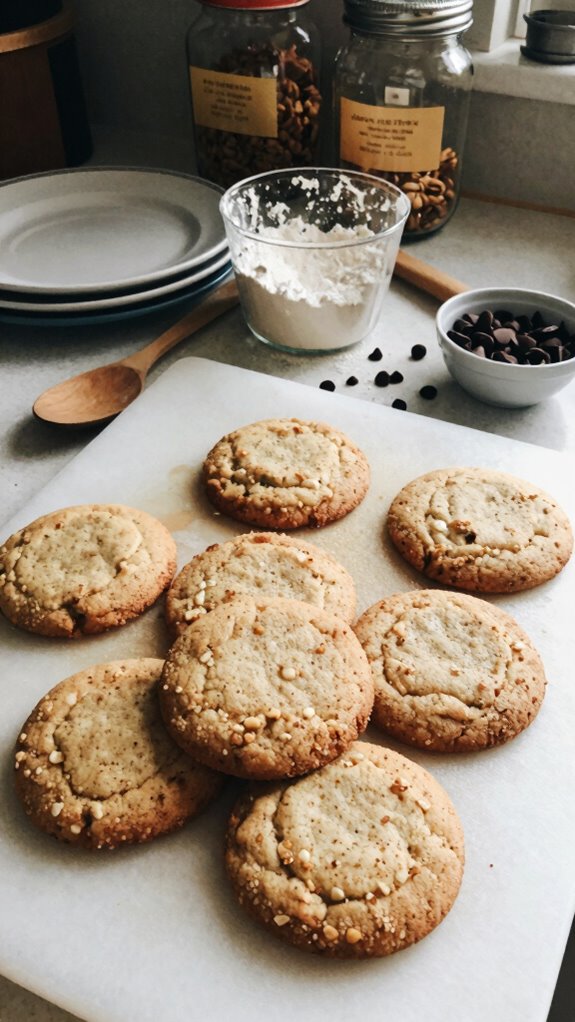
Brown Butter Shortbread Cookies are a delightful twist on the classic shortbread, featuring the rich, nutty flavor of browned butter that elevates their taste profile.
These cookies have a tender, crumbly texture and a subtle caramel undertone, making them an indulgent treat for any occasion.
Perfect for baking enthusiasts looking to impress friends and family, they’re also ideal for sharing during gatherings or as a thoughtful homemade gift.
Whether you’re a seasoned baker or a novice, this recipe is a must-try for anyone seeking to elevate their cookie game.
Preparation Time
| Aspect | Details |
|---|---|
| Difficulty | Intermediate |
| Preparation Time | 15 minutes preparation, 30 minutes chilling, 15-20 minutes baking |
| Number of Servings | Approximately 24 cookies |
Ingredients
| Ingredient | Quantity |
|---|---|
| Unsalted butter | 1 cup (2 sticks) |
| Granulated sugar | ½ cup |
| Brown sugar | ½ cup |
| All-purpose flour | 2 cups |
| Salt | ½ teaspoon |
| Vanilla extract | 1 teaspoon |
| Optional: Chocolate chips | ½ cup (if desired) |
Essential Kitchen Equipment
| Tool/Equipment | Purpose | Alternative Option |
|---|---|---|
| Mixing Bowls (Large & Medium) | Used for mixing the wet and dry ingredients separately before combining them. | Any large bowls you have at home |
| Measuring Cups (Dry & Liquid) | Essential for accurately measuring ingredients like flour, sugar, and butter. | A standard coffee mug (for dry) or a glass measuring cup (for liquid) |
| Measuring Spoons | Used for measuring small quantities of ingredients such as salt and vanilla extract. | Use the smallest spoons you have (like a teaspoon) |
| Stand Mixer or Hand Mixer | Helps to cream the butter and sugars thoroughly, ensuring a light and fluffy texture. | Whisk by hand (may take longer) |
| Rubber Spatula | Ideal for scraping the sides of the bowls and folding in dry ingredients without overworking the dough. | A flexible plastic or silicone spatula |
| Wooden Spoon | Good for mixing ingredients together, especially when combining the wet and dry mixtures. | Any sturdy spoon you have on hand |
| Baking Sheets (2-3) | Used for baking the cookies; multiple sheets allow for batch baking without waiting for a pan to cool. | Aluminum foil or a cast-iron skillet (if you don’t have sheets) |
| Parchment Paper or Silicone Mats | Prevents sticking and makes for easy cleanup when baking cookies on baking sheets. | Greasing the baking sheets with butter or cooking spray |
| Cookie Scoop or Spoon | Ensures uniform cookie sizes for even baking. | Use two spoons to scoop dough onto sheets |
| Cooling Rack | Allows cookies to cool evenly, preventing sogginess on the bottom. | A plate or countertop can be used if a rack isn’t available |
| Oven Thermometer | Ensures that your oven is at the correct temperature for baking the cookies properly. | Check oven calibration using an online guide or food testing method |
Cooking Steps
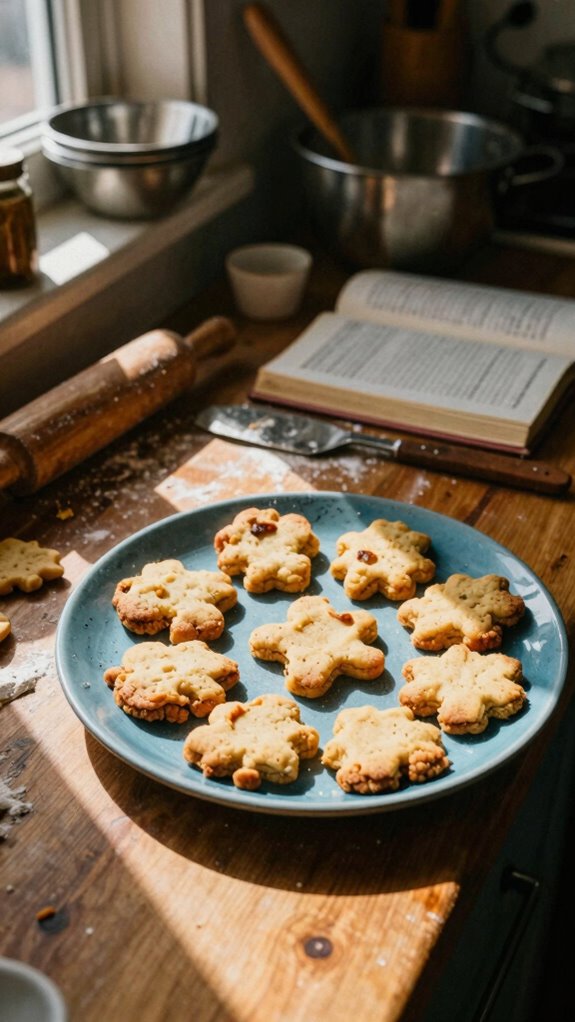
1. Prepare the mise en place by measuring 240 g (2 cups) of all-purpose flour, 150 g (¾ cup) of granulated sugar, and ¼ tsp of salt.
Set aside 200 g (1 cup) of unsalted butter, cut into pieces, and allow it to reach room temperature.
2. Preheat your oven to 160 °C (325 °F). Position the oven rack in the center of the oven.
3. In a medium mixing bowl, combine the flour, sugar, and salt. Whisk together until well mixed and set aside.
4. In a large mixing bowl, introduce the butter (cubed) and use a stand mixer with the paddle attachment (or a hand mixer) on medium speed to cream the butter until it appears light and fluffy, about 2-3 minutes.
This creates a smooth and airy texture.
5. Gradually add the flour mixture to the creamed butter in the large mixing bowl. Using a rubber spatula, gently fold the dry ingredients into the wet ingredients until just combined, ensuring not to overwork the dough.
6. Scoop the dough using a cookie scoop or two spoons, forming 30-35 equal-sized balls (about 30 g/1 oz each).
Place the dough balls on the prepared baking sheets lined with parchment paper, leaving about 5 cm (2 inches) between each cookie to allow for spreading.
7. Flatten each cookie slightly with the back of a fork or your palm, creating an even surface.
8. Bake in the preheated oven for 15-20 minutes. The cookies should be lightly golden around the edges while remaining pale in the center.
Keep an eye on the aroma, which should be nutty and buttery.
9. Once baked, remove the baking sheets from the oven and allow the cookies to cool on the sheets for 10 minutes before transferring them to a cooling rack (or a plate/countertop) to cool completely.
This resting time allows for carryover cooking to finish the baking process.
10. Let the cookies cool to room temperature, typically about 20-30 minutes, before serving.
The cookies should be firm yet slightly soft in the center upon first bite, with a rich aroma of brown butter.
Variations
- Lavender Brown Butter Shortbread: Add 2 tsp of culinary lavender buds to the dough for a floral flavor twist.
- Chocolate Chip Brown Butter Shortbread: Fold in 150 g (1 cup) of semi-sweet chocolate chips for a sweet, gooey center.
- Gluten-Free Brown Butter Shortbread: Substitute the all-purpose flour with a gluten-free flour blend, ensuring a similar texture without gluten.
- Dairy-Free Brown Butter Shortbread: Use coconut oil or vegan butter in place of unsalted butter for a dairy-free option, keeping the rich flavor intact.
- Vegan Brown Butter Shortbread: Replace butter with a vegan butter substitute and use flaxseed meal mixed with water as an egg replacer for a completely plant-based version.
- Citrus Zest Brown Butter Shortbread: Incorporate the zest of 1 orange or lemon into the dough for a refreshing zing.
- Spiced Brown Butter Shortbread: Add 1 tsp of ground cinnamon or ½ tsp of nutmeg to the dry ingredients for a warm, spiced flavor profile.
- Chilled Cookie Variation: Chill the formed dough balls for 30 minutes before baking to create a thicker, chewier cookie.
Tips on plating and presentation
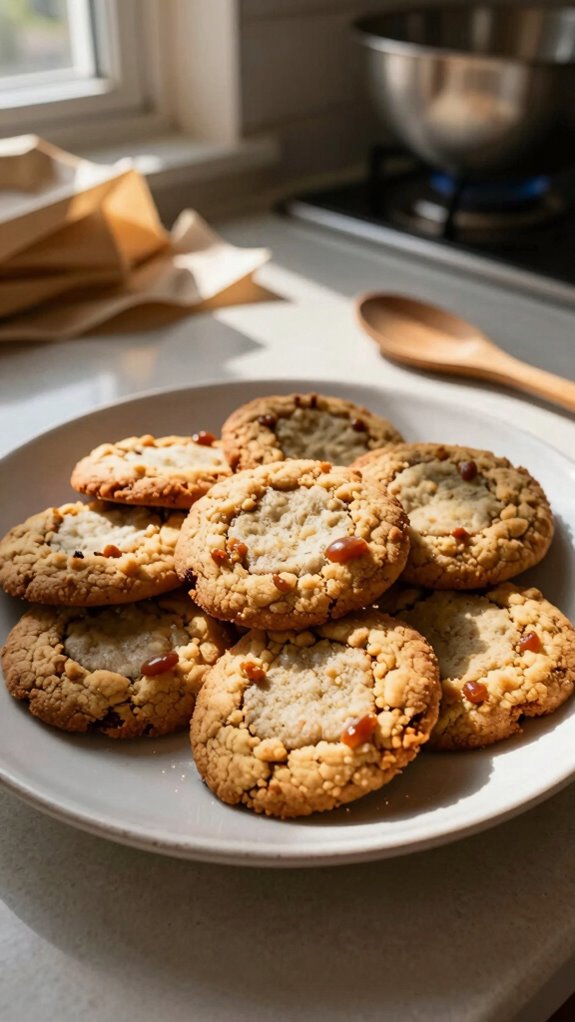
To elevate the appeal of your brown butter shortbread cookies, consider a few simple yet effective plating and presentation techniques.
Use a clean, white plate to highlight their rich color.
Add a dusting of powdered sugar for a touch of elegance, and try some garnish ideas like fresh herbs or berries, which create contrast and enhance the overall visual appeal of your delicious cookies.
What other dishes can I pair it with?
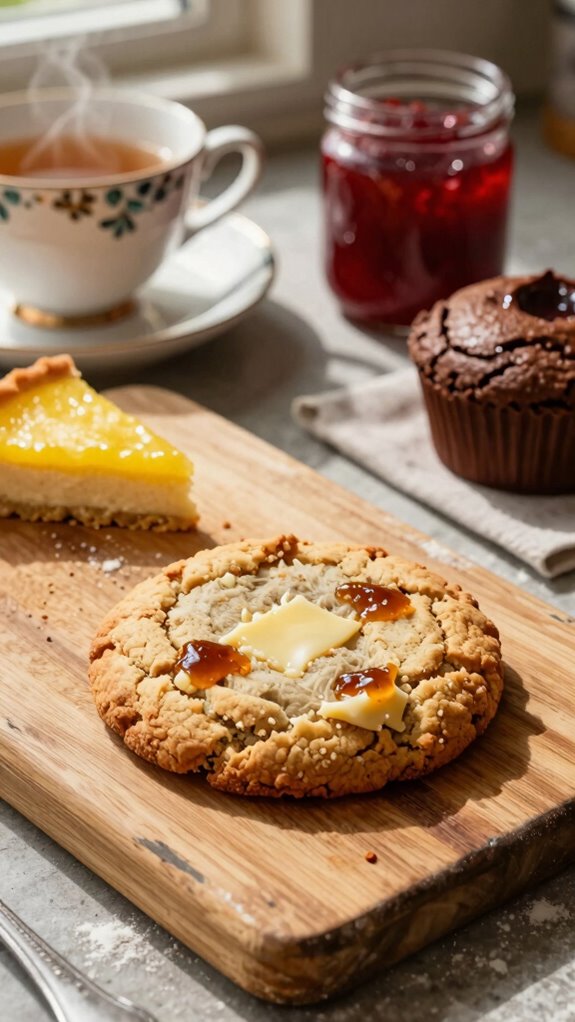
While enjoying my brown butter shortbread cookies, I love pairing them with a rich cup of tea or coffee, as the warmth and depth of these beverages perfectly complement the buttery, nutty flavors of the cookies.
For dessert pairings, I also recommend serving them with a scoop of vanilla ice cream or alongside fresh berries to create delightful flavor combinations that truly enhance the experience.
What drinks can I pair it with?
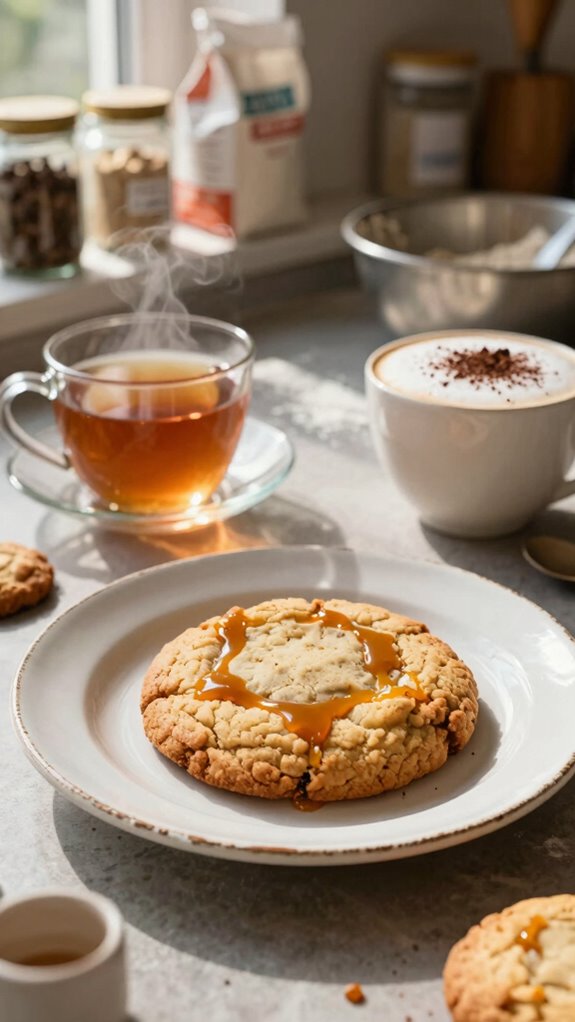
Have you ever wondered what drinks could enhance the experience of savoring brown butter shortbread cookies?
I’ve found that a rich coffee pairing, like a bold espresso, complements the cookies’ nutty flavors perfectly.
If you prefer something lighter, a delicate tea selection, such as Earl Grey, balances the sweetness beautifully.
Either choice elevates your tasting experience, making every bite even more delightful!
Frequently Asked Questions
Can I Freeze Brown Butter Shortbread Cookies?
Yes, you can freeze brown butter shortbread cookies! For the freezing process, I suggest placing them in an airtight container. That way, they stay fresh longer. Always label with the date for better storage tips.
How Long Do These Cookies Last at Room Temperature?
These cookies typically last about a week at room temperature. To store them, I keep them in an airtight container. I check for signs of freshness, like texture and smell, to ensure they’re still good.
Are There Gluten-Free Alternatives for This Recipe?
Yes, I’ve used gluten-free flours like almond or coconut in similar recipes. Just remember to add xanthan gum for better texture. It keeps the cookies together, making them perfect for a gluten-free treat!
Can I Add Chocolate Chips to the Dough?
Yes, I love adding chocolate chips to the dough! It really amps up the chocolate indulgence and provides a delightful flavor enhancement. Trust me, it makes the cookies even more irresistible and satisfying!
What Is the Origin of Shortbread Cookies?
Shortbread cookies originate from Scotland, dating back to medieval times. I love how traditional baking techniques highlight simple ingredients, creating a delightful texture and flavor that reflects its rich Scottish heritage. They’re truly a timeless treat!