When I first started experimenting with gluten-free baking, chocolate chip cookies seemed like the perfect challenge. They bring back memories of cozy evenings and shared treats. By substituting traditional flour with gluten-free alternatives, I’ve discovered a recipe that captures that rich, sweet essence we all love. If you’re curious about how to make these delightful cookies and elevate your dessert game, there’s much more to explore.
What kind of recipe is it?
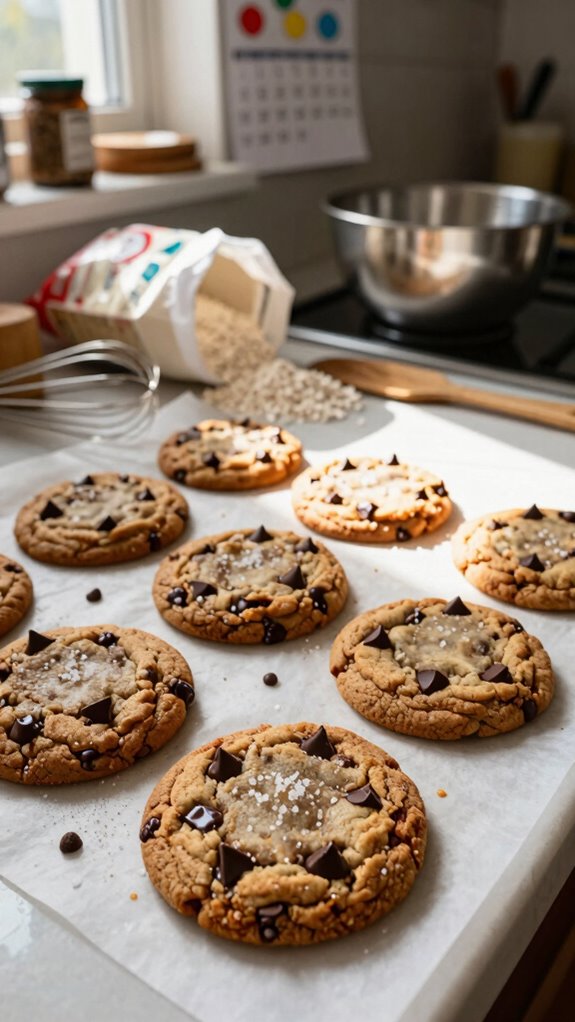
Gluten-Free Chocolate Chip Cookies are a delightful treat designed for individuals who are sensitive to gluten yet crave a classic dessert.
This recipe showcases the perfect balance of sweetness and rich chocolate, using alternative gluten-free flours that maintain a chewy texture.
Ideal for families, friends, or anyone with dietary restrictions, these cookies allow everyone to indulge without compromising on flavor.
Baking them is simple and rewarding, making them a perfect project for both novice and experienced bakers alike, ensuring delicious moments for all.
Preparation Time
| Attribute | Details |
|---|---|
| Difficulty of Recipe | Easy |
| Preparation Time | 15 minutes |
| Number of Servings | 12 servings |
Ingredients
| Ingredient | Quantity |
|---|---|
| Gluten-Free All-Purpose Flour | 1 ¾ cups |
| Baking Soda | 1 teaspoon |
| Salt | ½ teaspoon |
| Unsalted Butter | ½ cup (1 stick), softened |
| Brown Sugar | ¾ cup |
| Granulated Sugar | ¾ cup |
| Vanilla Extract | 1 teaspoon |
| Large Eggs | 2 large |
| Semi-Sweet Chocolate Chips | 1 cup |
| Optional: Nuts (e.g., walnuts or pecans) | ½ cup (chopped, if desired) |
This table provides a comprehensive list of the ingredients needed for the Gluten-Free Chocolate Chip Cookie recipe along with their respective quantities for optimal preparation.
Essential Kitchen Equipment
| Tool/Equipment | Purpose | Alternative Option |
|---|---|---|
| Mixing Bowls (Large & Medium) | Used for combining dry ingredients and wet ingredients separately before mixing. | Use other large bowls or containers from your kitchen. |
| Measuring Cups (Dry & Liquid) | Essential for accurately measuring flour, sugars, and liquids. | Use a kitchen scale for precise measurements. |
| Measuring Spoons | Used for measuring smaller quantities like baking soda, salt, and vanilla extract. | Tablespoons or teaspoons from your cutlery can work in a pinch. |
| Stand Mixer or Hand Mixer | Ideal for creaming butter and sugars together for a light and airy texture. | Whisk by hand if no mixer is available (though it requires more effort). |
| Rubber Spatula | Useful for scraping down the sides of bowls and folding in chocolate chips. | A silicone spatula or even a wooden spoon can be used alternatively. |
| Wooden Spoon | Great for mixing ingredients together, especially when combined with dry ingredients. | A sturdy plastic or silicone spoon can also work. |
| Baking Sheets (2-3) | Used for placing cookie dough and baking the cookies in the oven. | Use any flat, oven-safe baking dish you have. |
| Parchment Paper or Silicone Mats | Prevents cookies from sticking to the baking sheets and ensures even baking. | Lightly grease the baking sheets if parchment or mats aren’t available. |
| Cookie Scoop or Spoon | Helps to measure out uniform amounts of cookie dough for even baking. | A regular spoon can be used to drop dough onto the baking sheet. |
| Cooling Rack | Allows cookies to cool evenly and prevents sogginess after baking. | Use a wire rack or even the back of a baking sheet to cool cookies. |
| Oven Thermometer | Ensures that the oven is at the correct temperature for baking. | If you don’t have one, be sure to preheat the oven for at least 15 minutes before baking. |
This table outlines the essential kitchen equipment needed for making Gluten-Free Chocolate Chip Cookies, alongside their specific purposes and budget-friendly alternatives. Having the right tools can enhance your baking experience and ensure successful results!
Cooking Steps

1. Gather all necessary ingredients and equipment, ensuring accurate measurements of gluten-free flour, sugars, chocolate chips, and other ingredients.
Set aside your mixing bowls, measuring cups, measuring spoons, stand or hand mixer, rubber spatula, wooden spoon, baking sheets, parchment paper, cookie scoop or spoon, cooling rack, and oven thermometer.
2. Preheat your oven to 180 °C (350 °F).
Adjust the oven rack to the middle position for even heat distribution. If using convection, reduce the temperature by 10–15 °C (25–30 °F).
3. In a large mixing bowl, combine 120 g (1 cup) of gluten-free flour, 1/2 tsp of baking soda, and 1/4 tsp of salt.
Whisk together until thoroughly mixed.
4. In a medium mixing bowl, cream together 115 g (1/2 cup) of softened butter and 150 g (3/4 cup) of brown sugar using a stand mixer on medium speed until light and fluffy, about 2-3 minutes.
Add 50 g (1/4 cup) of granulated sugar and continue mixing until combined.
5. Incorporate 1 tsp of vanilla extract and 1 large egg (or egg substitute if making vegan) into the creamed mixture.
Mix on low speed until fully blended.
6. Gradually add the dry ingredients to the wet mixture, mixing on low speed until just combined.
Use a rubber spatula to fold in 150 g (1 cup) of chocolate chips until evenly distributed.
7. Line your baking sheets with parchment paper (or grease lightly if not available).
Using a cookie scoop or regular spoon, drop heaping tablespoons of dough onto the prepared baking sheets, spacing them about 5 cm (2 inches) apart.
8. Bake in the preheated oven for 10-12 minutes, or until the edges are golden brown and the centers appear slightly underbaked.
The aroma of chocolate and baked dough will fill your kitchen as they bake.
9. Remove the baking sheets from the oven and allow the cookies to cool on the sheets for 5 minutes.
Then, transfer cookies to a cooling rack to cool completely. The cookies will firm up as they cool, becoming slightly chewy in texture.
10. Allow the cookies to cool for at least 15 minutes before enjoying.
The internal temperature should be above 74 °C (165 °F) if using a thermometer, indicating they’re fully baked and safe to eat.
11. Store cooled cookies in an airtight container at room temperature for up to a week, or freeze for longer preservation.
Enjoy the delightful aroma and texture of your gluten-free chocolate chip cookies!
Variations
- Peanut Butter Chocolate Chip: Replace half of the butter (57 g / 1/4 cup) with creamy peanut butter for a nutty flavor twist.
- Coconut Macadamia Nut: Substitute 100 g (1 cup) of chocolate chips with chopped macadamia nuts and add 50 g (1/2 cup) of shredded coconut for a tropical touch.
- Vegan Dark Chocolate Chip: Use 120 g (1/2 cup) of coconut oil instead of butter, and an egg replacer (like flax egg) for a vegan-friendly version.
- Pumpkin Spice: Incorporate 120 g (1/2 cup) of pumpkin puree and adjust spice by adding 1 tsp of cinnamon and 1/4 tsp of nutmeg for a seasonal flavor.
- Oatmeal Chocolate Chip: Mix in 80 g (1 cup) of gluten-free oats for added texture and heartiness, balancing out the chocolate chips.
- Almond Joy: Fold in 50 g (1/2 cup) of almond slices and 30 g (1/4 cup) of unsweetened shredded coconut to create a cookie reminiscent of the classic candy bar.
- Matcha White Chocolate Chip: Add 2 tsp of matcha powder to the dry ingredients and swap dark chocolate for 100 g (1 cup) white chocolate chips for an elegant twist.
- Salted Caramel: Include 50 g (1/4 cup) of caramel bits with the chocolate chips and sprinkle sea salt on top of the cookies before baking to enhance the sweet-salty contrast.
Tips on plating and presentation
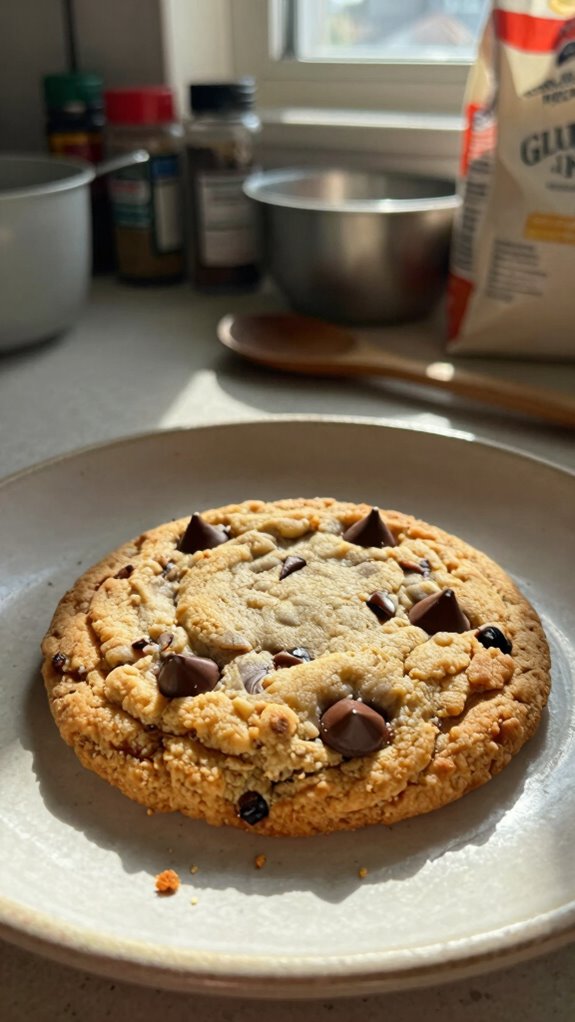
How can you elevate your gluten-free chocolate chip cookies from simple treats to stunning showstoppers?
I love using creative plating techniques, like stacking cookies with a sprinkle of sea salt on top.
Experiment with different presentation styles by serving them on colorful plates or with a drizzle of melted chocolate.
These little touches make all the difference, turning an ordinary snack into an eye-catching delight!
What other dishes can I pair it with?
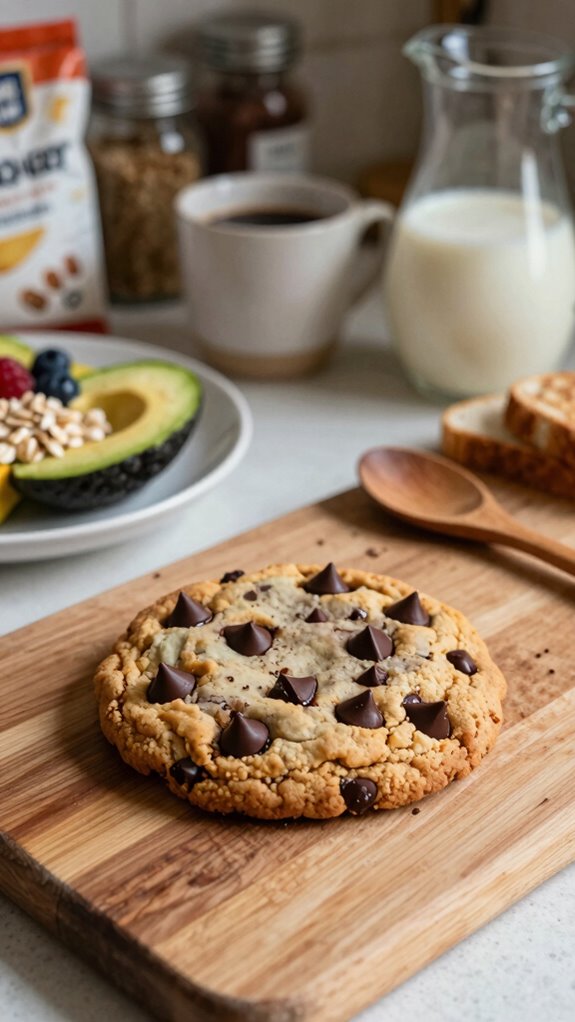
While enjoying my gluten-free chocolate chip cookies, I often think about what other dishes can complement their rich flavor and texture.
They pair wonderfully on a dessert platter with fresh fruit, like strawberries and raspberries, or alongside a scoop of vanilla ice cream.
These flavor pairings create a delightful balance, making for a perfect finish to any meal or gathering.
What drinks can I pair it with?
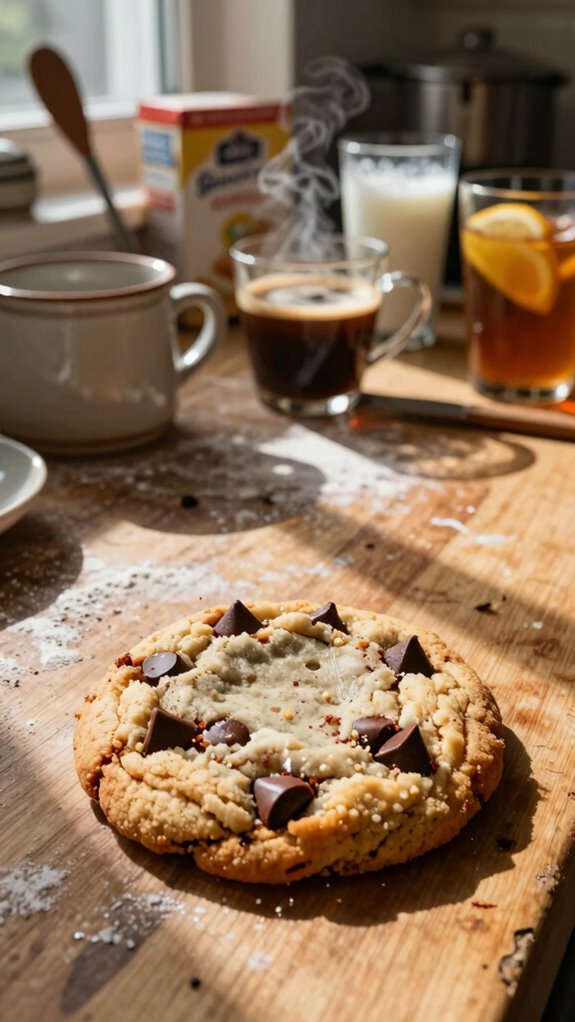
When you’re ready to sip something delightful alongside your gluten-free chocolate chip cookies, consider pairing them with a glass of almond milk or a rich coffee.
I often enjoy coffee pairings that bring out the sweetness of the cookies. If you prefer milk alternatives, try oat milk for a creamy finish.
Either option enhances the experience perfectly, making each bite even more enjoyable.
Frequently Asked Questions
Can I Substitute Almond Flour for Other Gluten-Free Flours?
Yes, I often substitute almond flour for other gluten-free flours. Almond flour benefits include added protein and healthy fats, making it a great alternative. Just remember, the texture and taste might vary slightly in your recipes.
How Can I Store Leftover Gluten-Free Cookies?
I store leftover cookies in airtight containers, ensuring they stay fresh longer. After cooling, I place them in the cookie containers, stacking them carefully to avoid damage. This keeps my treats delicious for days!
Are Gluten-Free Chocolate Chip Cookies Suitable for Freezing?
Yes, gluten-free chocolate chip cookies freeze well! I recommend wrapping them individually for freezing. This prevents freezer burn and helps maintain their cookie texture when you thaw them. Just bake and enjoy whenever you crave!
What Brands of Gluten-Free Chocolate Chips Do You Recommend?
I love Enjoy Life and Lily’s. Both brands offer great taste and texture, making them perfect for my baking. When comparing, Enjoy Life’s simplicity stands out while Lily’s adds just the right sweetness. You can’t go wrong!
Can I Make This Recipe Dairy-Free as Well?
Absolutely, you can make this recipe dairy-free! I usually swap butter for coconut oil or dairy-free margarine. Using almond or oat milk works great too. Just play around with these dairy alternatives for fantastic recipe modifications!