INCOMING MAIL STORAGE
Shallow Wall-Mounted Mail Sorter
Gives incoming household mail a visible landing spot without covering the console surface.
Find on AmazonSearch Amazon ↗
A family command center works when it gives each arriving paper a next step. Bring mail, the household calendar, and current school forms together in a small station that is easy to check during an ordinary day.
Affiliate disclosure: As an Amazon Associate I earn from qualifying purchases.
Gives incoming household mail a visible landing spot without covering the console surface.
Find on AmazonSearch Amazon ↗Keeps the current household schedule visible beside the papers that require action.
Find on AmazonSearch Amazon ↗Separates current school folders and forms in pockets that are easy to browse.
Find on AmazonSearch Amazon ↗Keeps a small number of active forms visible until their next step is complete.
Find on AmazonSearch Amazon ↗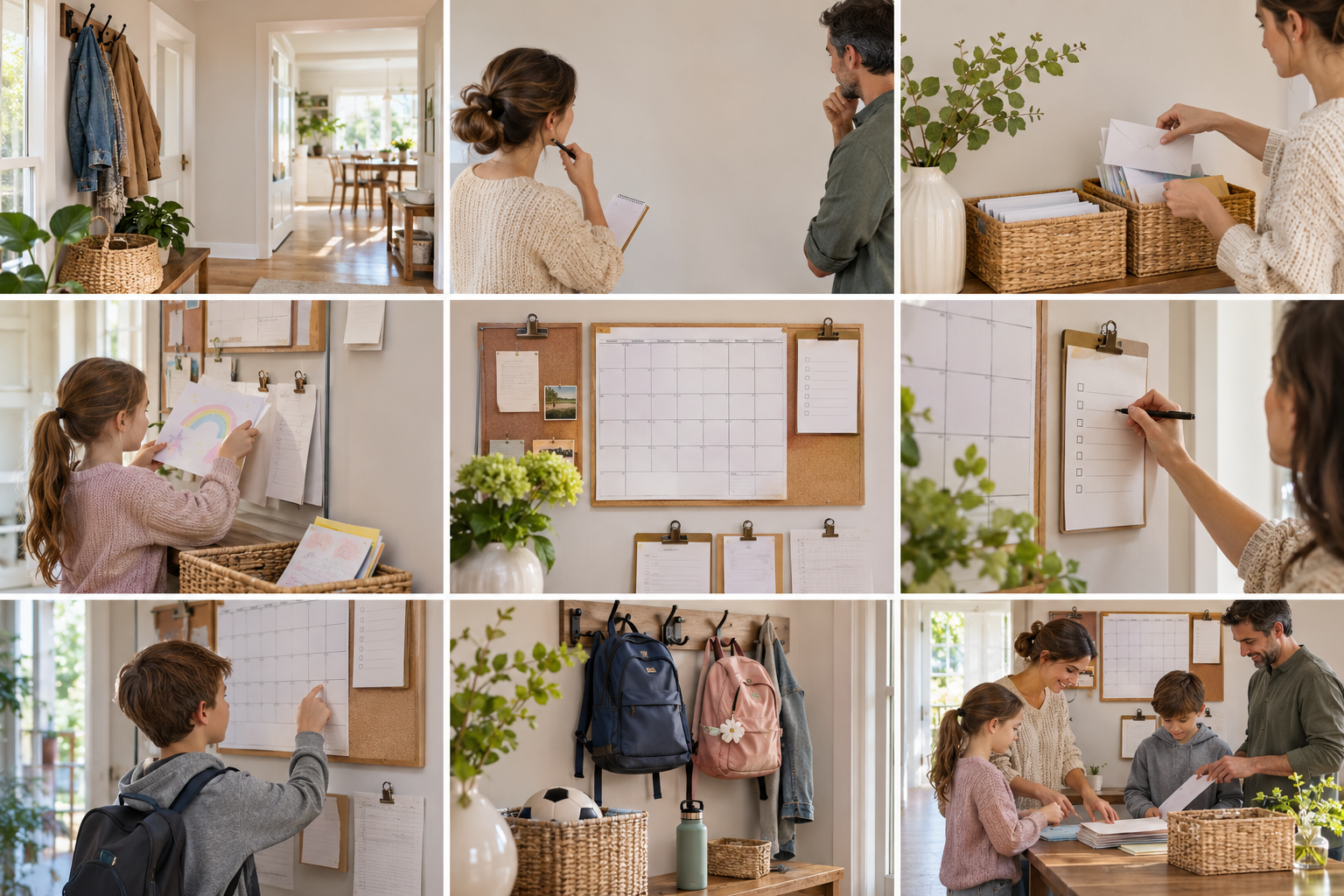
A command center is easier to use beside a normal arrival or departure route than on an empty wall nobody checks. Choose a modest station size that fits without blocking the entry or turning a narrow passage into a noticeboard corridor. Keep paper storage away from cooking heat, sink splashes, and other places that make documents harder to protect.
Find a compact wall organizer for a family command center on Amazon ↗
Use a shallow sorter to distinguish mail that has just arrived from papers that need an action or appropriate filing. Keep the categories simple enough that another household member can make the same choice. The sorter should hold a manageable current batch, with personal or important documents moved into suitable secure storage when their next step is complete.
Find a shallow three-section household mail sorter on Amazon ↗
Place a household calendar beside the paper slots so dates from school forms and mail can be added where they will be seen. Decide which kinds of commitments belong on that surface and keep the current period legible. Leave writing tools nearby in a small holder instead of spreading markers and accessories across the console below.
Find a monthly calendar board for a household planning wall on Amazon ↗
A school folder can hold current notices and forms without turning the command center into a permanent archive of every worksheet. Choose a pocket that allows the folder to slide out easily and keep the active contents modest. Store artwork, records, and papers you decide to keep in their appropriate longer-term location once they no longer need daily attention.
Find wall-file pockets for current school folders on Amazon ↗
A clipboard can make a permission slip or household form easy to find while it is being completed. Keep only a small number of active sheets visible and protect any personal information from unnecessary exposure. Once the action is finished, return or store the document appropriately instead of leaving the completed form permanently on the wall.
Find small wall clipboards for active household forms on Amazon ↗
Choose a regular moment to move completed papers out of the active slots and check the calendar against upcoming forms. Review documents according to their actual importance and any relevant requirements rather than discarding an entire pocket automatically. A small recycling container can help with unneeded ordinary paper, while sensitive documents should be handled appropriately.
Find a compact paper-sorting bin for a home command center on Amazon ↗
Keep the items that need current household attention: incoming mail, a useful calendar, and active school forms or notices. It does not need to hold every family document. Move completed actions and retained records to appropriate longer-term storage so the station remains easy to check.
Use a small set that the household can understand consistently. Incoming, action, and filing can be a starting point, but adapt the names to the actual workflow. Too many similar pockets can make the next step less obvious rather than more organized.
A small current display can fit the station, but the active-paper pockets should not become a permanent archive. Decide what to keep and move retained pieces into suitable storage when they no longer need to remain visible.