VERTICAL PAN STORAGE
Adjustable Vertical Pot-and-Pan Rack
Separates suitable pans so one can be removed without lifting the entire stack.
Find on AmazonSearch Amazon ↗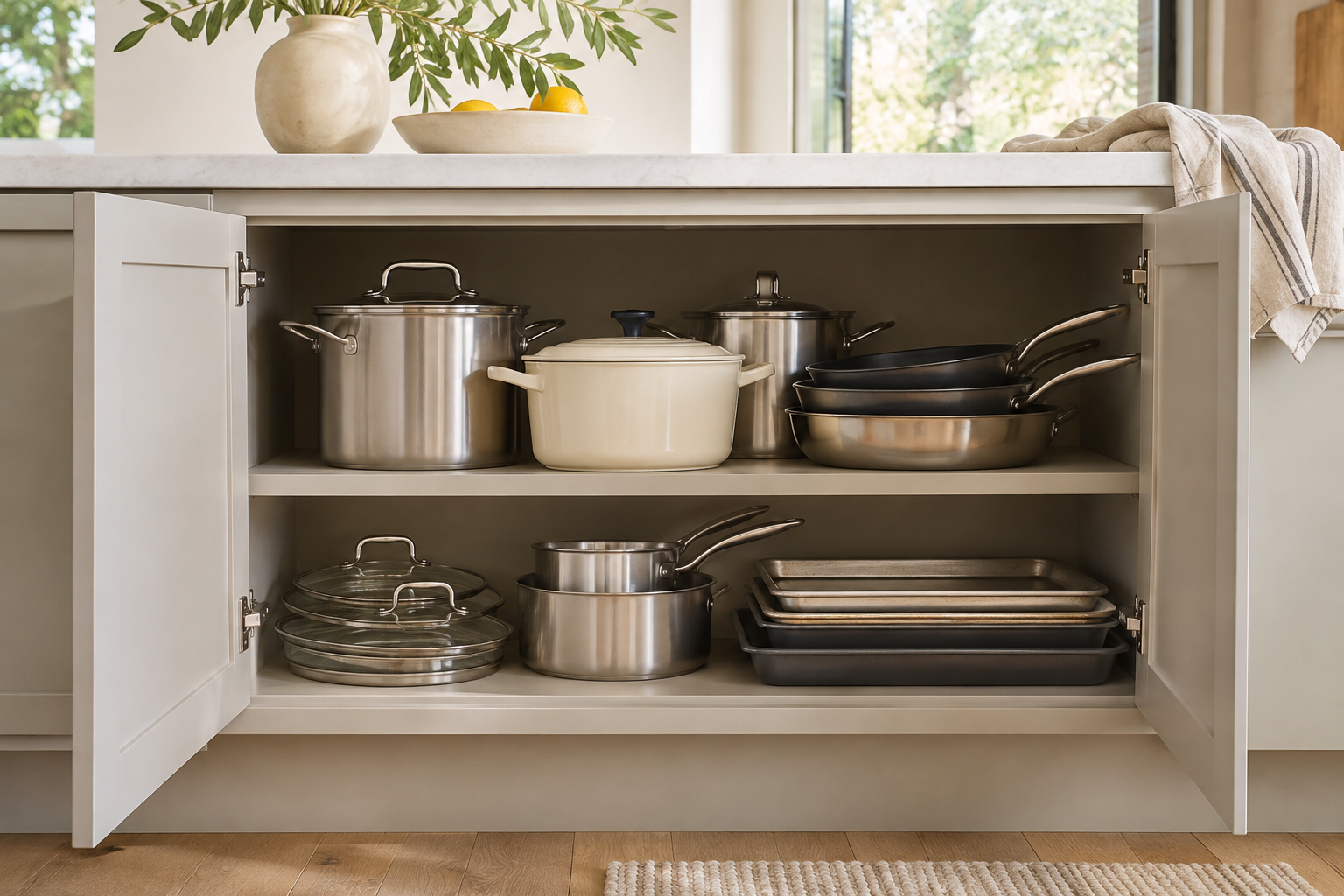
Deep lower cabinets are easier to use when pots, pans, and lids can be retrieved separately. Plan around the door opening and the cookware handles, then use fitted racks or suitable pull-outs to avoid unloading a heavy stack for one pan.
Affiliate disclosure: As an Amazon Associate I earn from qualifying purchases.
Separates suitable pans so one can be removed without lifting the entire stack.
Find on AmazonSearch Amazon ↗Brings cookware forward when rated load and cabinet clearances match your setup.
Find on AmazonSearch Amazon ↗Holds compatible lids apart while leaving their knobs and handles easy to grip.
Find on AmazonSearch Amazon ↗Separates suitable clean dry nested pans when their care instructions allow this storage method.
Find on AmazonSearch Amazon ↗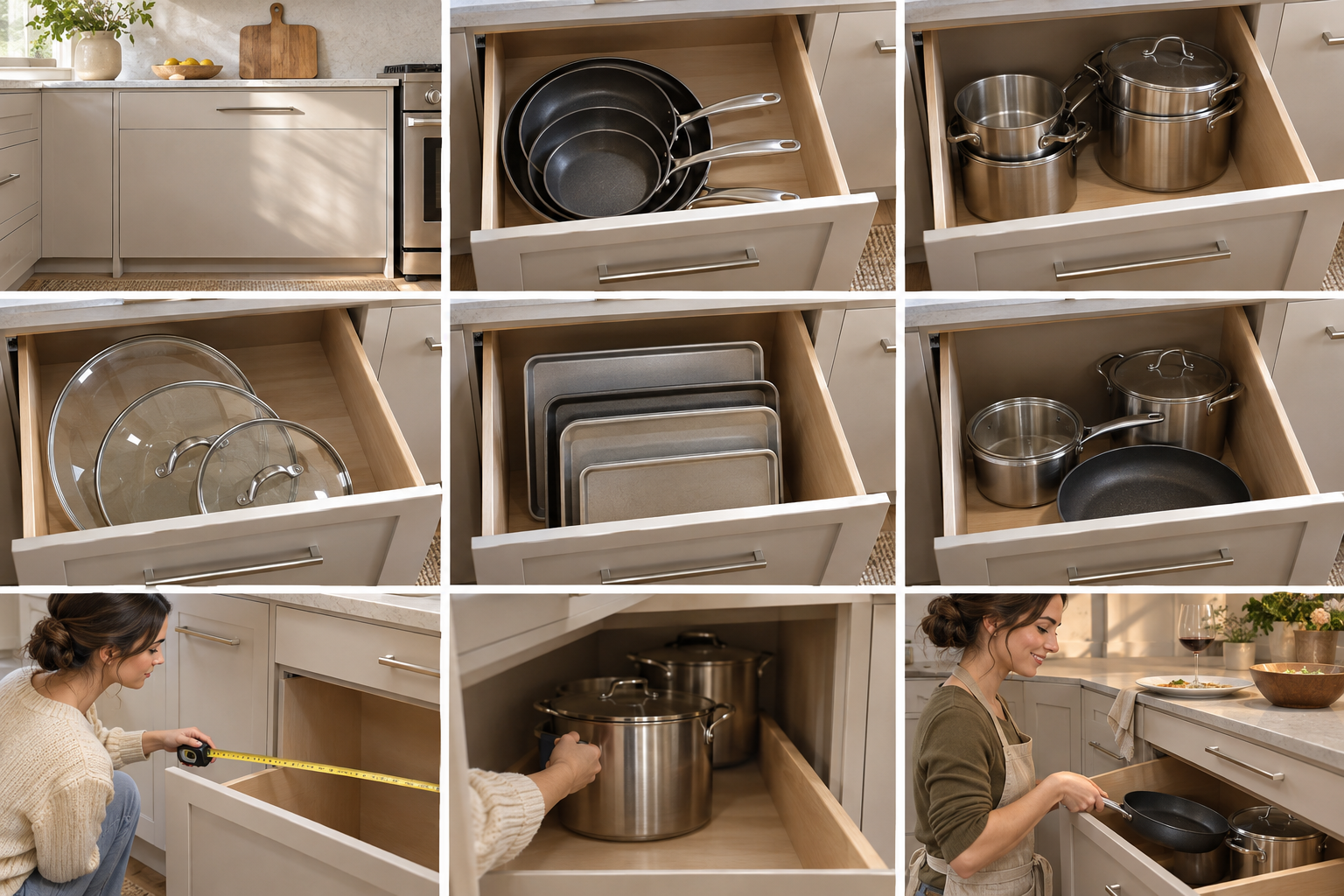
The cabinet’s interior width does not tell you whether a pan will pass through the opening beside the hinges. Measure the clear doorway and each bulky piece with its handles included. Check the existing shelves and hardware ratings as well, so a new organizer does not turn a deep cabinet into an overloaded or inaccessible storage space.
Find a measuring tool for deep cookware-cabinet layouts on Amazon ↗
A fitted vertical rack can make everyday pans easier to retrieve than a single nested pile. Adjust the spaces to the actual pan depths and keep handles positioned where they can clear the cabinet door. Use the rack in its intended orientation and check that removing one pan will not tip the remaining cookware into the next slot.
Find an adjustable vertical pan rack for a base cabinet on Amazon ↗
A suitable sliding shelf can reduce the reach needed to retrieve cookware from the back of a deep cabinet. Compare its fully loaded rating, mounting requirements, and travel with the cabinet opening before choosing a model. Keep the pot group stable and manageable, with handles clear of the hinges, door frame, and adjacent shelf contents.
Find a rated pull-out shelf for deep pot storage on Amazon ↗
A lid rack can stop knobs and rims from catching beneath the pans they belong to. Fit the slots around the actual lid thicknesses and leave room to grip each handle. Place the rack where it can be accessed from the open cabinet without reaching over a heavy pot stack or pushing a lid against the door hinges.
Some cookware can nest compactly when its care instructions allow it and the surfaces are clean and dry. Use suitable protectors if needed, and keep the stack small enough to lift comfortably. Avoid forcing pieces together or placing a heavy pot against a delicate finish simply because the cabinet has enough height for another layer.
Return the intended cookware and practice taking out a daily pan, a larger pot, and their lids separately. Check that doors close normally and that organizers do not scrape handles or obstruct the available opening. Keep the most-used pieces in the easiest positions, with occasional cookware behind or beside them only where it remains manageable to retrieve.
Find modular racks for accessible cookware storage on Amazon ↗
Choose according to the cookware’s construction, care instructions, cabinet dimensions, and the organizer’s intended use. A vertical rack can make frequently used pans easier to retrieve, while a small suitable nested group may use space more efficiently. Avoid a heavy stack that must be dismantled for everyday cooking.
Check the cabinet opening past the hinges, the shelf depth, the loaded cookware height, and the hardware’s mounting and load requirements. Include handles in every measurement. The shelf must travel normally without scraping the door or becoming unstable under the intended group of pots.
A separate fitted rack can keep lids accessible without trapping them beneath cookware. Leave enough room around knobs and handles, and place the rack where it can be reached without lifting a heavy stack out first.